Key Takeaways
- People now ask AI long, detailed questions instead of typing two-word keywords.
- You can find them on Reddit, Quora, in support tickets, and in AI follow-up suggestions.
- Put a short, bolded answer right under a heading that matches the question.
- When pages tie, trust signals like links and mentions from respected sites often decide who gets cited.
Not long ago, people typed “best running shoes” and scrolled.
Now they ask: “I have flat feet, run 15 miles a week on pavement, and have a $150 budget. What shoes should I buy?”
That’s a prompt, and finding prompts like it is the heart of AI prompt research SEO. Instead of chasing short keywords, you learn the real questions people ask ChatGPT, Claude, and Perplexity. Then you build pages that answer them.
Sounds like a lot? Don’t worry. We’ll go step by step.
How to Do AI Prompt Research for SEO (Step by Step)
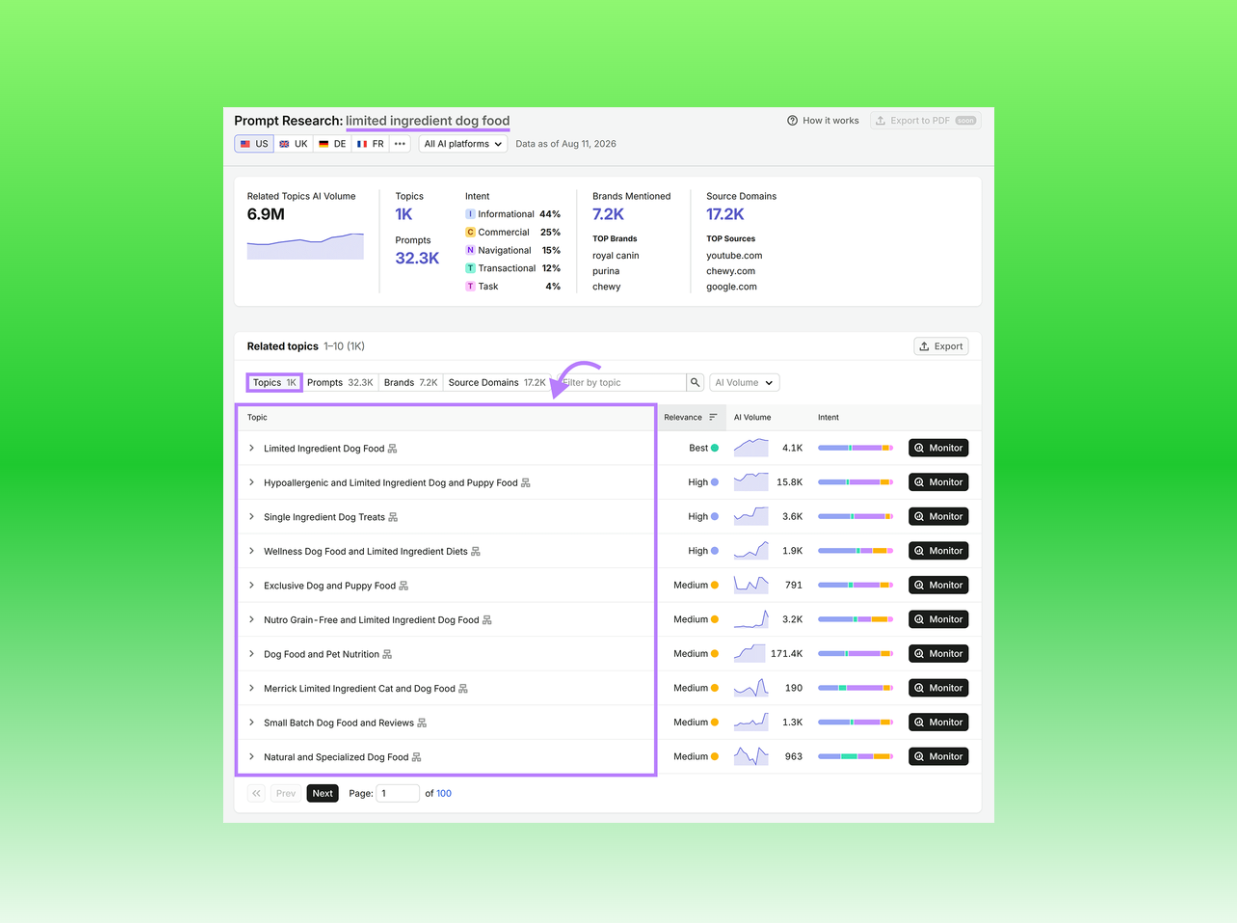
Think of prompt research as listening in on real conversations. Here’s your simple workflow:
- List your core topics. Pick five to ten things your business wants to be known for.
- Dig through Reddit. Peec’s study of 30 million AI citations ranked it the most-cited website. A thread like “Best running shoes for flat feet under $150?” is a prompt waiting for an answer.
- Browse Quora. Look for long, detailed questions, not short ones.
- Read your support tickets. Customers tell you exactly what confuses them, in their own words. A ticket like “Why won’t my order sync with my store?” is a ready-made prompt. Sales calls and chats work too.
- Ask the AI. Type each topic into Perplexity or ChatGPT and note the follow-up questions they suggest. Those hint at what people ask next.
- Group what you find. Sort prompts by the details people add, like budget, location, or skill level.
Each group becomes a page, or a section of one. You’ll end up with a list of questions, not keywords.
Why Two-Word Keywords Don’t Cut It Anymore
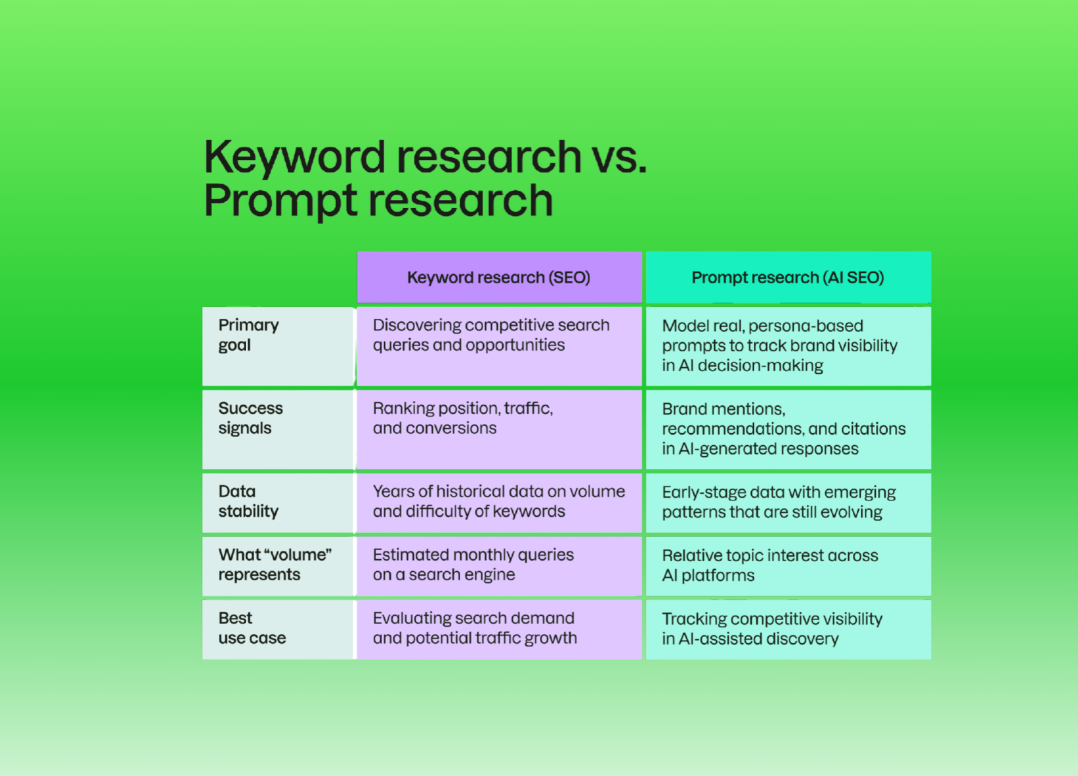
Here’s the big shift: people talk to AI like they’d talk to a friend.
Semrush analyzed 80 million ChatGPT clickstream records. Regular prompts averaged about 23 words. A typical Google search? Around three or four.
Google sees it too. Its own report says the average search in AI Mode, its chat-style search tab, is three times longer than a regular one. “I” is even one of the most common first words. AI Mode now has over 1 billion monthly users, and ChatGPT passed 900 million weekly users in February.
Even ChatGPT’s own behind-the-scenes searches are getting longer. Peec found they roughly doubled, from about 6 words to about 12, between October 2025 and January 2026.
Short searches haven’t vanished. But AI doesn’t want a general overview of running shoes. It wants a specific answer for flat feet, pavement, and $150.
So if your plan only chases vague head terms, you’re optimizing for yesterday’s search.
How to Build a Page AI Wants to Quote
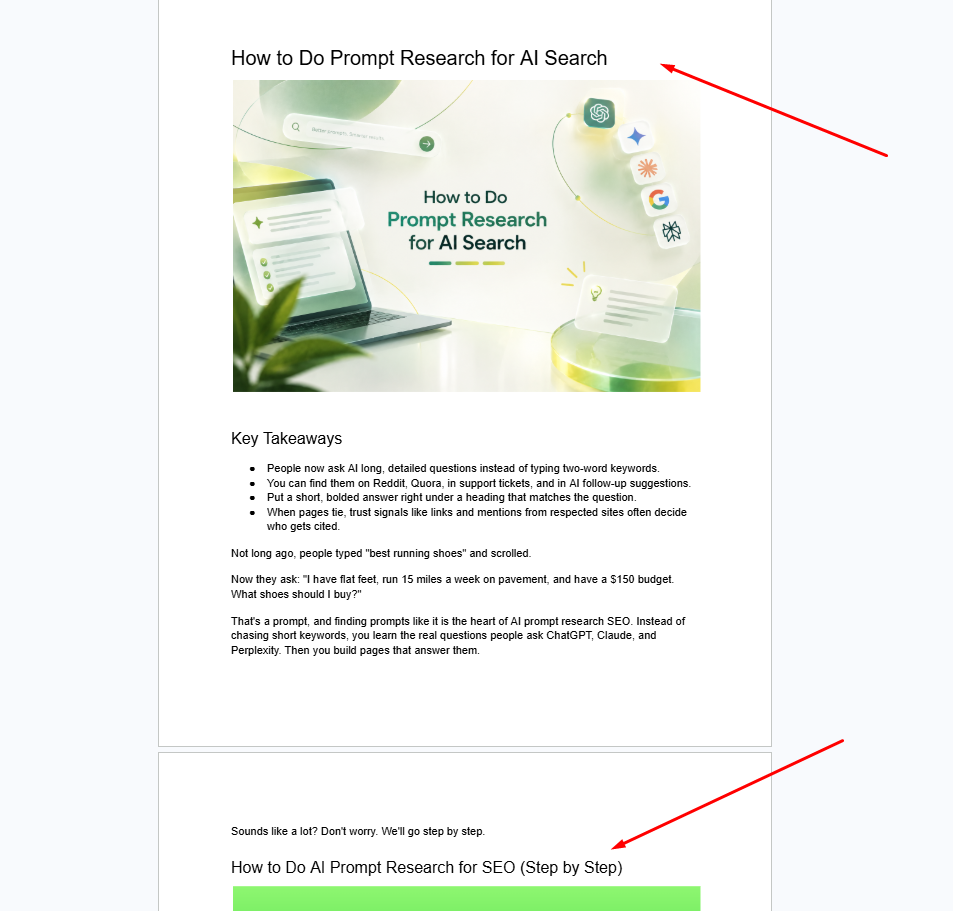
Once you have your prompts, format your answers so AI can grab them fast. Think of AI as a speed reader. It wants a clean answer, right away.
Try this simple pattern:
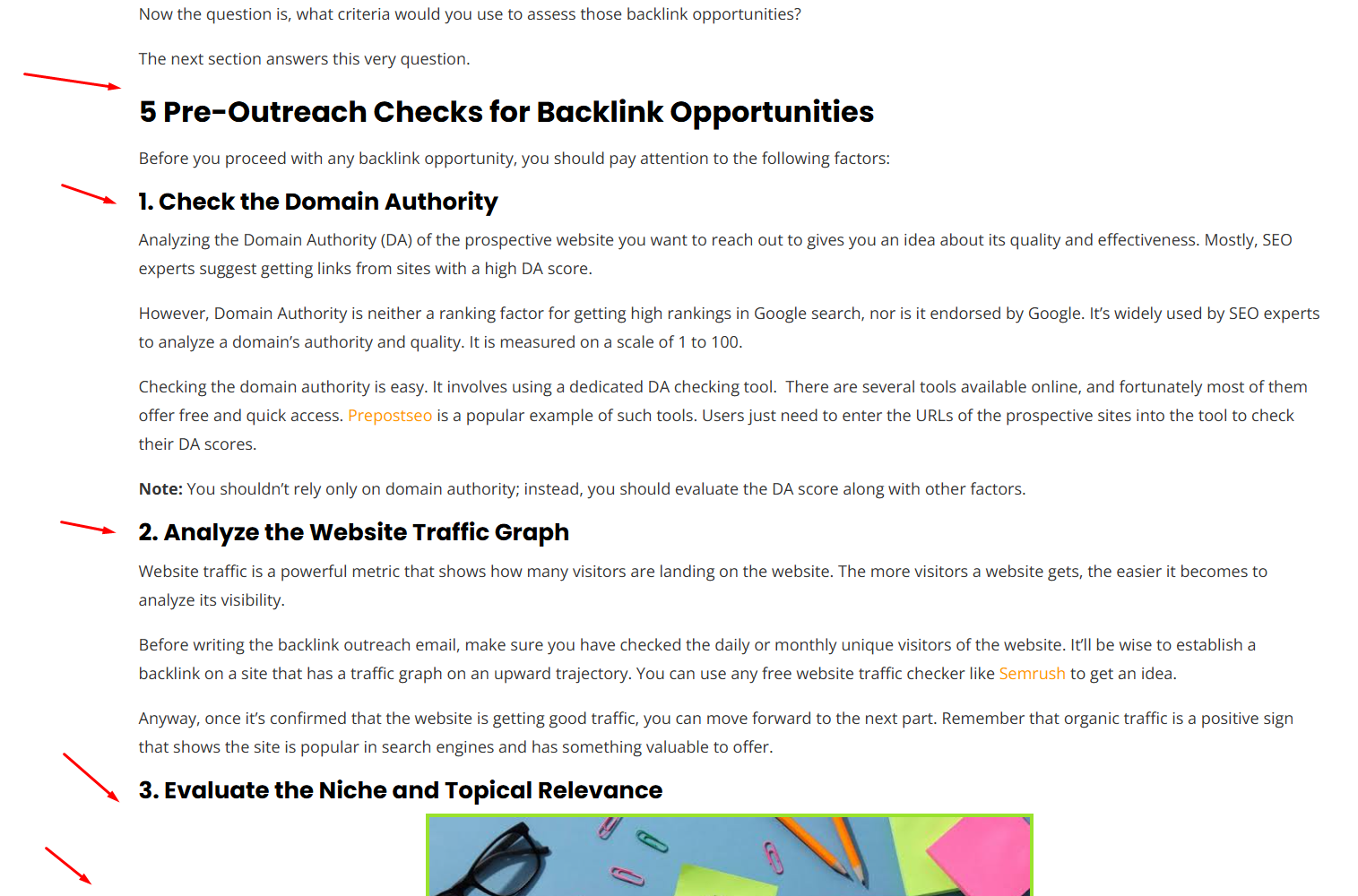
- Match your H2 to the prompt. Use the exact question people ask.
- Answer immediately. Place a bolded answer of about 40 words right below it.
- Then add depth. Follow with proof, examples, and a short list. Keep sections to roughly 120 to 180 words. SE Ranking tied that length to about 70% more ChatGPT citations than sections under 50 words.
Here’s what that looks like:
H2: What is prompt research?
Prompt research is finding the long, detailed questions people ask AI tools like ChatGPT and Perplexity, then writing pages that answer them directly. Think real-life questions with context, not short keyword lists. It’s the AI-era version of keyword research.
Why does this work? In Kevin Indig’s study of 1.2 million ChatGPT answers, about 44% of citations came from the first 30% of a page. The study also suggests AI often treats a heading like a prompt and the paragraph below it like the answer.
Adding statistics, quotes, and sources helps too. Researchers from Princeton and other schools found those tweaks boosted visibility in AI answers by up to 40%.
When Two Pages Say the Same Thing, Who Gets Cited?
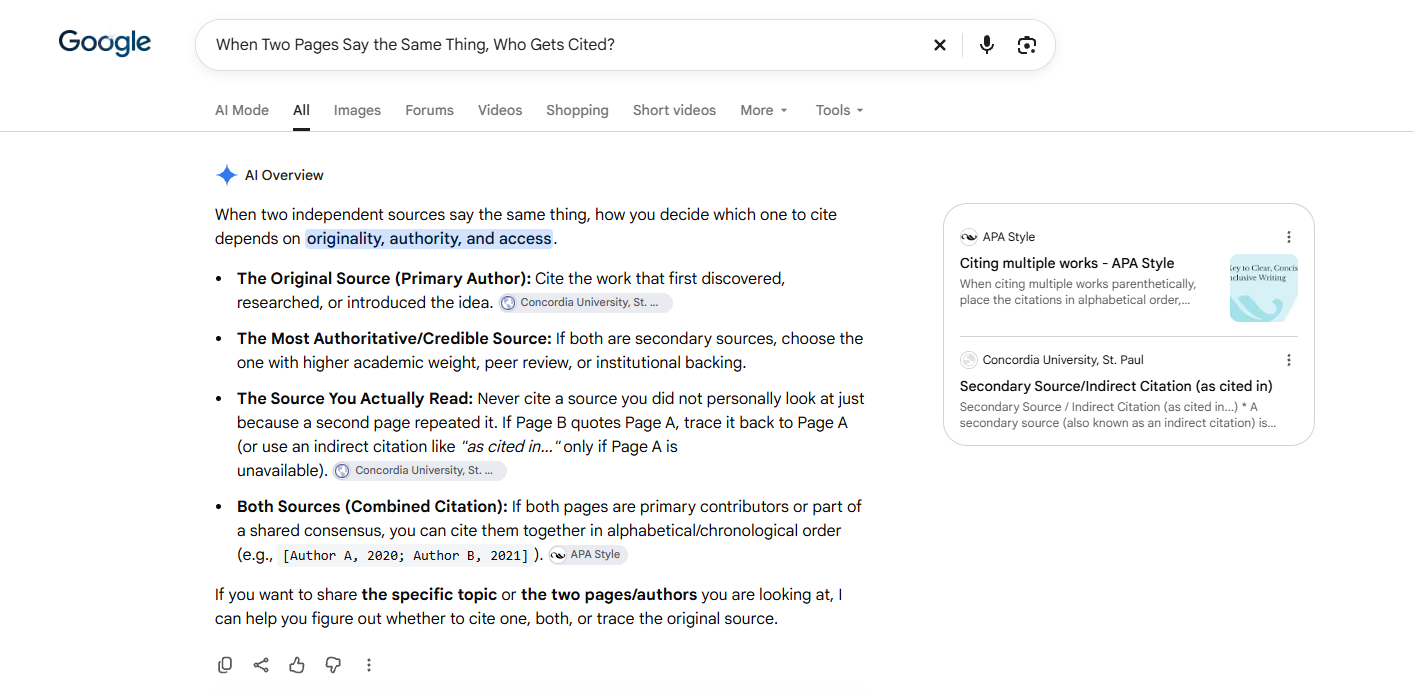
Here’s the hard truth. Say three websites answer a prompt perfectly. The AI still has to pick one to name as its source.
So what breaks the tie? Very often, trust.
Think of a job interview. Two people are equally qualified, but only one has glowing references. Who gets hired?
SE Ranking studied 129,000 domains. The number of websites linking to a domain was the strongest predictor of ChatGPT citations. Sites with up to 2,500 linking domains averaged under two citations. Sites with over 350,000 averaged 8.4.
Ahrefs looked at 75,000 brands from another angle. Brand mentions across the web, and brand names inside link text, tracked Google AI Overview visibility most closely.
Correlation isn’t proof, and no link can guarantee a citation. But the pattern is hard to miss: AI leans toward sources the rest of the web already trusts.
That’s where SirLinksALot fits in. By securing premium guest posts and niche edits, you put your brand and a link on established sites. That builds the domain trust AI engines look for. Great content gets you in the race. Trust helps you win the tie.
Conclusion
Prompt research isn’t a one-and-done job. Once your updated pages are live and indexed, test them:
- Run your target prompts in ChatGPT, Google AI Overviews (the AI summaries at the top of results), and Perplexity.
- Check whether your brand appears in the citations.
- Repeat each prompt a few times. SparkToro found the odds of getting the same brand list twice were under 1 in 100, so track how often you appear, not just your spot.
Then tweak and test again.
That’s AI prompt research SEO in a nutshell: find the real questions, answer them up front, and back your pages with authority. For that last part, SirLinksALot can help you secure the guest posts and niche edits that build trust. Pick one prompt and start today!
FAQs
What is AI prompt research SEO?
It’s finding the long, conversational questions people ask AI tools, then creating content that answers them. Think of it as keyword research for the age of ChatGPT, Claude, and Perplexity.
How is prompt research different from keyword research?
Keyword research targets short phrases. Prompt research targets full questions with context, like budget, location, or skill level.
Do I need special tools?
No. Reddit, Quora, support tickets, and AI follow-up suggestions are free and powerful. Paid tracking tools can help later.
Can backlinks really help me get cited by AI?
They can help. Studies tie links and brand mentions on trusted sites to more AI citations. Still, nothing is guaranteed, so pair links with strong, well-structured content.
Does prompt research replace traditional SEO?
No, it builds on it. SE Ranking found pages that rank well on Google tend to earn more ChatGPT citations, so solid SEO basics still matter.