Key Takeaways
- Answer Engine Optimization (AEO) is about delivering direct, clear answers to user queries and assisting brands in remaining relevant in an increasingly AI-powered search future.
- To embrace AEO is to hear the user’s intent, speak conversationally, and keep your content continuously fresh and relevant.
- Leveraging keyword research, structured data and entity recognition tools can increase visibility in search results and featured snippets.
- Measuring AEO performance with visibility metrics, citation tracking, and user engagement data helps refine content and drive better outcomes.
- Spicing up your posts and pages with multimedia and semantic content not only pleases users, it helps search engines understand the context of your content.
- By remaining informed of new technologies and evolving your AEO strategy, you will set yourself up for long-term success and a more resilient web presence.
AEO, or Answer Engine Optimization, tools assist sites in delivering fast, concise responses on search engines and AI-powered interfaces.
These tools analyze the suitability of site content to frequently asked questions and then provide suggestions to increase the likelihood.
Most companies observe improved clicks and increased traffic with solid AEO strategies.
For SEO pros and agencies, these tools simplify how to identify and address vulnerabilities.
Next, we’ll dissect the leading AEO tools and their capabilities.
What is Answer Engine Optimization?
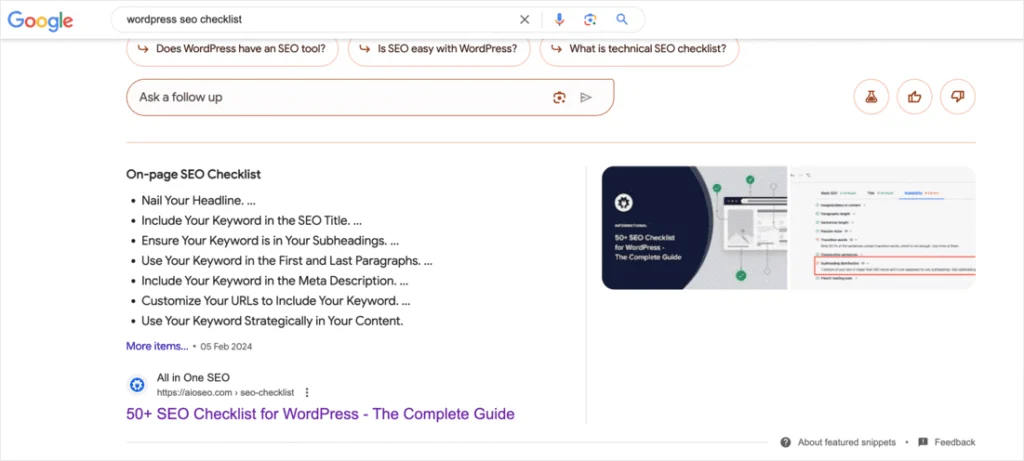
Answer Engine Optimization (AEO) is optimizing content for answer engines—ChatGPT, Perplexity, Google AI Overviews—to easily read, comprehend, and leverage it. It’s all about assisting users in discovering immediate answers quickly, so content needs to be straightforward, well-organized, and designed for authentic queries.
With AI tools transforming how people search, AEO is now at the heart of digital content strategies. For SEO buyers and agencies, knowing AEO is how they get ahead in a world where AI selects the winners.
1. The Core Concept
AEO works by providing fast, precise answers to users’ queries. It’s not like old-school SEO, which obsesses over keywords and links. AEO considers what users desire and attempts to immediately address their issues.
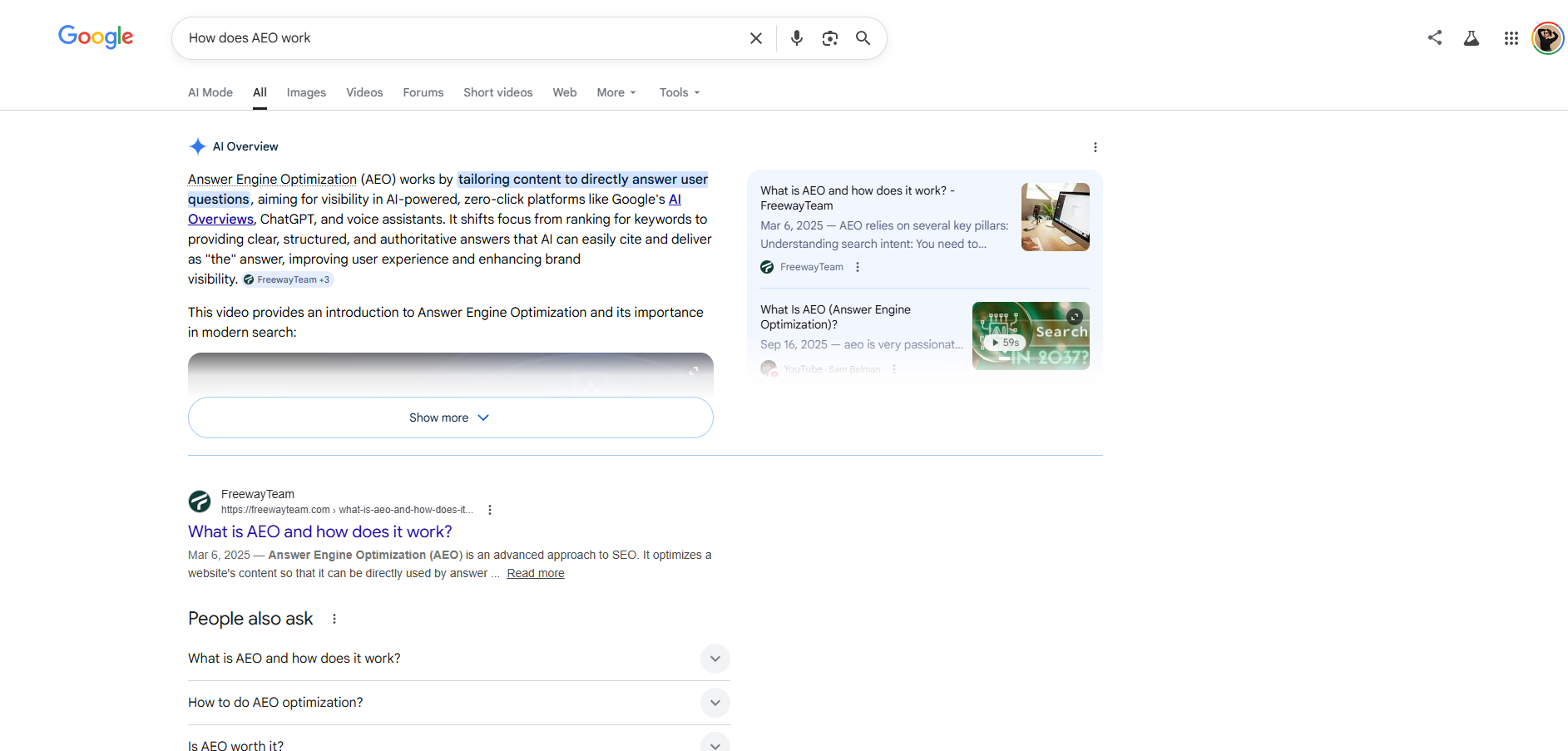
For instance, if someone queries “How does AEO work,” they want a concise, useful response, not an overload of buzzwords. AEO goes with SEO; its soul is intent and user needs. If your content fixes a genuine issue or responds to a query, AI engines see.
That way, when people query about your subject, your response can appear in those intelligent AI-powered responses. Knowing what your users care about is half the battle. Observe their search and questioning behavior, then create content tailored to it. Brands that adapt to AEO are more likely to appear in AI responses, increasing trust and traffic.
2. The User Focus
AEO is user-first. It forces brands to write in terms that sound conversational and approachable, using language that people use every day. That is less fluff, more fact, and crisp, concise answers.
For example, deconstructing a difficult subject into simple steps or utilizing concise bullet lists can go a long way. It’s about listening. If users are leaving comments or questions, brands should be using that feedback to adjust their content.
It’s this cycle of creating and optimizing content that keeps it relevant. Content isn’t just helpful; it’s enticing users to stay, click, and share.
3. The Technology Shift
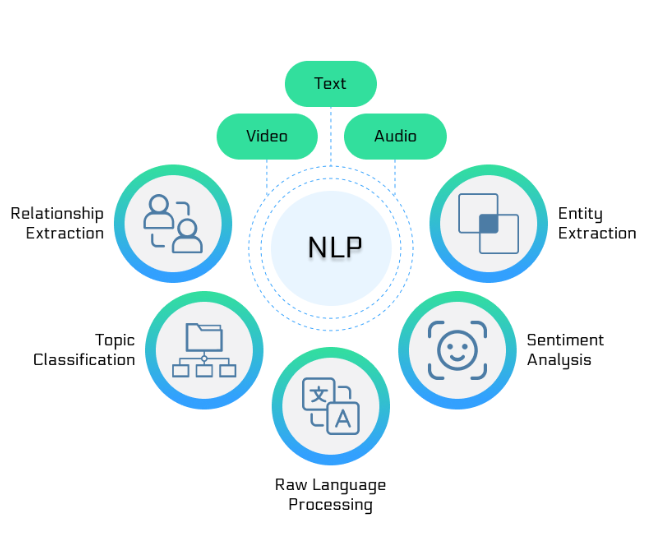
AI and machine learning have transformed search engines. Now, engines look at meaning and context, not just keywords. Tools like NLP (natural language processing) allow machines to ‘understand’ what queries mean and select the most appropriate answers.
Voice search and smart assistants force brands to write like people talk. For instance, someone might ask, ‘What’s the best way to increase AEO?’ The response must be straightforward and easy.
As AI-centric platforms continue to emerge, brands must adapt by developing content that resonates with both humans and bots.
4. The Business Impact
AEO can deliver massive amplification for brands by providing incremental clicks, shares, and credibility. When your brand is referenced in AI responses, you are exposed to new audiences. This increase in visibility typically results in superior conversion rates because users are locating precisely what they require more quickly.
The brands that nail answer engine optimization stand out. They appear in more searches, get mentioned more, and are trusted voices in their industries. Keeping up with AEO means long-term wins: steady traffic, strong reputation, and lasting authority.
AEO vs. SEO
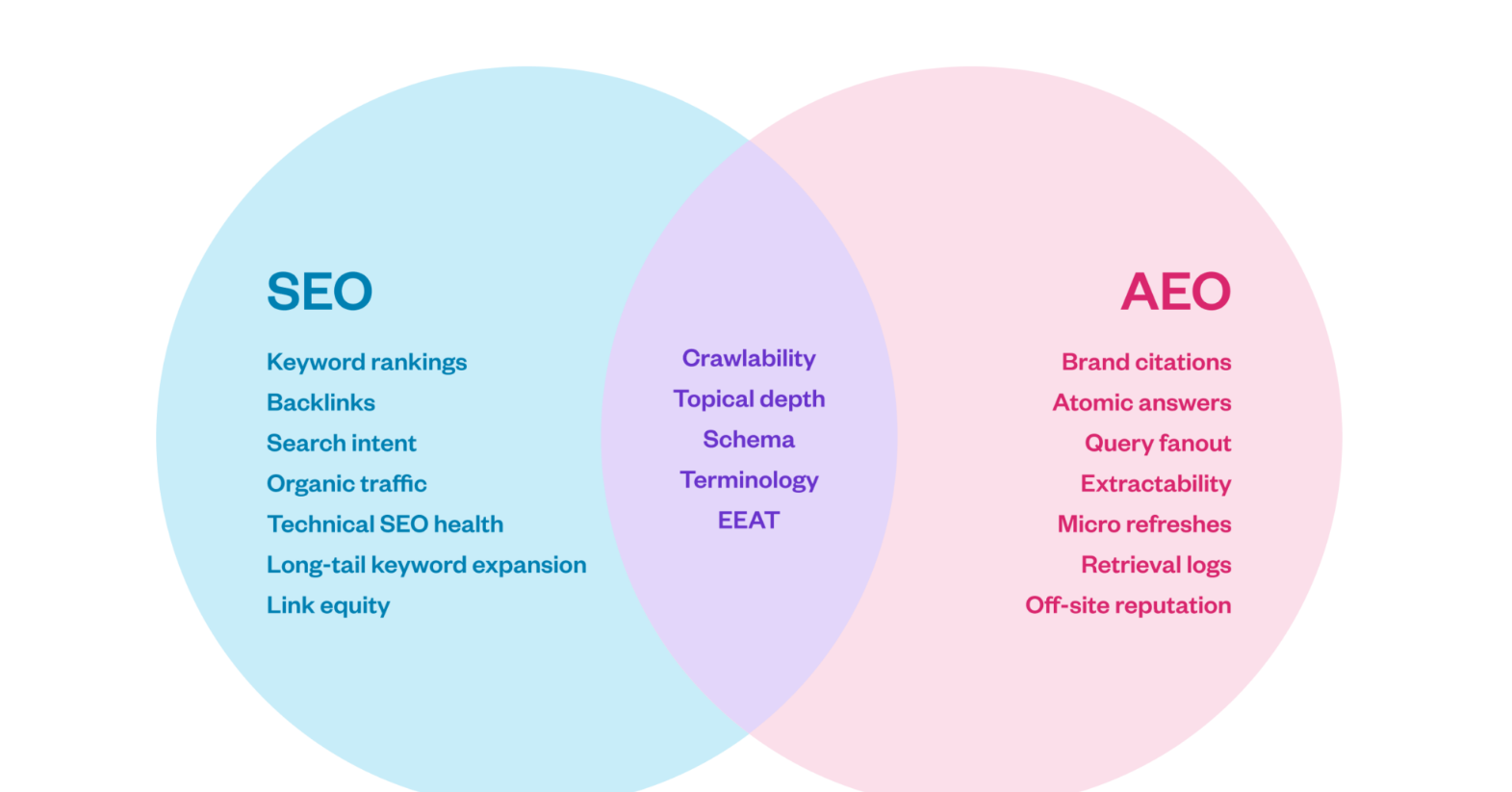
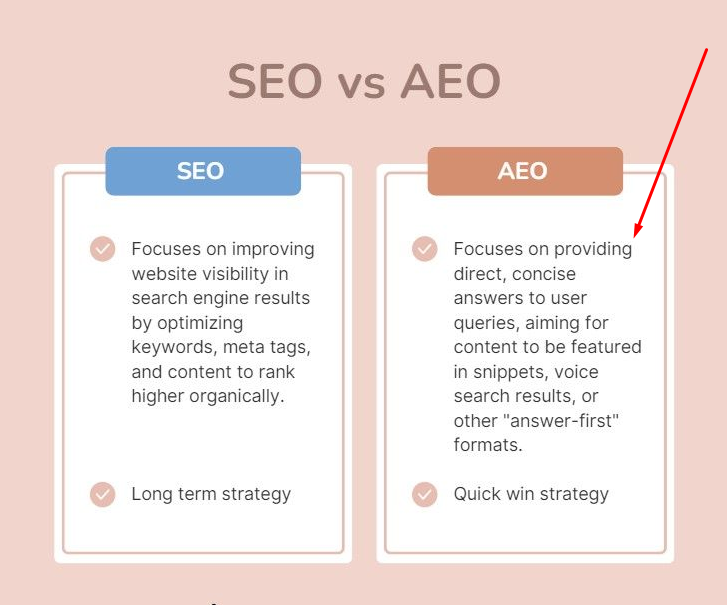
AEO and SEO work in concert to help brands shine online, but their focus is rather different. Traditional search engine optimization has undergirded digital marketing for decades, aiming to increase a site’s position on search engines like Google and Bing. It’s about attracting clicks, keyword positioning, and directing people to your site, while effective AEO focuses on enhancing the visibility of content as direct answers to user queries.
AEO, or Answer Engine Optimization, is newer and stems from the emergence of AI tools and transformations in answer-seeking behavior. Instead of just ranking on search, AEO is about getting your content featured as answers—Google’s featured snippets, AI overviews, knowledge panels, voice assistants, and more. This approach complements SEO by providing a more targeted response to search intent.
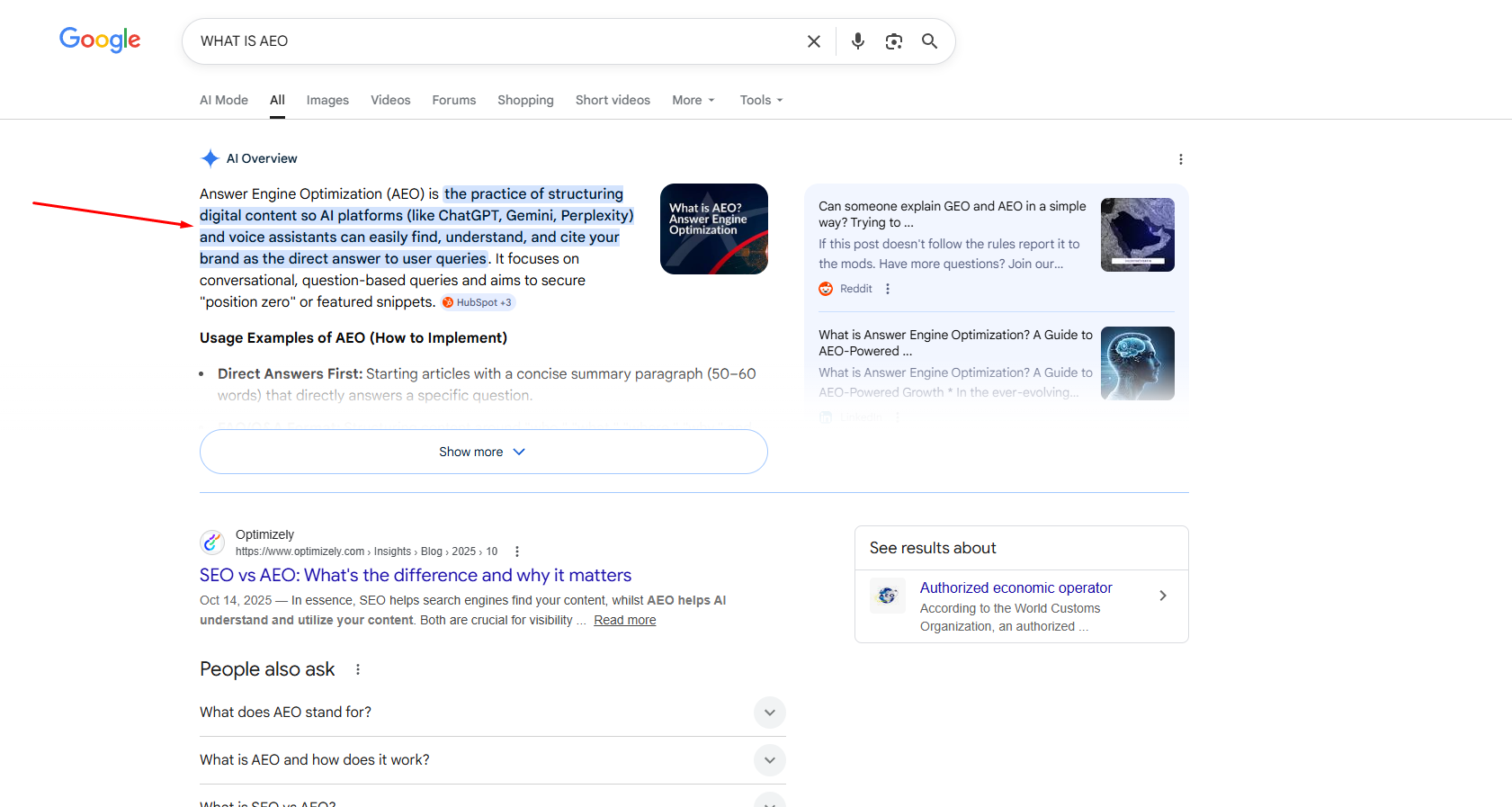
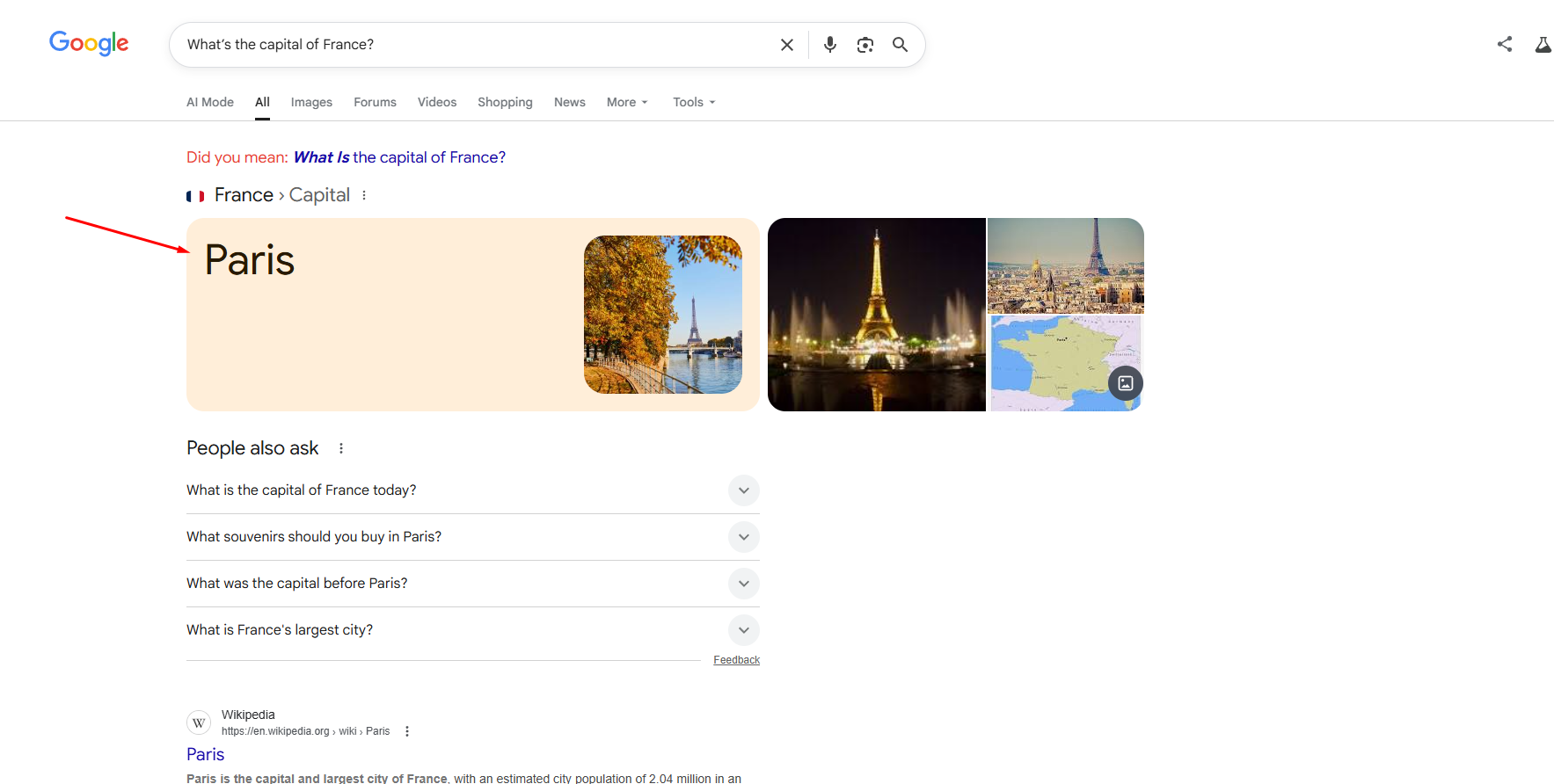
Both AEO and SEO aim to get your brand seen, but AEO is laser-focused on user questions and delivering clear, quick answers. For instance, when someone inquires, “What’s the capital of France?” they want “Paris” immediately. Traditional SEO may go after more general terms such as “France travel guide,” looking to capture users at any point in their search journey.
That’s why AEO employs tools such as structured data, including schema markup, to assist search engines in comprehending the context of your content. Semantic content is what matters—writing with semantic connections between concepts and with entities that identify people, locations, and objects. While SEO still cares about keywords and link-building, effective AEO requests that you demonstrate obvious expertise and format information so AI can extract it quickly.
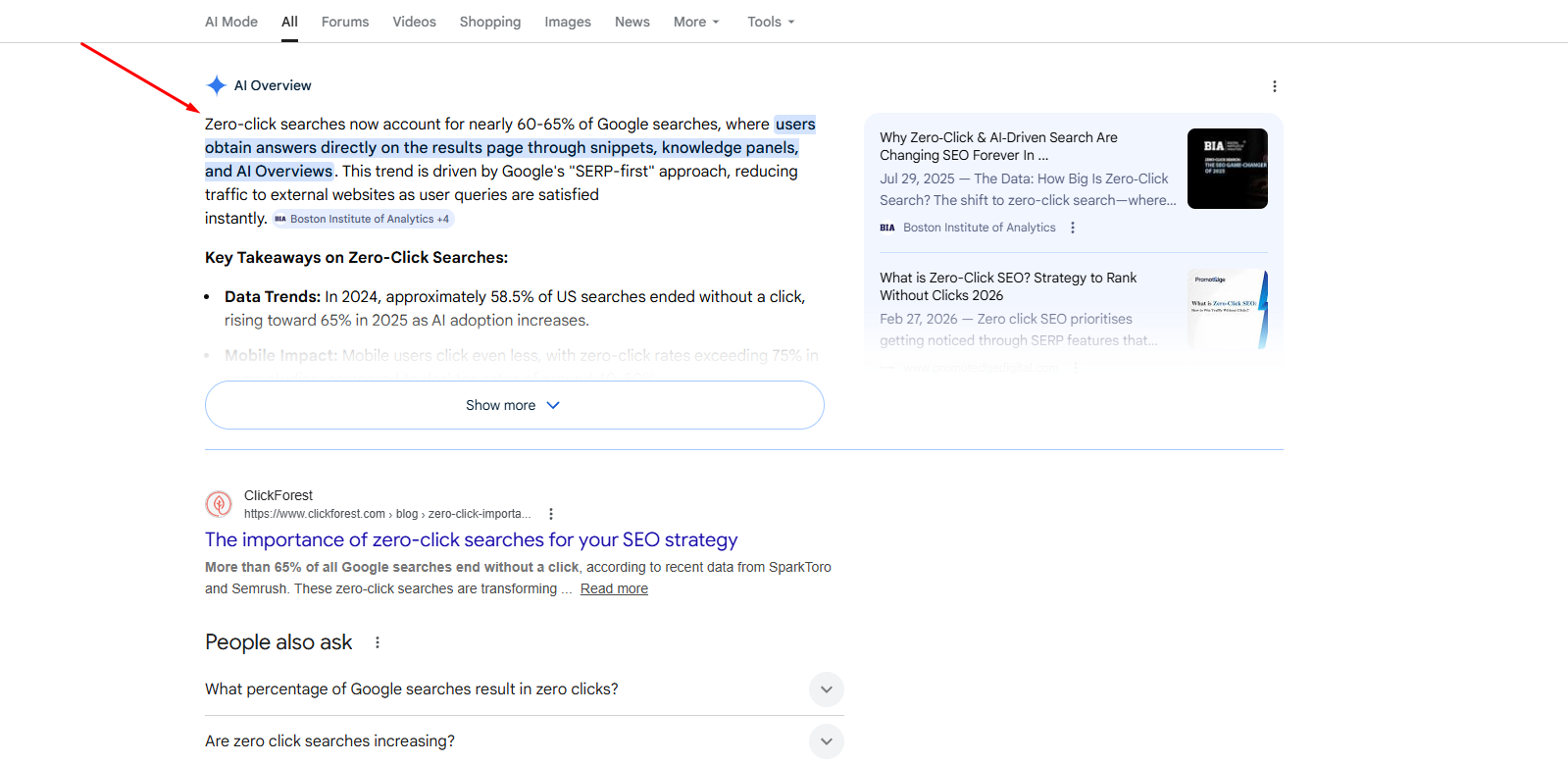
User behavior is evolving. More than 65% of Google searches are zero click results now, where users receive the answer on the search page itself and never go to a website. This shift renders AEO more critical than ever. If your content isn’t answer-ready, you lose impressions.
AEO tools assist by displaying the inquiries users make, the optimal format for answers, and where your brand ranks in featured snippets or AI-generated responses. SEO tools still matter for tracking rankings, backlinks, and technical health. AEO tools are about shaping the content itself for instant answers.
Both AEO and SEO depend on authority signals such as backlinks and brand mentions, which help search engines trust your site. To really win in the digital landscape, you need a blend of strong SEO fundamentals and AEO optimizations: logical structure, clear entities, up-to-date info, and comprehensive coverage of topics.
AEO and SEO lead to getting seen everywhere users search, scroll, or ask out loud.
Essential AEO Strategies
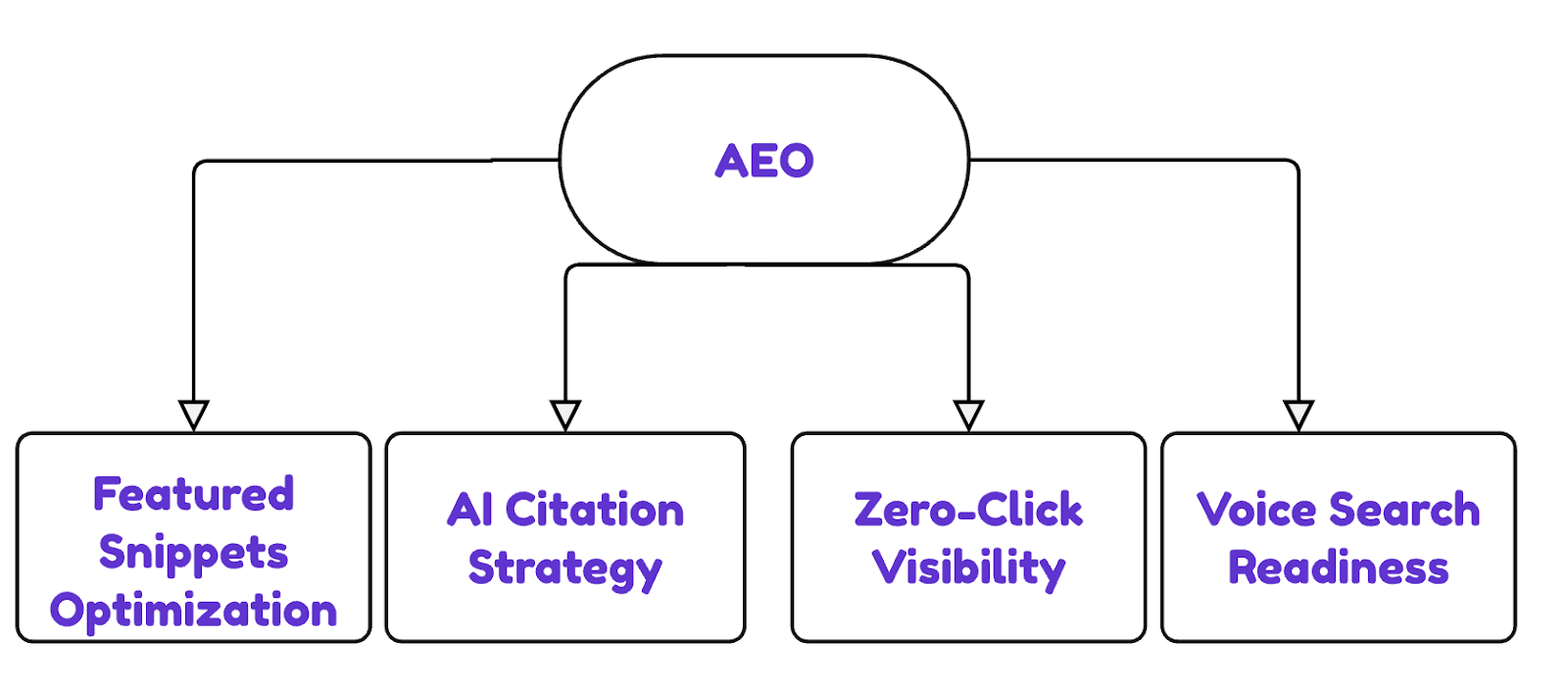
Crafting a strong AEO strategy involves optimizing content so it resonates with both search engines and actual humans. It remains about addressing user intent, deploying the proper tools, and ensuring content is accessible and readable on any device.
To optimize, key points are 160 characters or less, as these are most likely to be cited by AI engines. Publishing specialist material, incorporating the current year in meta information, and measuring with GA4 provide your strategy an advantage in quick-evolving search environments.
Semantic Content
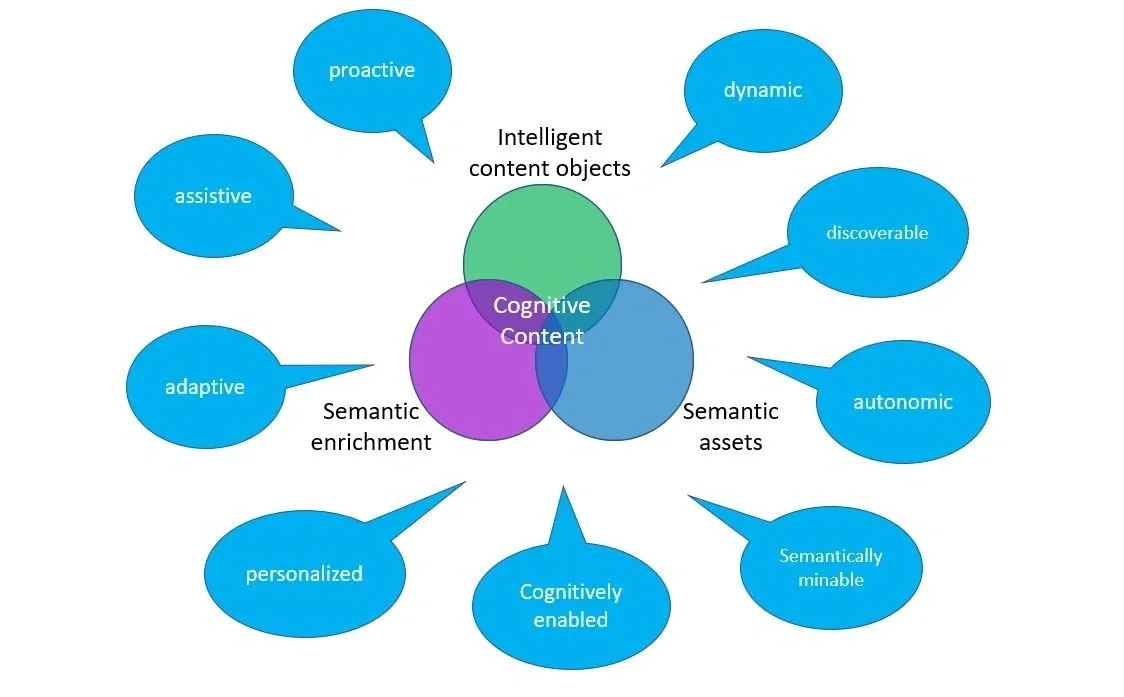
Semantic content responds to what people actually want to know, not simply what they type. Utilizing language around the topic, such as synonyms or related questions, demonstrates to readers and search engines you know what you’re talking about.
If they query something like “best ways to save energy in 2024,” content should use those words and provide useful context around energy-saving trends, techniques and tools for the present year. It helps Google or Perplexity AI identify how large your answer is and cite it more frequently.
It’s key to find the right balance of keywords, but cramming them in never does. Instead, be clear, simple, and exact. Emphasize key points in brief sentences or bullet points.
This makes your main ideas easier for both users and AI engines to scan. Context and related terms enhance your authority and help your content appear in more answer boxes.
Direct Answers
Give users what they want—short, clear answers right at the top. When you address a question, repeat it and then provide a straightforward response. For steps, tips, or facts, use a bullet list or numbers.
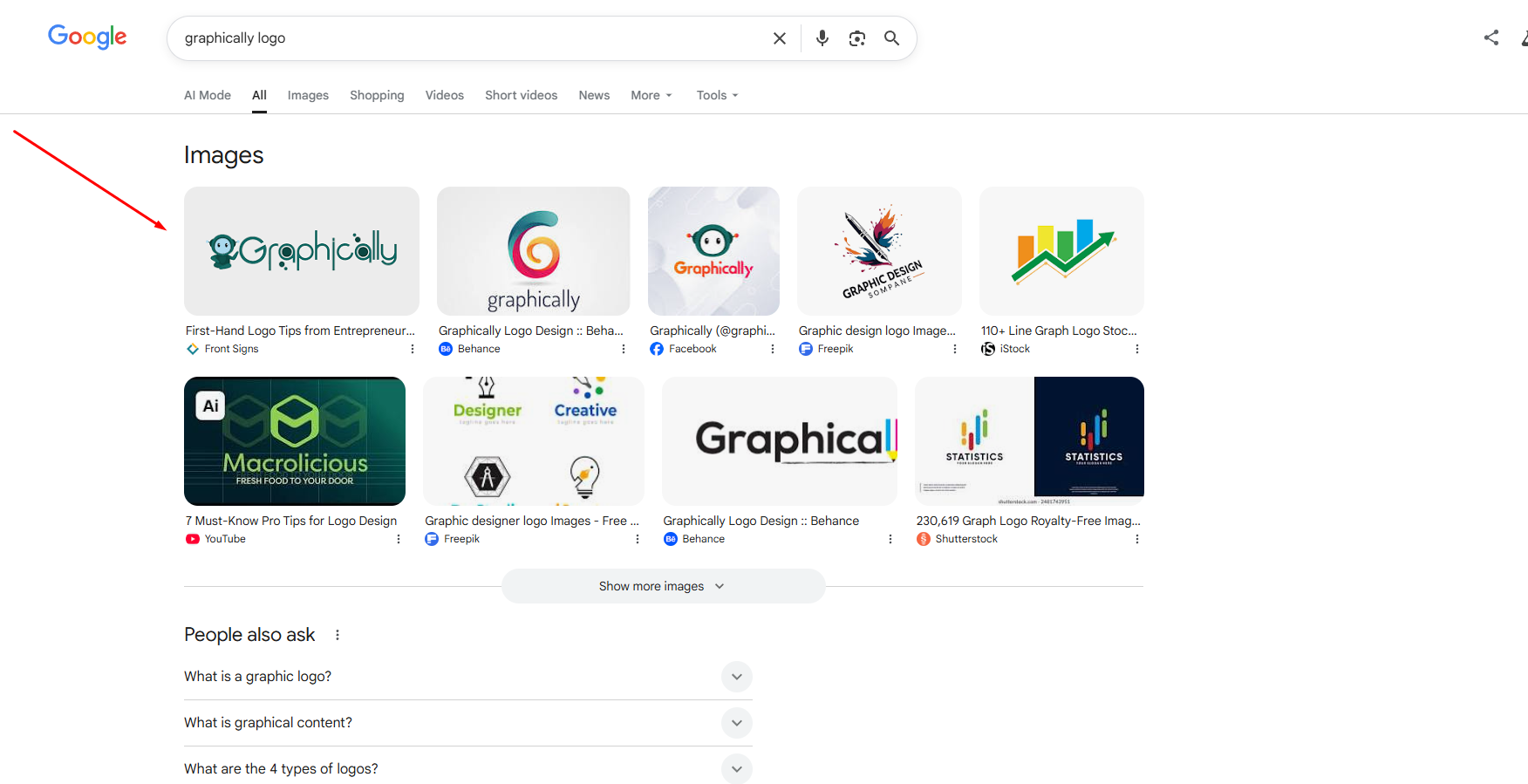
Frontload your key message within 160 characters if you can for increased likelihood of citation. Formatting counts! Brief, pointed answers make it easy for your content to be scooped up for featured snippets and answer panels.
Updates keep facts accurate and your content relevant as AI engines switch what they like to quote.
The Function of AEO Tools
AEO tools are designed to assist brands and agencies in preparing their content for answer engines such as Google’s featured snippets, Bing AI, or voice assistants. These enterprise AEO platforms operate in the background to ensure that a site’s content and architecture are simple for AI crawlers to parse and extract. They check aspects like schema validation, site performance, and if search models can access all pages.
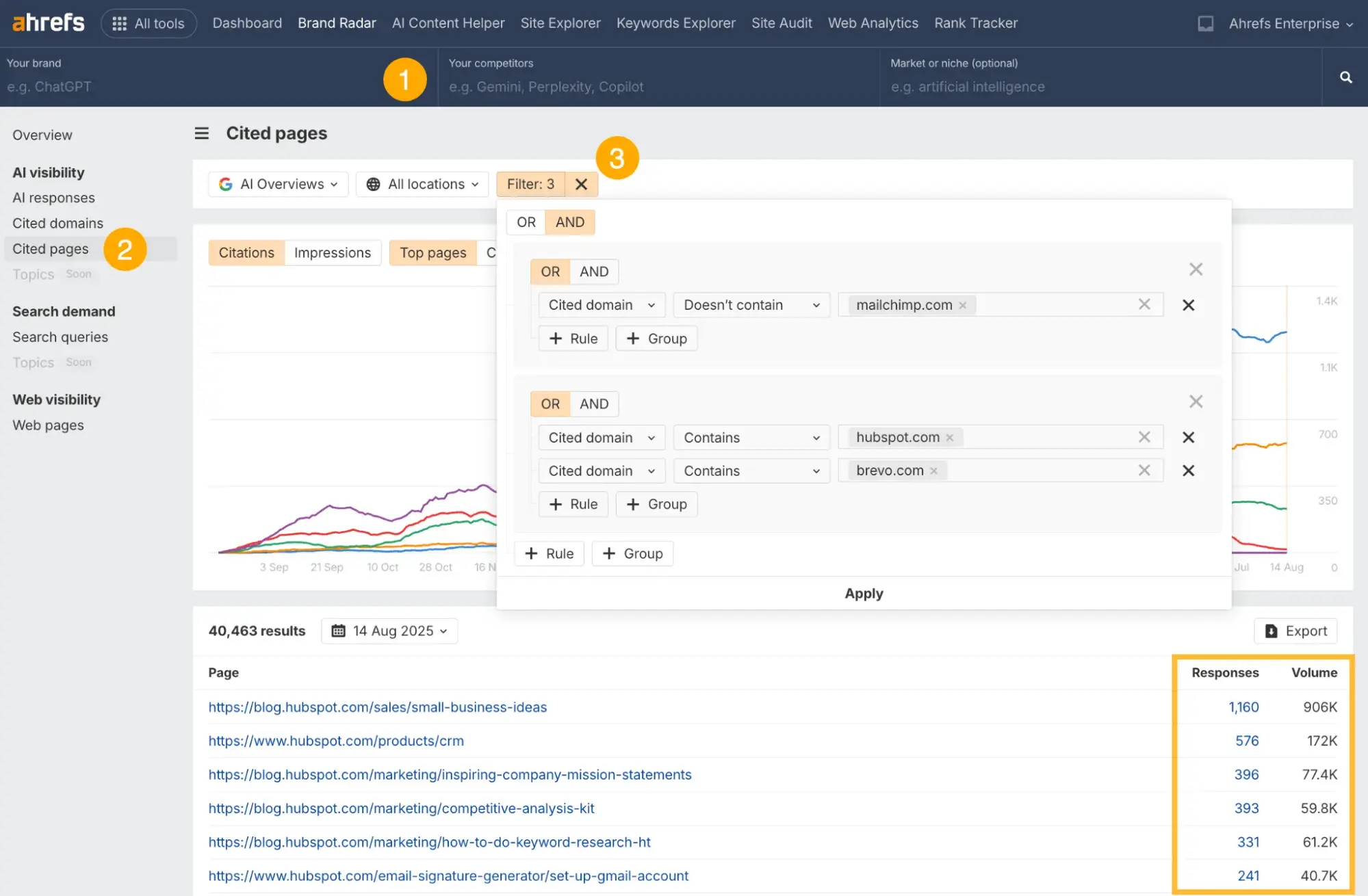
AEO tools scan for technical problems and provide directions on what to repair so that content has a greater likelihood of appearing in “zero-click” or voice search. By implementing AEO strategies, brands can significantly improve their chances of ranking well in AI-driven search results.
AEO tools simplify keyword research by identifying the specific questions users are querying on the internet. They analyze search data to identify terms that activate answer boxes or voice replies. Instead of concentrating on keyword stuffing long lists of keywords, these tools assist writers in phrasing questions and answers in a way that matches search intent.
For instance, tools may display how to structure an answer in the initial 40 to 60 words and provide additional information beyond that. They assist in adding structured data and FAQ schema, which is critical for appearing in AI-powered results across locations and devices.
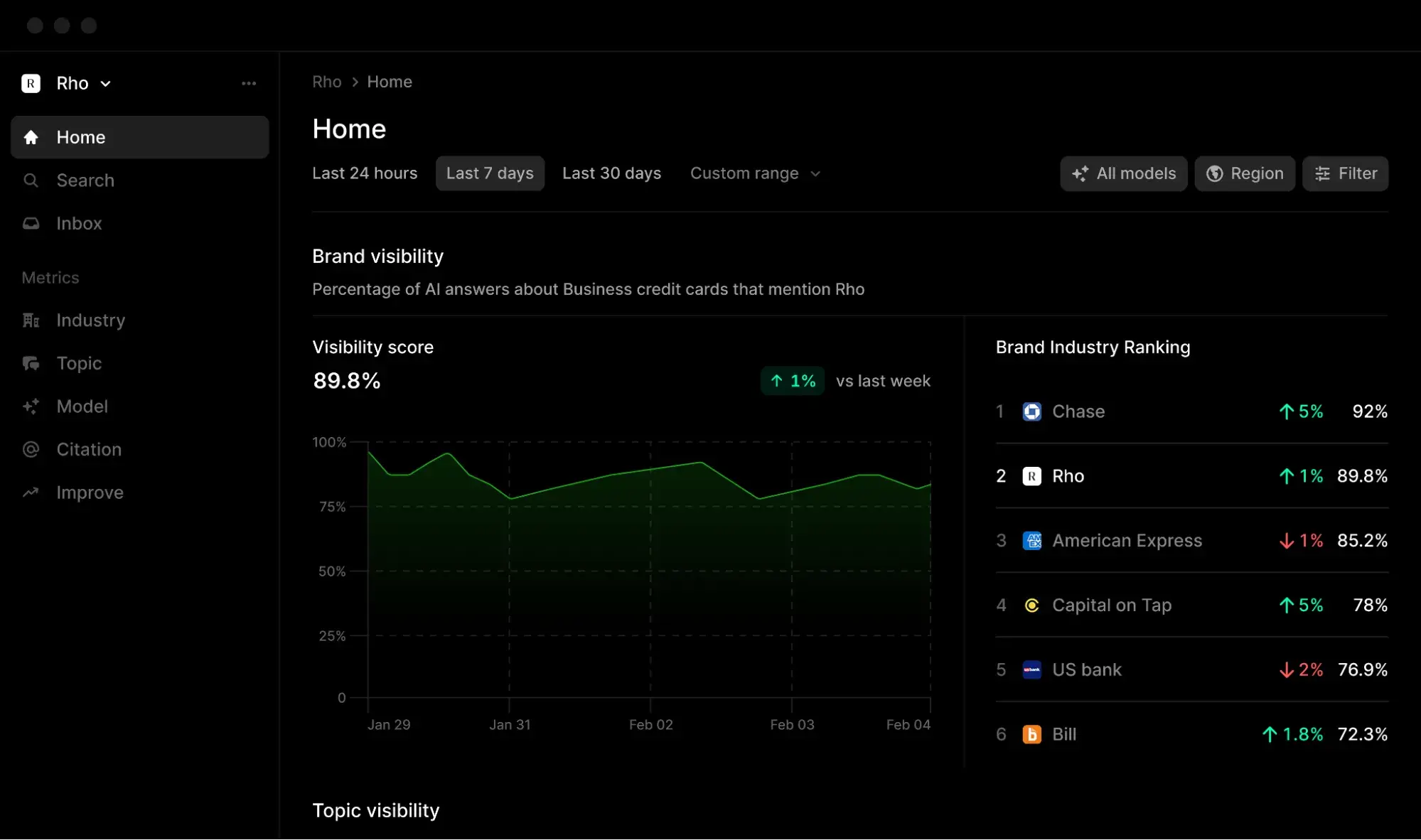
Tracking and analytics are a huge piece of what makes AEO tools appealing to agencies and consultants. These tools provide straightforward analytics about how a brand’s content performs in answer engines. They indicate where the site ranks in AI results, monitor its citation frequency for important queries, and correlate alterations in technical health with variations in AI visibility.
This allows teams to understand which changes are effective and where to concentrate next. A few tools even break down your content gaps and recommend impact-ranked fixes, so agencies can hit the ground running and maintain momentum.
AI-powered features are a standout. Most AEO tools leverage AI to assist in crafting crisp, brand-appropriate common questions answers. This can allow teams to rapidly build out FAQ sections or generate passages that answer a single question in a way that is convenient for AI to discover and leverage.
Such tools can indicate whether the content is answer engine ready and provide step-by-step remedies to fill any gaps. Merging technical audits, keyword research, and intelligent writing tools, AEO platforms provide agencies and brands with a comprehensive picture of how to enhance their visibility in the expanding universe of answer engines.
Measuring AEO Performance
AEO performance measurement is really just about understanding whether your content is being seen and utilized by AI answer engines. Over 50% of Google searches now end without a click, so tracking how your content appears in answer engines like ChatGPT, Perplexity, and Google AI Overviews is now essential.
AI search traffic is expected to outpace traditional search in a few years. The average AI search visitor converts at a rate of 4.4 times that of a typical search user. To keep ahead, you need transparent means to track whether your AEO work pays off. That means monitoring traffic, mentions, and engagement, utilizing tools that display your AI Visibility Score, mention count, and projected monthly reach.
Visibility Metrics
Visibility metrics indicate how frequently your content is displayed in search results, particularly in AI-generated responses. Monitoring impressions and clicks lets you know if answer engines are taking your content or bypassing it.
A tool that provides an AI Visibility Score from zero to one hundred, for instance, offers a fast indicator of how frequently your site or brand appears in AI answers. Measure these AEO performance numbers frequently. Look for surges or declines in impressions and clicks. These indicate whether your adjustments are aiding or hindering.
If your content begins appearing in AI summaries more frequently following an update, you’re aware that you’re headed in the right direction. Over time, following these trends helps you identify what types of topics or formats perform best.
Visibility metrics don’t simply indicate your position. They direct your next step. For example, if your content infrequently shows in Google AI Overviews, test more answer-first sections or structured data. Use the insights to schedule content that’s simpler for machines to parse and reference, increasing your chances of appearing next time.
Citation Tracking
Citation tracking is important because it establishes that your content is considered trustworthy and repeatable. When AI responses or other sites link to your work, it causes the authority, something LLMs such as ChatGPT use to decide what to display.
Use services that track citations and see where you get mentioned. This can uncover new backlink opportunities or potential partners. Perhaps a top industry blog begins referencing you. Contact them and foster a relationship.
Citation data is crucial. If you find your content referenced in answers but the information is stale, update your content to keep it fresh. LLMs love fresh, relevant information, so frequent audits keep you in the mix and enhance your prestige.
User Engagement
User engagement measures whether your content truly assists human individuals. Bounce rate, time on page, interaction rate. Low bounce and high time on page indicate users are getting what they need.
Don’t just trust the figures. Deploy surveys and feedback forms to capture firsthand direction. Inquire users what clicked, baffled them, and what they crave more of. Small adjustments grounded in actual responses can increase your effectiveness quickly.
Great engagement signifies your AEO strategy is paying off. It sparks ideas for what to work on next. Measure AEO performance. Use engagement data to iterate your approach, so your content keeps pace with users and answer engines alike.
Conclusion
Answer Engine Optimization tools transform how people discover and consume information online. They present immediately, succinct answers to match how people search today. A lot of brands get more clicks from these tools, not search engines. Nice AEO tools provide down-to-earth information, utilize actual terminology, and eliminate the marketing bloat. They get your site to appear in voice search, smart devices, and even chatbots. A client leaped from page 5 to the top three just by swapping outdated jargon for straight talk and inserting some short answers. Those types of wins feel good and have more staying power. Need more eyeballs on your site or customers? Just equip yourself with the appropriate AEO tools, keep it simple, and see your reach increase. Contact me if you want to hear more.
Frequently Asked Questions
What is Answer Engine Optimization (AEO)?
Answer Engine Optimization (AEO) is the effective AEO strategy of structuring website content, enhancing search visibility so that it is easy for major answer engines and AI search platforms to comprehend and present direct responses to users’ queries.
How do AEO tools help improve website visibility?
AEO tools effectively scan your content and identify opportunities for content optimization, helping your site achieve better rankings in answer boxes and featured snippets.
What is the difference between AEO and SEO?
SEO optimizes rankings, while effective AEO complements SEO by ensuring your content is selected as a direct answer for specific queries through voice search or featured snippets.
What are some essential strategies for AEO?
Key AEO strategies enhance search engine optimization by assisting answer engines in discovering and presenting your content effectively.
How can you measure AEO performance?
AEO performance is tracked by monitoring the presence of your content in answer boxes, featured snippets, and voice responses, which enhances your search visibility and complements SEO efforts.
Why is AEO important for global audiences?
AEO complements SEO by enabling your content to connect with users globally, delivering concise responses that enhance search visibility, especially for those using voice assistants in various languages.
What is the future of AEO?
AEO will grow as voice and AI-driven search gains popularity, making effective AEO strategies crucial for enhancing digital visibility in the coming years.