Key Takeaways
- Brands are being discovered in a big way thanks to AI platforms such as ChatGPT, Gemini, and Google’s AI Overviews, and your rank tracker is blind to all of that.
- According to one G2 report, 51% of B2B software buyers are beginning their B2B software search using an AI chatbot rather than a search engine.
- AI brand mention trackers are a newer type of tool that will demonstrate precisely when, where, and how AI is discussing your brand.
- It’s not only about backlinks, but it’s also about the trust signals all over the web: reviews, press, Reddit, and content that is clear.
- Small businesses can start improving their AI visibility today, without needing an enterprise budget.
Think about the last time you needed a recommendation for something. Did you type it into Google, or did you just ask ChatGPT?
If you’re like a growing number of people, you skipped the search bar. You asked an AI assistant, got a short, confident answer, and moved on with your day.
That is a practice that’s slowly shifting the way brands are found — and it’s something that no one looking at their Google rankings can miss. A rank tracker can tell you exactly where you sit for “best accounting software.” It has no idea what ChatGPT or Perplexity are actually saying when someone asks the same question out loud.
This article is a good explanation of that. Below, you’ll find five practical tools built to track brand mentions in AI, a plain-language look at how those mentions actually happen, and steps small businesses can take to start showing up.
5 Best Tools to Track Brand Mentions in AI (2026)
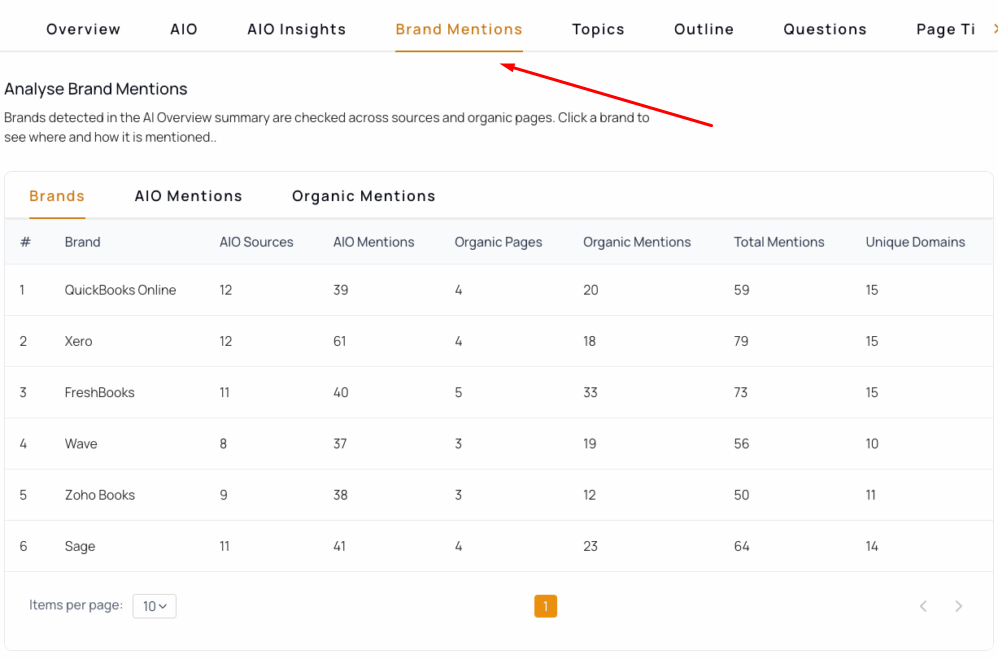
Rank trackers were built for a world of blue links on a results page. These tools were built for a different world — one where the “result” is a paragraph an AI wrote about you. Here are five worth knowing, from budget-friendly to enterprise-grade.
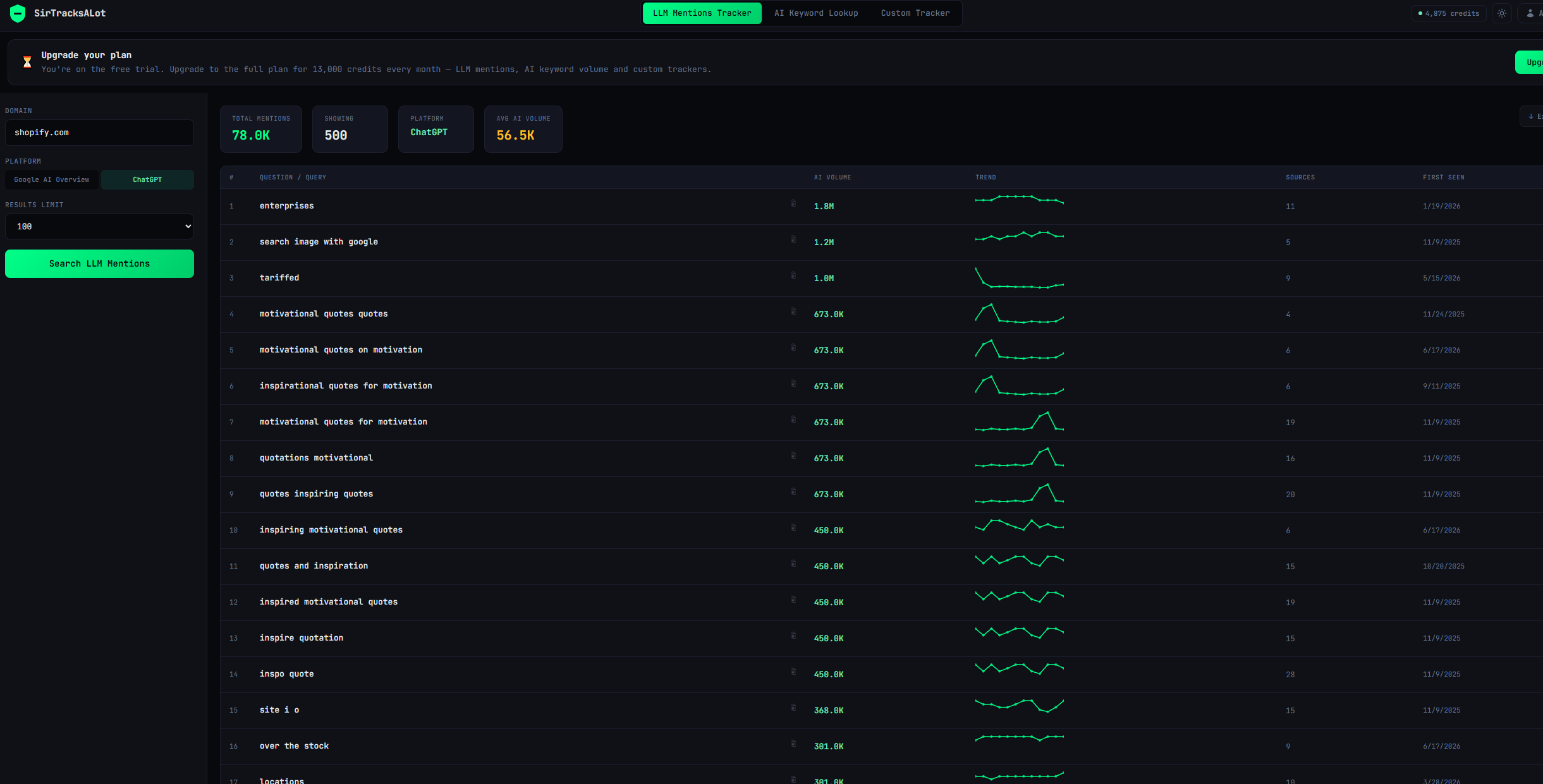
1. SirTracksALot
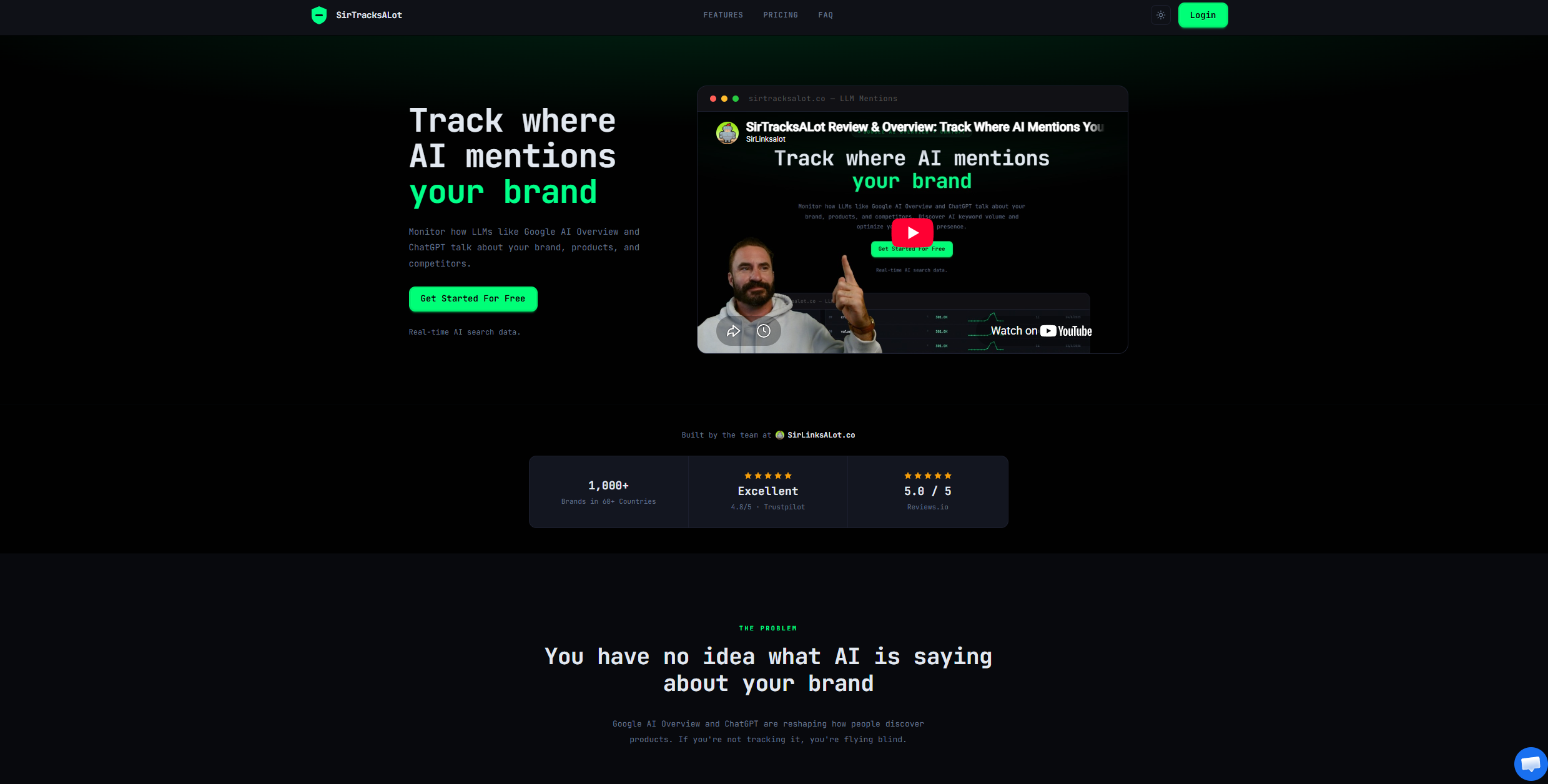
SirTracksALot shows you exactly where and how AI mentions your brand, using live data pulled fresh with every search instead of old snapshots.
- Key features: Tracks 7+ AI platforms (ChatGPT, Claude, Gemini, Grok, Perplexity, Google AI Overviews, and Google AI Mode); shows the full AI answer plus its cited sources; bulk AI keyword volume lookups; and a tool that flags which keywords AI is actually likely to cite a brand for.
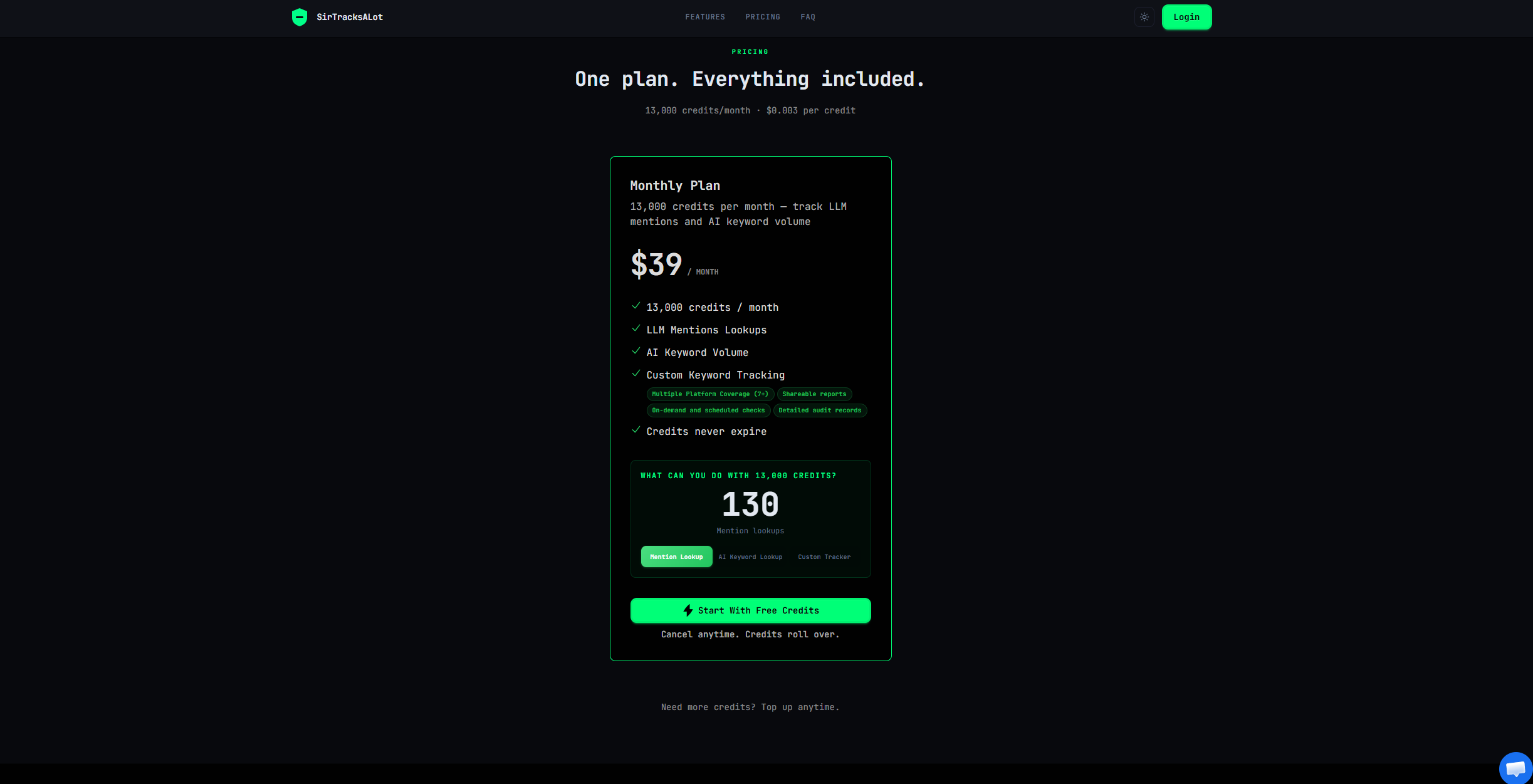
- Pricing: Free to start, then $39/month for one plan with 13,000 credits that roll over and never expire.
2. Profound
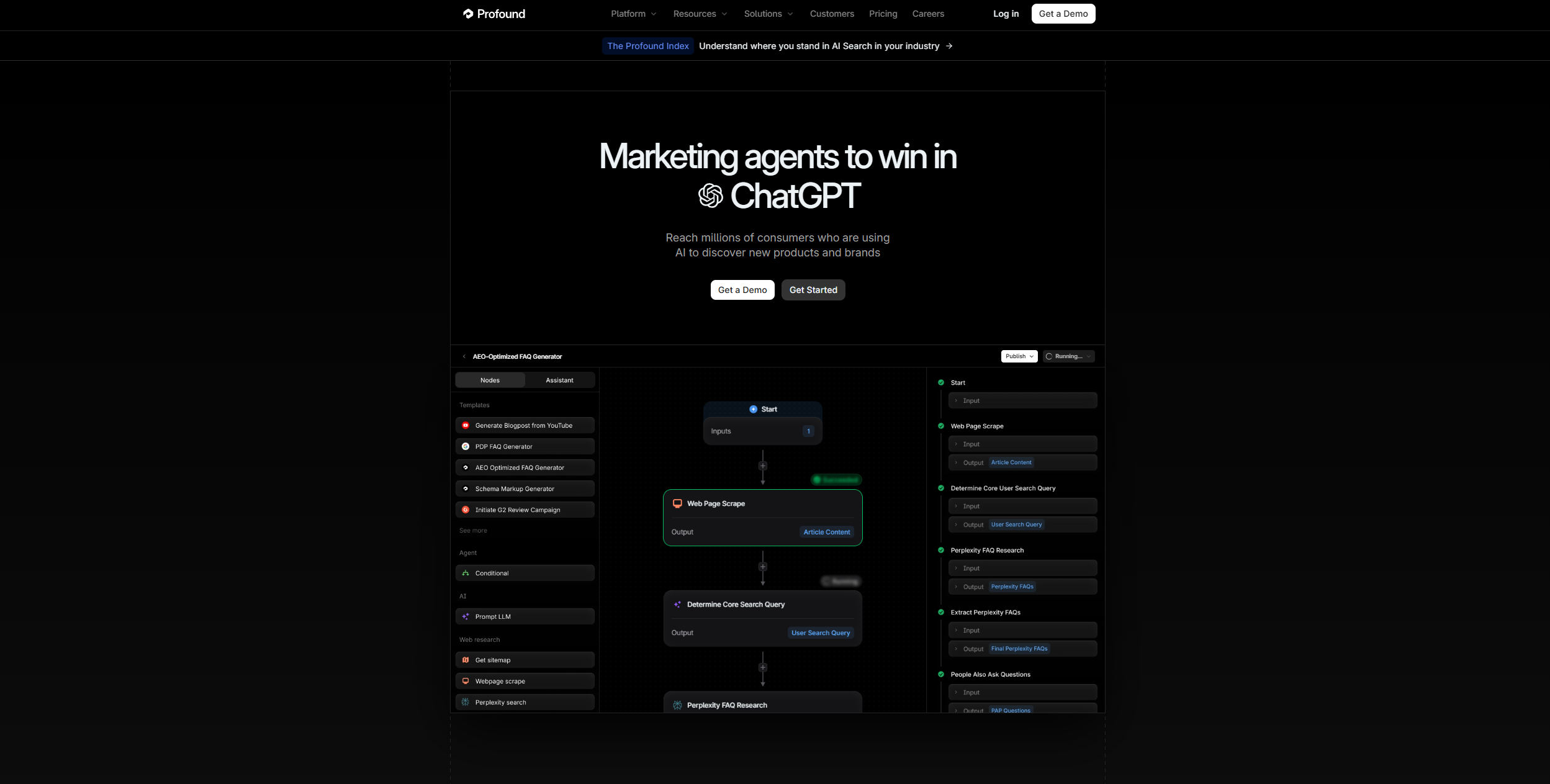
One of the most well-funded in this area is Profound, which raised a $96 million round in early 2026. It is designed for more mature marketing teams with a need for more granular information.
- Key features: A visibility dashboard covering citation patterns and sentiment; a “Conversation Explorer” for browsing real AI conversations that mention your brand; and tracking for which AI crawlers visit your site.
- Pricing: Paid only. Starts around $99/month for a single platform; most teams land closer to $400–$500/month, with custom enterprise pricing above that.
3. Otterly.AI
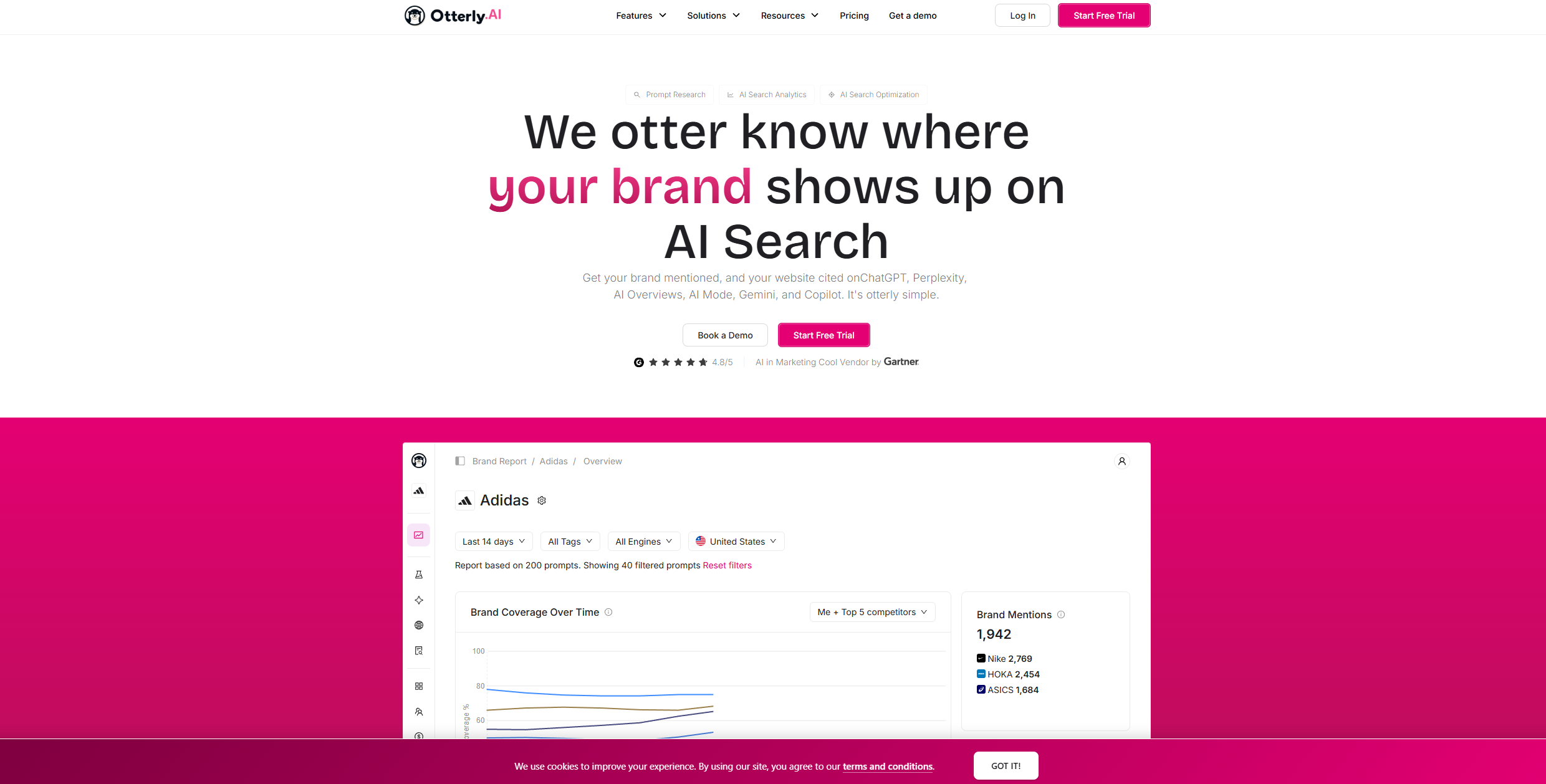
Otterly.With low entry cost and an easy-to-use dashboard, AI is a first resort for smaller teams.
- Key features: Daily tracking across ChatGPT, Perplexity, and Google AI Overviews (Gemini and AI Mode are add-ons); a proprietary “Brand Visibility Index” score; and content audits that flag issues hurting your AI visibility.
- Pricing: Free trial, then plans starting at $29/month.
4. Semrush AI Toolkit
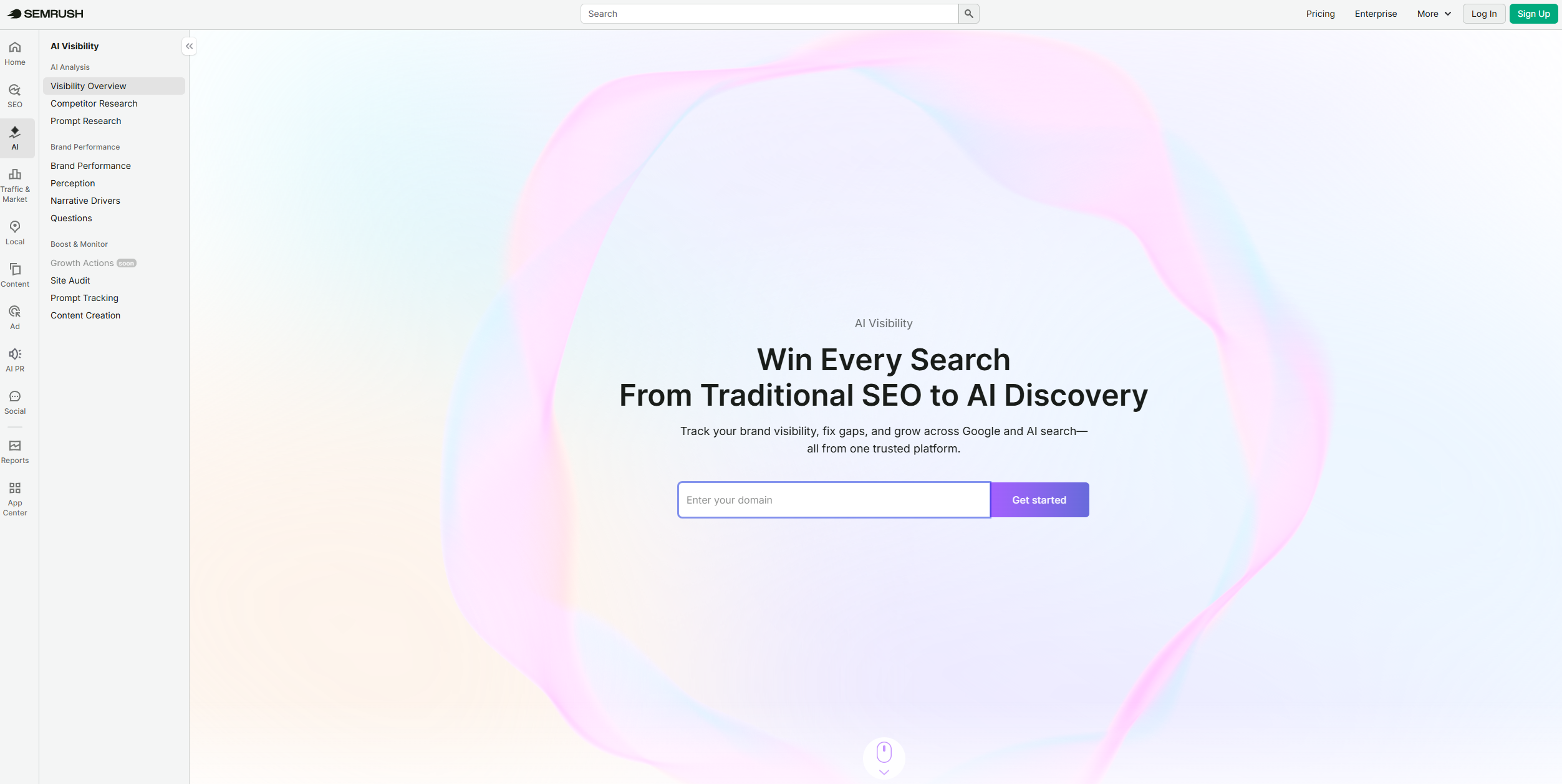
The AI Visibility Toolkit integrates mention tracking into the same dashboard as keyword and competitor data, making it easy to handle for anyone already using Semrush for SEO.
- Key features: Tracks brand mentions and share of voice across ChatGPT, Gemini, Perplexity, and Google’s AI surfaces; sentiment analysis; side-by-side competitor comparisons.
- Pricing: Free trial available; AI tracking starts around $99/month as an add-on, or bundled into Semrush One plans from $199/month.
5. Ahrefs Brand Radar
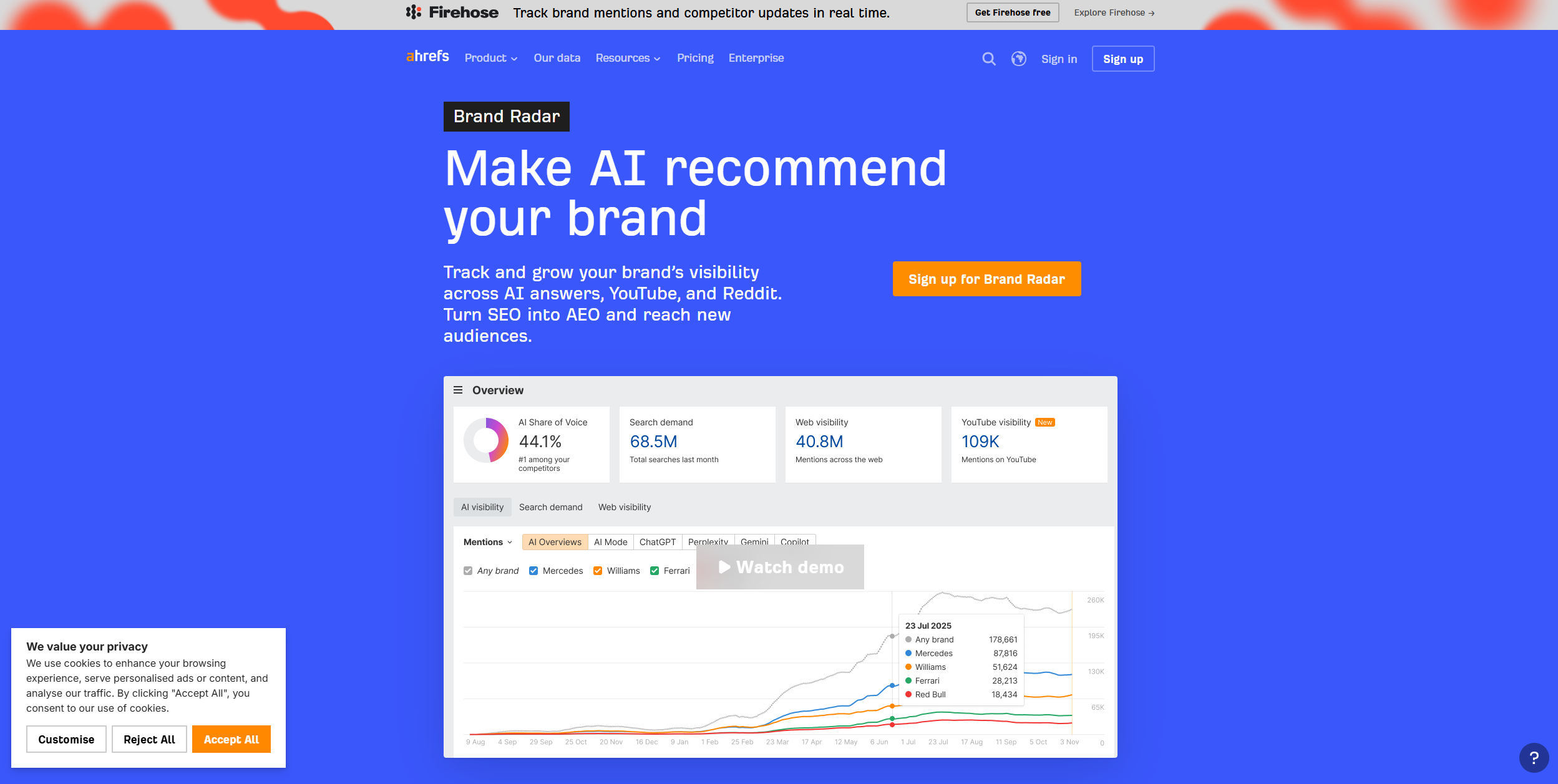
Ahrefs, long known for rank tracking and backlink data, built Brand Radar on a database of more than 200 million monthly AI prompts.
- Key features: Tracks mentions and citations across ChatGPT, Perplexity, Gemini, Google AI Overviews, Google AI Mode, and Copilot, plus newer coverage of YouTube, TikTok, and Reddit.
- Pricing: A free one-time checker is available with no signup. Full access starts at $199/month as an add-on.
How Brand Mentions in AI Actually Work
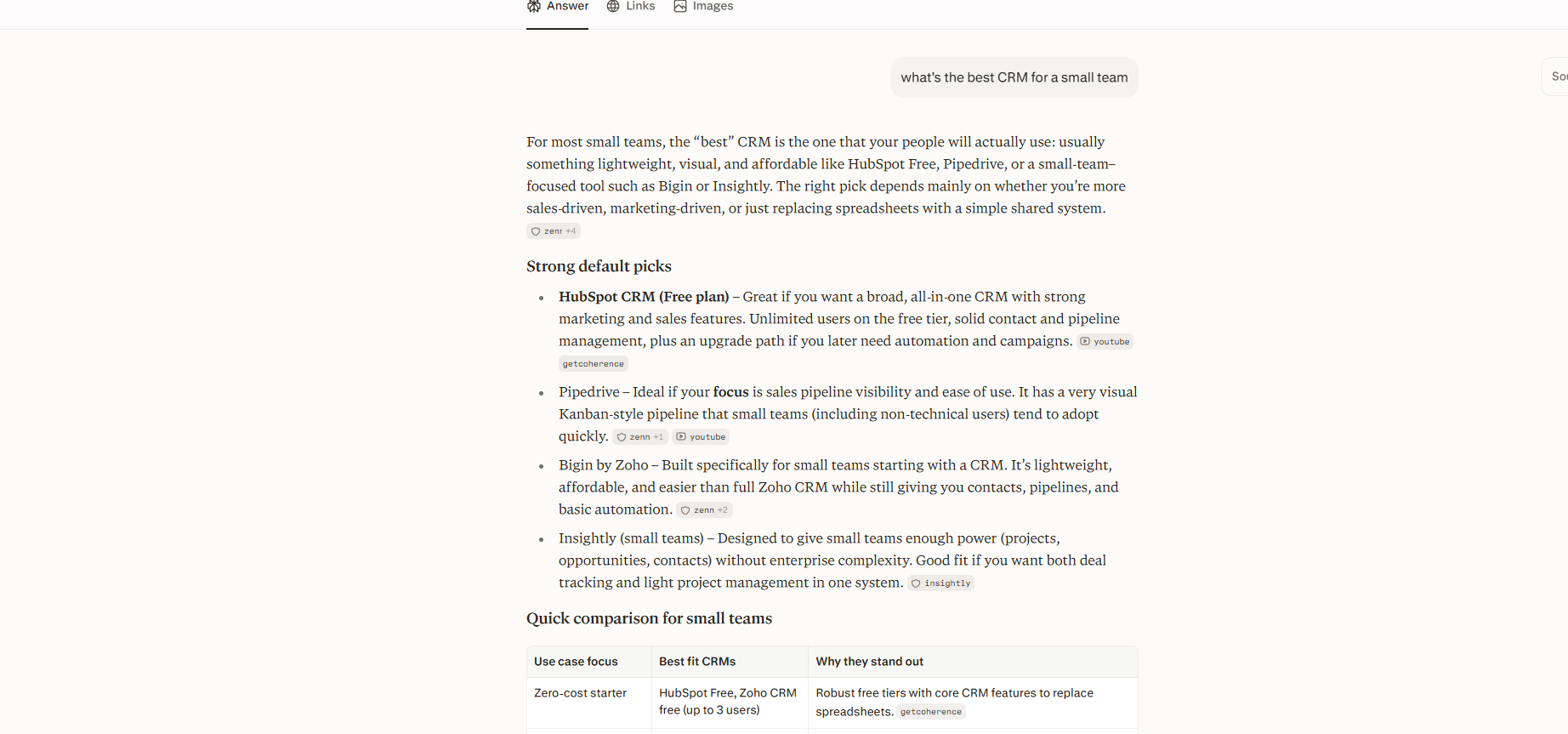
Here’s the part most people get wrong: AI tools don’t “rank” brands the way Google ranks pages. There’s no single results page, and no #1 spot to fight over.
When you ask ChatGPT or Perplexity questions such as “what’s the best CRM for a small team?” the AI uses its training data to create a concise and confident response, along with real-time search data from the web if it’s searching while you’re typing. It’s not the librarian giving you a list, but rather your well-read friend asking for your opinion.
This involves how often and how sure a brand is to appear next to a topic on various types of sources.
A few things carry real weight:
“Best of” lists and expert roundups are influential — one study from 2026 revealed that this was the most important factor for brands to be mentioned in ChatGPT recommendations. Real reviews, such as those from G2, Capterra, or Trustpilot, are also important, as are real posts in appropriate Reddit communities (AI tools are known to steal from threads that pop up regularly).
A real-world example of the type of information they’ve compiled and analyzed: Semrush’s own research showed that its AI visibility score was 100% higher than the visibility scores of other online eyewear companies like Zenni Optical and LensCrafters. If you were to look at the AI Visibility score for Warby Parker, it would be 75, with 6,000+ pages cited and more than 10,000 AI mentions, not all from a single trick.
The lesson to be learned: Don’t fret about playing the algorithm. It’s about you being truly and continuously ‘seen’ where AI tools already see you.
Tips for Small Businesses That Want to Get Mentioned in AI
You don’t need an enterprise budget to start showing up in AI answers. Focus here first:
- Get genuine reviews. Ask happy customers to leave reviews on sites relevant to your industry — G2 or Capterra for software, Trustpilot or Yelp for local businesses. AI tools treat review sites as a strong trust signal.
- Claim and clean up your directory listings. Keep your business name, description, and category accurate and consistent everywhere, from your Google Business Profile to industry directories.
- Show up where your customers already talk. Answer questions honestly in relevant Reddit threads or Facebook groups. Be genuinely helpful, not promotional.
- Write content that answers real questions. Use clear headings, short answers, and FAQs — AI tools tend to favor content that’s easy to pull a clean answer from.
- Aim for “best of” lists in your niche. A mention in even a small industry roundup adds up over time.
- Describe yourself the same way everywhere. If you’re “a bakery in Denver” on your site but “a dessert catering company” elsewhere, you’re making it harder for AI to confidently place you.
Conclusion
AI search is not the future; it’s the present, and it’s reshaping the way people search and select brands, which is something a Google-only rank tracker cannot track. The five tools above provide a clear insight into what ChatGPT, Perplexity, Gemini, and Google’s AI Overviews say about you.
But tracking your visibility is only half the job. The other half is earning it, through the same trust signals that have always mattered online: genuine reviews, real coverage, and content people (and AI) can actually trust. That’s exactly the groundwork SirLinksAlot has helped businesses build for years through backlinks and content built to last — on Google, and now in AI answers, too.
If you’re not sure where your brand currently stands with AI, that’s the first thing worth checking.
FAQs
What’s the difference between a rank tracker and an AI brand mention tracker?
A rank tracker displays how many links you have to the top of a regular search results page. Unlike “positions” in answers, an AI brand mention tracker will help you determine if and how your brand is mentioned in AI-generated answers.
Do I need a paid tool to track AI mentions?
Not to start. There are many tools above that can help, such as SirTracksALot, Ahrefs and Otterly, to name a few. AI provides a free trial or a free one-time assessment. If you’ll require continuous, automatic tracking, it’s advisable to opt for a paid plan.
Can small businesses actually get mentioned by AI, or is this just for big brands?
Absolutely! Small businesses can also appear in AI answers, particularly when searching for specific, local, or niche questions. It’s not always the size of the company that counts, it’s the genuine reviews and real presence in your niche.
Which AI platform should I track first?
Begin using ChatGPT and Google AI Overviews, as they have the widest audience. Then add Perplexity, Gemini, or Copilot depending on the customers’ time.
How long does it take to start showing up in AI answers?
There’s a time lag of a few months, but most companies will take a step-by-step progression. It’s similar to SEO in that it is a consistent effort with cumulative benefits rather than a paid ad.