Key Takeaways
- Knowing how to build patient trust online begins with putting your credentials front and center, leveraging robust privacy policies, and sharing unbiased patient reviews to demonstrate genuine credibility.
- Fresh, quality content and expert web design position your healthcare practice as an industry leader.
- Focusing on HIPAA compliance and secure online forms protects patient data, maintaining confidentiality and increasing patient trust in your practice.
- By local keywords and optimizing your Google Business Profile, it’s easier for nearby patients to find your practice when they’re in need of care.
- Compelling, research-backed content — including patient testimonials and interactive health illustrations — resonates with users and educates them about your practice.
- By ensuring that your website is fast and mobile-friendly, with relevant internal links and optimized structured data, you can give yourself an edge in the highly competitive healthcare landscape.
Healthcare SEO involves applying proven search engine optimization strategies to help clinics, hospitals, and healthcare groups get found online by their local community.
Powerful healthcare SEO attracts more patients by securing top rankings for health services in local Google listings. In the competitive U.S. Healthcare market, clinics need their websites to rank #1 so patients can discover them quickly.
Next, watch how the proper actions can impact.
Patient Trust

Patients rank trust highest on their list in selecting a provider. That trust is established or torn down by what they encounter online. You look more reliable if your practice comes up first in a search. If your website lists out-of-date phone numbers or incorrect office hours, trust falls rapidly.
People want to find genuine qualifications, current physician profiles, and authentic ratings. Almost half of Americans are concerned about bogus health info, so transparent, truthful content is more important than ever. Building digital trust, prioritizing privacy, and hearing the community are essential moves for healthcare SEO in Austin and everywhere.
Digital Credibility
A health site must demonstrate it’s operated by experts. It begins with providing accurate and useful medical content. Patients look for doctor names, they look for specialties and credentials and when something doesn’t match up with what they’ve heard.
So a good site maintains this data fresh and accurate. Clean layout and user-friendly design assist. If your site is difficult to use, people won’t stick around. Sharing patient trust and stories humanizes your practice.
She helps people to achieve visible results and gain confidence. Badges or logos from medical boards or associations add to your legitimacy.
Ways to showcase certifications and affiliations on your website:
- Include a ‘Certifications’ section on your home or about page.
- Use official logos from medical boards or associations.
- Link to credential verification pages.
- Display awards and recognitions.
- Share stories about ongoing training or education.
|
Tool |
Features |
Price Range |
Pros |
Cons |
|---|---|---|---|---|
|
Trustpilot |
Review collection, widgets |
$0–$250/month |
Builds trust, easy setup |
Can show negative feedback |
|
Healthgrades |
Profile management, reviews |
$0–$150/month |
Well-known, healthcare focus |
Limited design control |
|
BBB Accreditation |
Accreditation badge, listing |
$500+/year |
High authority, US-focused |
Costly for small practices |
|
Google Reviews |
Free, integrated with maps |
Free |
Broad reach, easy for users |
Hard to manage the negative |
Foundational Strategy
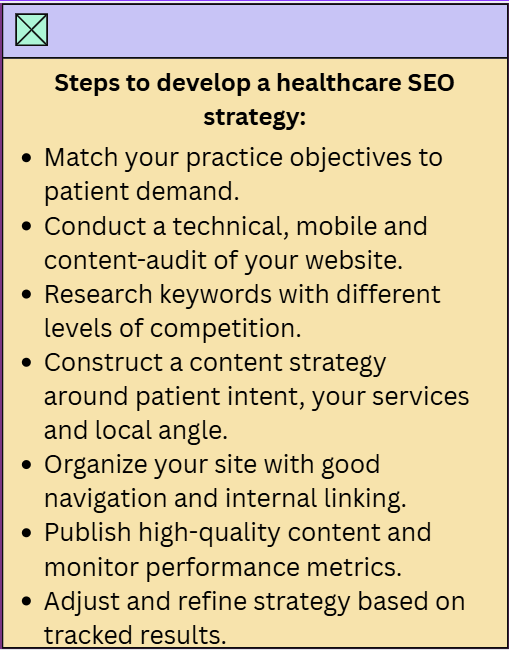
A foundational healthcare SEO strategy begins with clear goals, an obsessive focus on patient needs, and a healthy plan for site structure and content. SEO is powerful because it earns patients’ trust as it supports the expansion of your practice. In Texas, patients anticipate quick, convenient information at their fingertips—so mobile-first is mandatory.
Robust technical health—think clean internal links and a defined blog or news section—ensures that both users and search engines discover the right information quickly. Quarterly audits provide an opportunity to identify what’s absent and where to expand. Monitoring metrics such as core web vitals, keyword rankings, and organic traffic is essential to see if the strategy is effective.
Most practices start to experience actual impact within three months, but adaptation and iteration are simply par for the course.
1. Patient Intent
Step one is knowing what patients are searching for. Tools like SEMrush or Google Keyword Planner show real phrases, like “urgent care Austin” or “how to treat allergies in Texas heat.”
If searches spike for “flu symptoms in Austin,” write a blog or FAQ around it. Use analytics to track what’s working and update content as needs change. Over time, matching content to patient intent builds trust and visibility.
2. Localized Keywords
Local keywords connect you with nearby patients. Examples include “Austin pediatrician” or “family doctor Round Rock.”
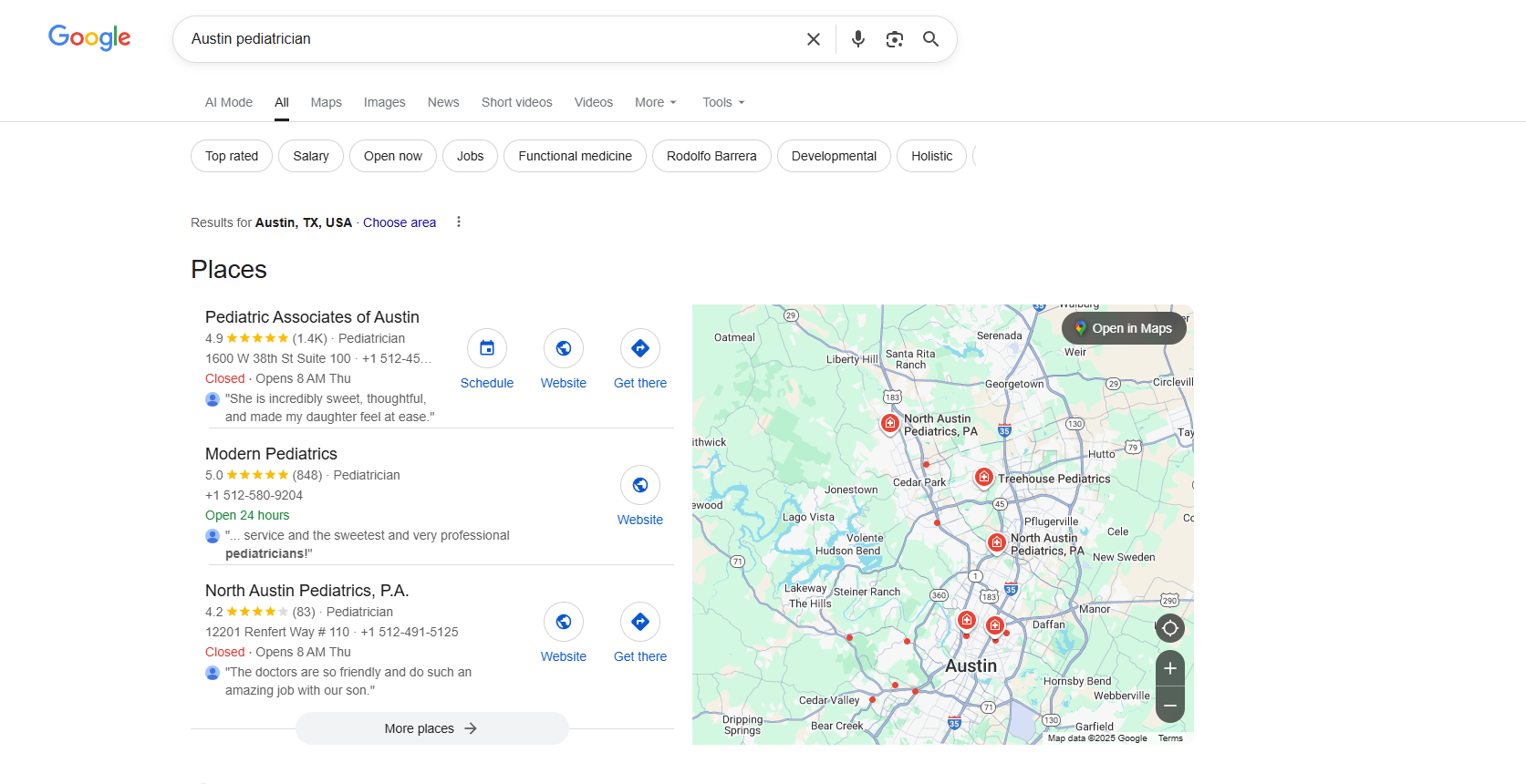
Use these on service pages, blogs, and your Google Business Profile. Seasonal posts, like allergy tips for Central Texas, help you stay relevant. Review your keyword list every few months to keep it fresh.
3. Service-Specific Terms
Highlight your specialties with focused terms such as “sports physicals,” “telehealth appointments,” or “diabetes management.”
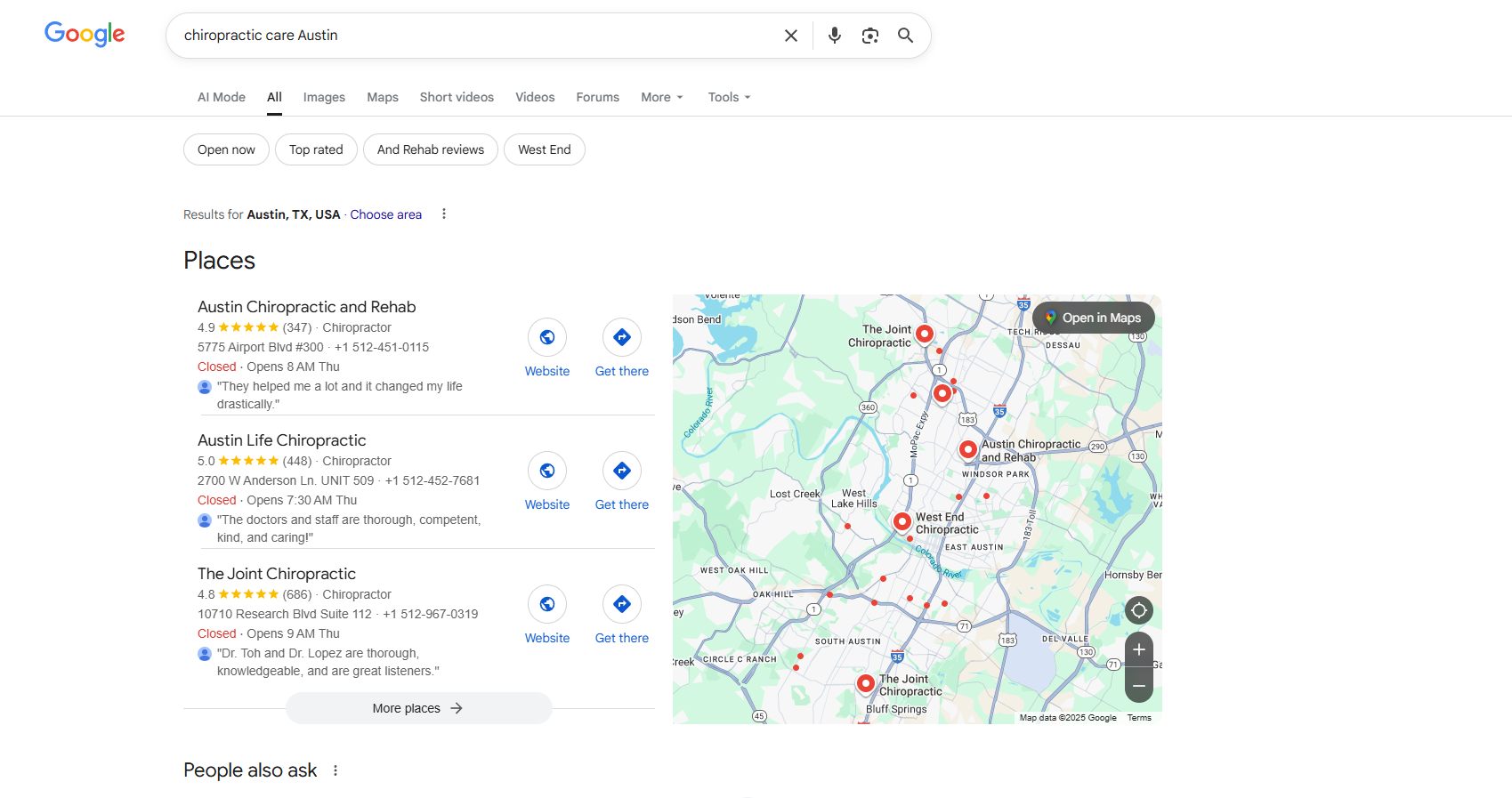
Create a page for each service and answer common patient questions. Track rankings — if a term like “chiropractic care Austin” isn’t performing, refine headers and keywords.
4. Symptom Checkers
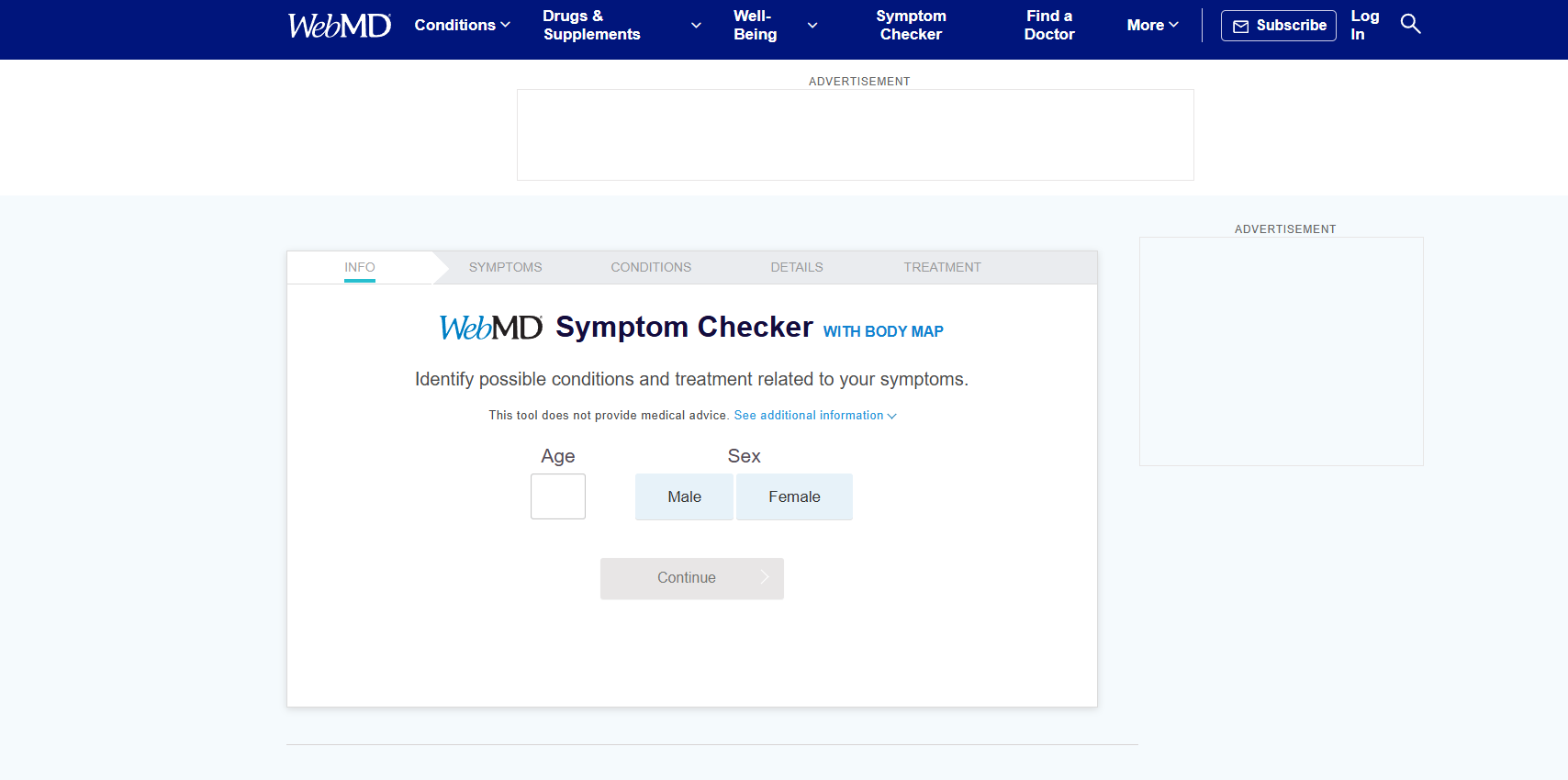
A simple, reliable symptom checker sets your site apart. Make sure it’s accurate, easy to use, and regularly updated.
Promote it through social media and newsletters. It adds real value and drives traffic while positioning your practice as a trusted resource.
5. Competitor Gaps
Look at competitor sites and note what’s missing — maybe they skip certain conditions or lack detailed service pages. Fill those gaps with original, useful content.
Stay agile. If competitors launch something new, decide whether to match it or improve on it. In Texas’s crowded healthcare market, staying ahead means always looking for new ways to serve patients.
Content That Heals
Healthcare SEO content doesn’t have to just rank; it can also enhance healthcare search engine optimization by building trust, providing true value, and addressing patient needs with clarity. The finest content forges authentic connections with readers while adhering to rigorous criteria of truthfulness and readability.
- Work with medical reviewers to boost credibility.
- Tell real patient stories to connect.
- Use visuals to help folks understand medical info.
- Update content often for new research.
- Cite trustworthy sources.
- Train the team in evidence-based methods.
Evidence-Based
Good healthcare content starts with trusted research. Pull information from respected sources like Mayo Clinic, CDC, or Texas Health Systems. Fact-check everything and review your articles at least twice a year to keep them current.
Train your writers and editors regularly so they know how to spot credible research and avoid fluff. Always reference your sources so readers feel confident in the information.
Medical Review
Every post should pass through a medical reviewer before it goes live. Licensed doctors or nurses can catch mistakes others might miss.
Highlight their credentials, like: “Reviewed by Dr. Jane Smith, MD, Austin General Hospital.” This builds trust and shows you put patient safety first.
Revisit published posts every few months to make sure advice is still accurate and up to date.
Patient Stories
Real patient stories bring your practice to life. Share mini interviews or notes from people of different ages, cultures, and backgrounds.
Focus on the journey, not just the result — whether it’s a Texas mom overcoming chronic pain or a student in Austin finding mental health support.
Encourage patients to share feedback. Even a simple request at the end of their visit can lead to powerful stories that build deeper connections.
Visual Health
Visuals make complex health info easier to digest. Use:
- Charts and diagrams for clarity
- Short videos with care instructions
- Crisp, high-quality graphics
Compress images so they load quickly, especially on mobile devices. Add alt text and captions to make visuals accessible to everyone.
Local Visibility
Most patients start their search online — and nearly 9 out of 10 book with the providers they see at the top. For clinics in Austin, ranking high isn’t just about clicks; it’s about building trust in your community.
Strong local SEO means:
- Claiming your Google Business Profile (GBP)
- Keeping info consistent across directories
- Encouraging patient reviews
- Staying visible in the community
It’s not just about being found. It’s about being found as a trustworthy choice when health matters most.
HIPAA Compliance
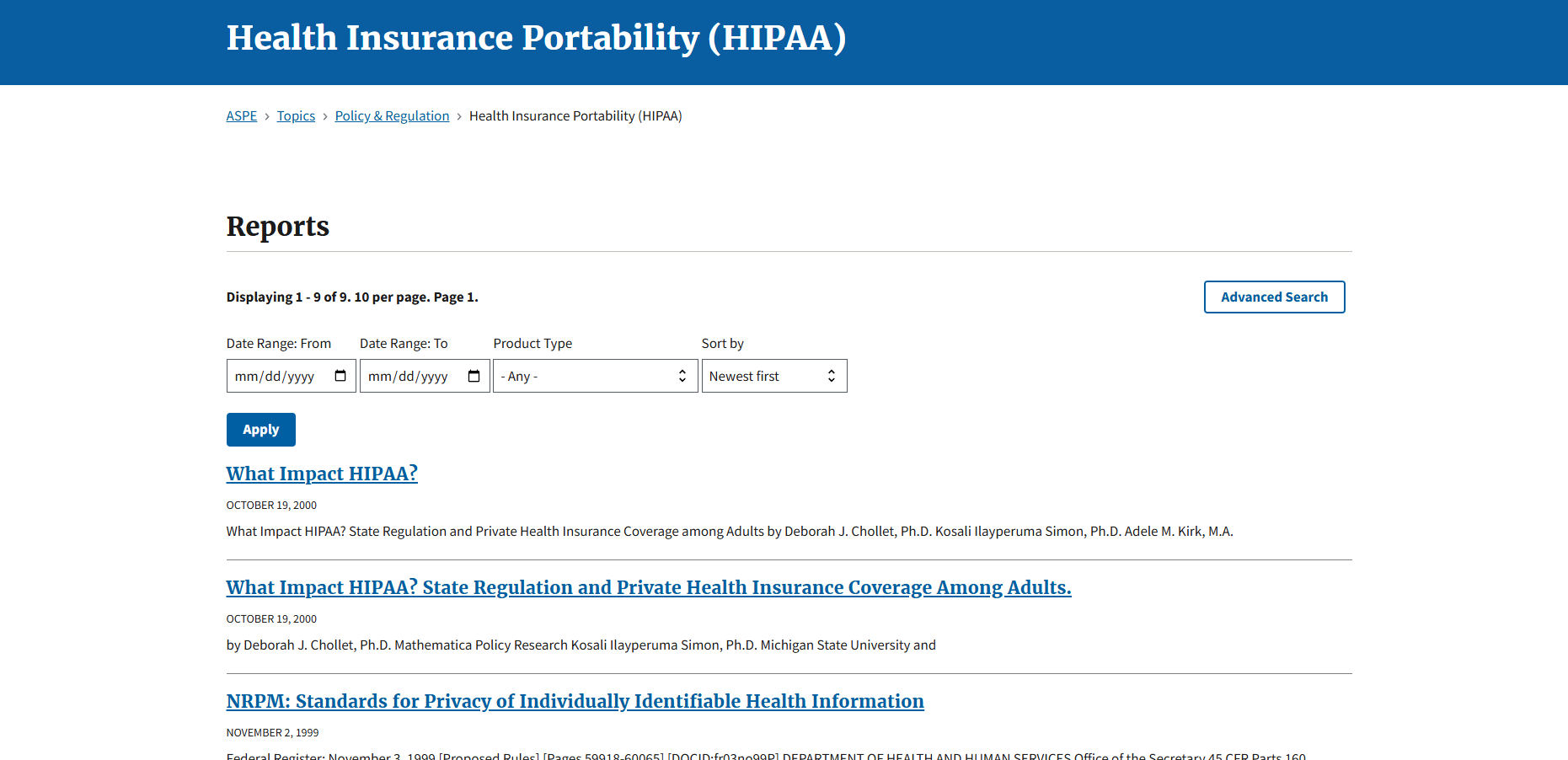
So, HIPAA compliance is a no-brainer for any healthcare provider or marketer working with patient data. In Austin and the US, healthcare SEO means adhering to rigorous standards to protect PHI online. HIPAA means more than just a secure website—it’s about ensuring every touchpoint, from online forms to third-party tools, prioritizes patient privacy.
Non-compliance with HIPAA can lead to penalties of as much as $20 million or 4% of turnover, so all steps count.
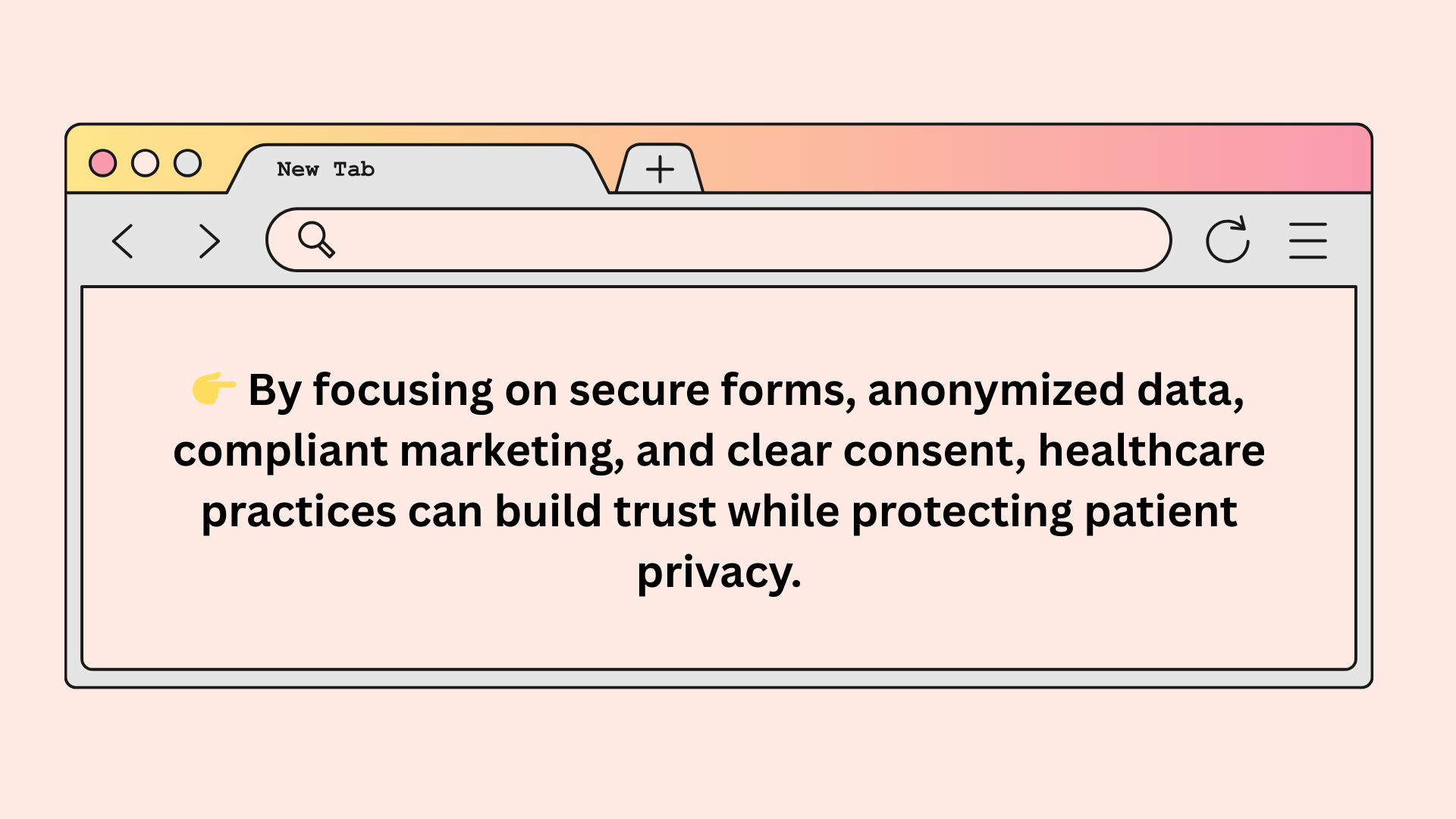
|
Strategy |
Benefit |
|---|---|
|
Regular staff training |
Reduces risk of breaches, builds a culture of compliance |
|
Anonymized data usage |
Protects identity, enables safe marketing and research |
|
Clear patient consent |
Builds trust, ensures legal use of patient information |
|
Secure forms |
Prevents data leaks, reassures patients about privacy |
|
HIPAA-ready third-party |
Maintains compliance, avoids penalties for vendor mistakes |
Secure Forms
Every online form that collects patient info — from contact requests to payments — must be encrypted. Patients also expect to see a clear privacy policy, even if it’s just a simple link in your footer.
Forms aren’t “set it and forget it.” Test and update them regularly. And always provide alternatives, like phone calls or in-person drop-offs, for patients who prefer not to submit forms online.
Anonymized Data
Anonymized data lets you track trends without risking patient privacy. For example, an Austin clinic can see which treatments are most in demand — without storing names or contact info.
Make sure all marketing data is scrubbed of identifiers. Train your staff so they understand why anonymization matters and how to apply it. A quick quarterly review helps you stay HIPAA- and GDPR-compliant.
Compliant Marketing
Healthcare marketing must always follow HIPAA rules. If you want to share a patient’s story, get written consent first. Never assume.
Check campaigns regularly to ensure compliance. Even a quick monthly review keeps your team aligned and avoids costly mistakes.
Patient Consent
Consent isn’t just paperwork — it’s clarity. Use plain language so patients know exactly what they’re agreeing to, whether it’s for newsletters or testimonials.
Update your forms often as laws and best practices change. Provide patients with resources, like an FAQ page or handouts, so they understand their rights.
Technical Health

Your website’s technical health is the backbone of healthcare SEO. It covers speed, security, and mobile usability. With 80% of adults in the U.S. searching for health info online, even small issues—like broken links or a slow site—can cost you trust and patients.
Site Speed
Great content won’t matter if your site is slow. Patients leave if a page takes more than a few seconds to load.
Quick fixes:
- Compress large images and files
- Combine CSS and JavaScript to cut down requests
- Enable caching so return visitors don’t reload everything
- Test speed with tools like Google PageSpeed Insights or GTmetrix
Aim for a load time under 3 seconds. Faster pages = more trust.
Mobile Experience
Most patients are searching on phones, so your site must be mobile-first.
- Use responsive design that adapts to any device
- Keep navigation simple with thumb-friendly buttons
- Avoid pinching or zooming by making text and images fit naturally
- Test regularly on iPhones, Androids, and tablets to catch problems early
A smooth mobile experience makes it easier for patients to book with confidence.
Schema Markup
Schema markup is like adding road signs for Google. It tells search engines about your services, doctors, reviews, and locations.
Benefits:
- Rich snippets in search results
- Better visibility for treatments or offices
- Potential for knowledge panels
Always validate your schema and update it as Google’s rules evolve to stay competitive.
Internal Linking
Internal links guide patients (and Google) to the right information.
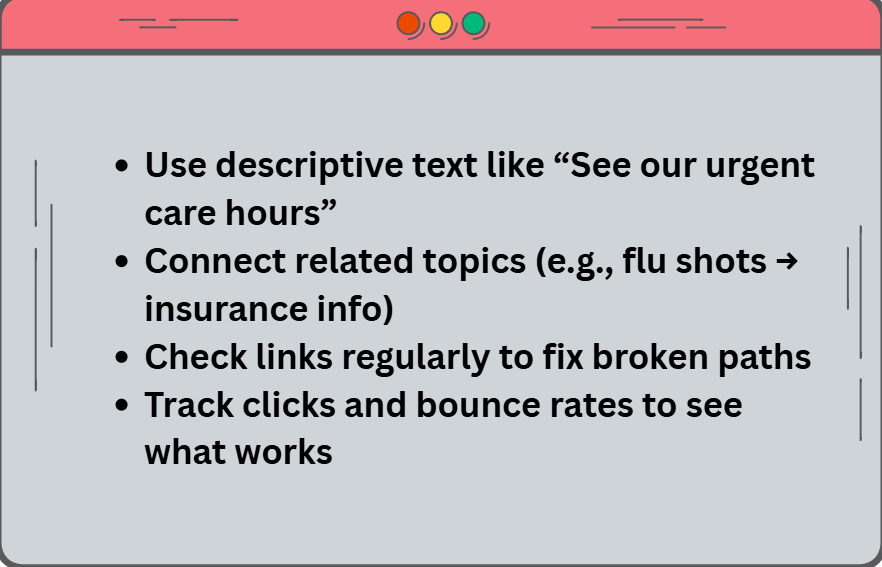
Strong linking keeps users engaged and boosts your site’s authority.
Conclusion
Strong clinic SEO doesn’t just boost rankings — it builds trust, connects you with the community, and gets more patients through the door. When your site is fast, accurate, and easy to use, patients find answers quickly and feel confident choosing your practice.
Simple fixes like clear text, quick load times, and smart local backlinks can make a massive difference. Staying HIPAA-compliant ensures your clinic is both safe and credible. Local touches — like sharing patient stories or spotlighting a doctor giving flu shots at Zilker Park — show you’re part of the community, not just another listing online.
At the end of the day, great SEO is about matching real people with real care. If you’re ready to expand your clinic’s reach and become the go-to choice in Austin, SirLinksALot can help you stand out, stay compliant, and win local trust. Let’s talk about making your clinic the #1 pick in town.
Frequently Asked Questions
What is healthcare SEO?
Healthcare SEO services enhance your healthcare practice’s visibility on popular search engines like Google, utilizing effective SEO strategies such as keyword research and content optimization to attract prospective patients searching for medical services.
Why is patient trust important in healthcare SEO?
Establishing patient trust on the web compels them to visit your healthcare practice. Trust arises from accurate content, positive reviews, and a solid SEO strategy, which Google prioritizes for higher search engine rankings.
How does local SEO help healthcare providers?
Local SEO strategies enable your healthcare practice to appear in searches like ‘doctor near me’ in Austin, TX, driving traffic and helping you connect with prospective patients seeking healthcare services in the area.
What is HIPAA compliance in healthcare SEO?
HIPAA compliance is crucial for healthcare organizations, as it means protecting patient privacy on your healthcare website. Employ safe forms, don’t display patient information, and ensure all plugins and tools are HIPAA-compliant to enhance user satisfaction.
What are the technical SEO elements for healthcare websites?
Technical SEO, including mobile-friendliness and rapid site speed, is crucial for healthcare companies as it helps improve search engine rankings and enhances the overall patient experience.
Why does content matter for healthcare SEO?
Good content marketing addresses patient questions, provides health tips, and showcases your expertise. Effective healthcare search engine optimization prioritizes useful, unique content with higher search rankings, bringing more prospective patients.
How do reviews affect healthcare SEO?
Good reviews increase your credibility and demonstrate to Google that your healthcare practice is trusted. Motivate patients to post genuine reviews on Google and local directories to boost your search engine rankings.