The SEO industry is huge, and the only thing is that you get to see and come across different opinions about the most effective ways to approach site optimization. Yes, it sure can seem overwhelming to know what works best. But like spoiling the end credit scene to your favorite Marvel movie, well, here there’s no surprising character in the end, as there’s no special strategy to get you on top.
But when we talk about different approaches to make your website seem better in terms of search engine optimization, then we can’t miss out on the SEO practices of black hat and white hat SEO. If you’re confused between the two, then there’s one more to the list: the grey hat SEO. Grey hat SEO territory exists in the ambiguity between black and white hat techniques, often involving practices like buying links that can blur the lines depending on context and intent. And in this article, let’s look at the difference and what you need to know about each SEO hat.
What Are SEO Hats?

When I talk about SEO hats, I’m really looking at three main ways people boost website rankings: white hat, black hat, and grey hat. The terms originated from ancient hacker language. As you probably know, white hats are the good guys, black hats are the ones who make risky shortcuts, and grey hats are in between.
Understanding the distinction is important. Each one directly impacts how search engines perceive your site, as well as whether or not your traffic is in it for the long run.
White Hat SEO
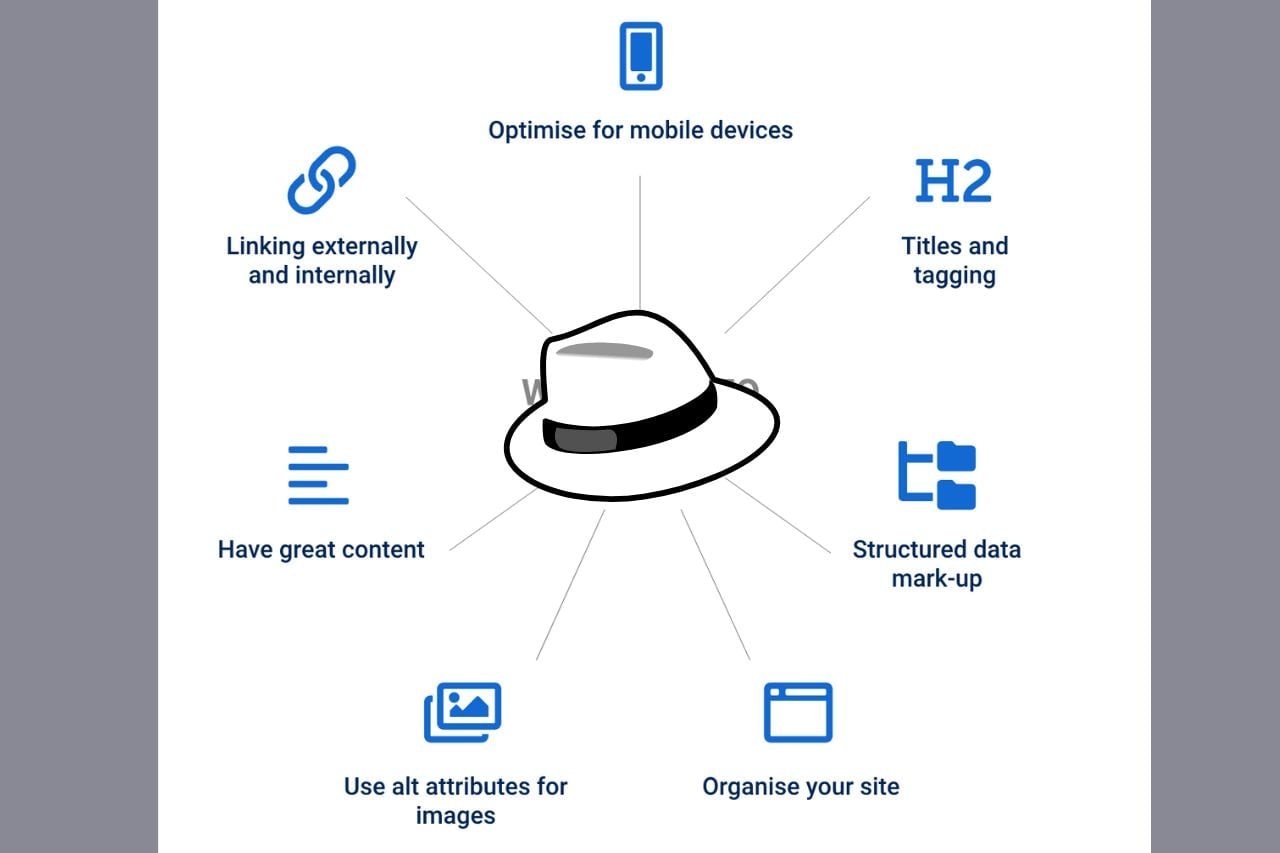
White hat SEO is simply the practice of building the right way. You need to comply with search engine guidelines, prioritize high-quality content, and ensure that your website genuinely serves users. The other area I spend a good amount of time on is keyword research, emphasizing the importance of utilizing target keywords effectively.
You need to create backlinks ethically, and make your website user-friendly! Developing useful guides, sharing your community’s stories, these are the types of content that resonate with audiences and help you earn genuine trust.
White hat SEO aims to create a positive user experience by adhering to ethical practices.
It includes a variety of factors of web vitals, including, but not limited to
- site speed optimization
- mobile-friendliness
- intuitive navigation
White hat requires a bit more patience, but the payoff is consistent traffic and a strong brand. I’ve witnessed how websites climb SERPs through genuine outreach and content collab, but it costs a lot of money and your energy to reach a safe place.
Black Hat SEO
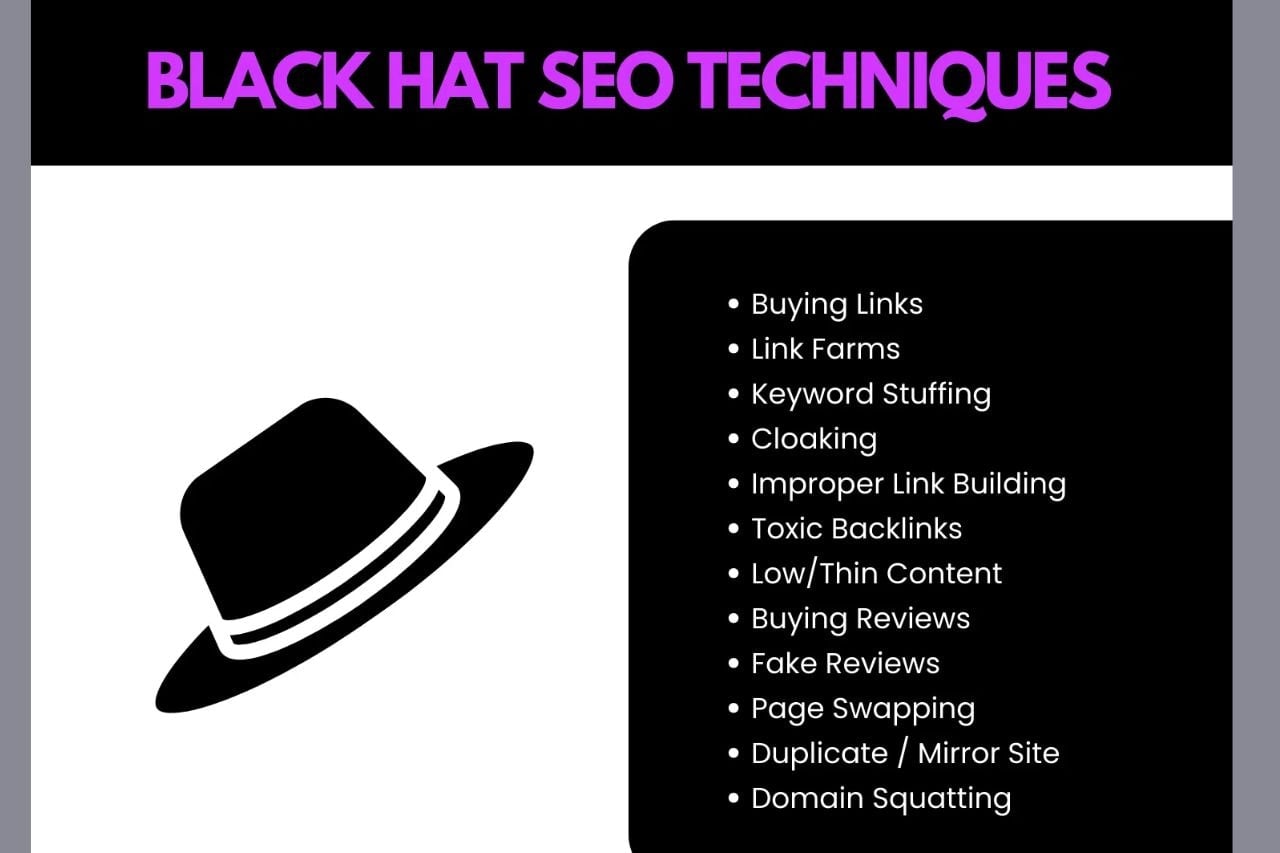
Black hat SEO is the fast lane, though definitely not the rewarding kind. So I don’t want to see people use link farms, hidden text, or spammy comments to fool search engines. The payoff is instant and substantial, but the risk is enormous. Cloaking, for example, involves showing different content to users and search engine spiders, which is highly unethical.
Google and other search engines are constantly changing their algorithms, looking for these loopholes. Some of the most notable Google search algorithm updates have been:
- Florida, which penalized keyword stuffing
- Panda, which penalized content farms
- Penguin, which penalized certain linking practices
Examples of black hat techniques include keyword stuffing and link schemes, which can lead to significant penalties if discovered.
When discovered, the sites involved may be de-indexed or severely penalized in search rankings. Although it’s volatile, you should not get scared by the term Black Hat, as it is somehow used by websites to get improved SERPs, but beware of potential penalties, like it can temporarily lower your page rank, loss of organic traffic, and loss of page one positions.
What is Grey Hat SEO?
Grey hat, as you might have guessed, is in the middle. Here, you have to know that Search engines do not disapprove grey hat but it’s not the right way to move forward with your SEO strategies.
Grey hat requires a thorough education on what is considered a risk and what is not. Whenever I employ these tactics, I stay up-to-date on rule changes and rely heavily on experience to not step over boundaries. Here, tactics like aggressive link acquisition strategies or duplicating content across different domains fall. It’s not risky, but you should not overdo it. These tactics exist in a moral grey area and do not directly aim at manipulating search engines.
These tactics can lead to a site experiencing rapid, positive growth in many cases, but only when implemented correctly. Grey hat techniques, while not overtly violating rules, can lead to negative consequences if search engine algorithms change, making them a risky choice for long-term optimization strategies.
Black Hat Vs White Hat SEO
When I view SEO, I view two distinct roads: the white road and the black road, but which one will you go? I’d rather go in between, and find the grey road. White hat SEO means providing genuine value. I create beautiful, useful content to serve the searchers’ needs, and I employ white hat techniques to earn higher rankings.
On the other hand, black hat SEO breaks the rules. It’s quick, but dangerous. Each has a role in the history of digital marketing, but their results were as opposite as one could imagine. Let’s work through where these paths diverge and what each one entails for the SEO professional dead-set on making their mark. Following Google’s guidelines is crucial for long-term success, as it ensures ethical practices and sustainable rankings.
The most effective SEO strategies focus on enhancing user experience, aligning with Google’s goal of delivering the best results for users.
1. Their Core Guiding Rules
White hat SEO is based in good, ethical practices. My passion lies in creating impactful content that genuinely assists users rather than merely aiming for high rankings. That starts with writing for humans and not search engines.
I employ white hat methods to earn backlinks, such as guest blog posts or product reviews from reputable sites. Black hat SEO, on the other hand, is all about exploiting loopholes, tactics like cloaking or keyword stuffing. These cheap tricks can take you a long way, but they always come home to roost. SEO professionals play a crucial role in making strategic choices between these ethical and unethical practices.
Following the rules put in place by search engines ensures that their growth is consistent and secure. Adhering to Google’s guidelines is essential for ethical SEO practices, which focus on improving user experience and achieving sustainable results.
2. Common Tactics Used
| Approach | Tactics Used | Examples |
|---|---|---|
| White Hat | Content quality, legit backlinks | Blog posts, outreach, reviews |
| Black Hat | Keyword stuffing, cloaking, link schemes | Hidden text, spam links |
| Grey Hat | Slightly risky, not fully black hat | Buying aged domains, link swaps |
White hat SEO is when we focus on building trust, not just links. I get my hands dirty on real blogs and deploy white hat tactics to generate good reviews. White hat SEO involves creating high-quality content and ethical practices that align with Google’s goal of delivering valuable results to users.
Black hat, on the other hand, employs tactics such as comment spam or cloaking redirects. Using unrelated keywords in black hat SEO can lead to penalties from search engines, as it makes content appear unnatural and irrelevant.
3. Search Engine Reactions
Search engines, particularly Google, have gotten extremely clever. Algorithms such as RankBrain identify and penalize these black hat shenanigans. Penalties are severe and can cause a site’s rank to plummet overnight or be completely removed from search results due to violations of the search engine’s algorithms.
When I do everything white hat, I get consistent wins. I help clients achieve higher rankings, develop greater trust, and ensure their long-term survival as algorithms evolve.
Examples of black hat SEO techniques include hidden text, which involves concealing text or links to mislead search engines while ensuring that the information is not visible to users. These methods are intended to manipulate and deceive search engines, enhancing a website’s rankings and organic traffic in an unethical manner.
4. Risk Levels and Payoffs
White Hat SEO is virtually risk-free in terms of search engine penalties. By following the rules, you literally minimize the chance of sudden ranking drops or deindexing.
Black Hat SEO is extremely high-risk. Black hat SEO relies on manipulating Google’s algorithm to artificially enhance site rankings. Penalties can range from significant ranking drops to complete removal from search engine indexes. Recovering from such penalties can be costly and time-consuming, often outweighing any initial short-term gains.
Google’s algorithm updates frequently to enhance user experience and discourage manipulative practices, making black hat SEO tactics even riskier.
5. Common Mistakes to Avoid
When it comes to SEO, there are several common mistakes to avoid. These include:
- Keyword stuffing: trying to overload your web page with keywords to manipulate search engine rankings.
- Duplicate content: By publishing the same content on multiple websites or pages.
- Hidden text: hiding text or links from users to manipulate search engine rankings.
- Duplicate meta tags: using the same meta tags on multiple pages or websites.
6. Cost and Effort Needed
White hat requires a lot of your time and money. Yet the cost is obvious, and the payoff tangible. Adhering to search engines’ terms is crucial for long-term success.
Black hat may appear cost-effective, but in the long run, the cost of cleanup is more expensive. While a quick fix would require less effort initially, the cost of reparative work done later would be greater. Ethical practices are essential for maintaining and improving your search engine ranking. So I’d rather suggest you move forward with practicing and a bit of white hat seo with grey hat.
Black Hat Tactics Uncovered
As you dig deeper into the black hat SEO world, you’ll find a surprising reality. All the rule-bending SEO strategies often get noticed by search engines. Google became hip to these tactics, as they launched algorithmic updates to eliminate black hat tactics. So, you have to stick to following search engine rules. it is crucial to avoid penalties and maintain a sustainable SEO strategy.
The origins of the term “black hat” in SEO can be dated back to classic Western movies. You see, most of the villains in such movies often wore black hats. But, not there are good type of villains and other are bad, so stick to good villains!
Common Black Hat SEO techniques that you should probably avoid:
Keyword Stuffing: You should not overload pages with keywords to manipulate rankings.
Cloaking: Stop showing different content to search engines than to users.
Private Blog Networks (PBNs): Creating or using a network of sites solely for generating backlinks.
Hidden Text and Links: Concealing keywords or links within a page’s code or background.
Automated Content: Mass-producing low-quality or duplicate content to target many keywords.
These tactics may deliver quick results but carry significant risks, including penalties from search engines.
Why These Are Volatile
Black hat wins never stick. Updates can be painful, like penalties, lost rankings, and a cleanup process from hell. Tactics that deceive search engines, such as cloaking and invisible text, may initially drive traffic but ultimately lead to severe penalties.
Certain practices are considered black hat SEO, such as buying links from other websites to manipulate search engine rankings. While this practice is discouraged and can lead to penalties, some brands navigate a grey area by creating partnerships for sponsored content that provides backlinks, blurring the lines between acceptable black hat tactics.
Grey Hat SEO: Play Safe
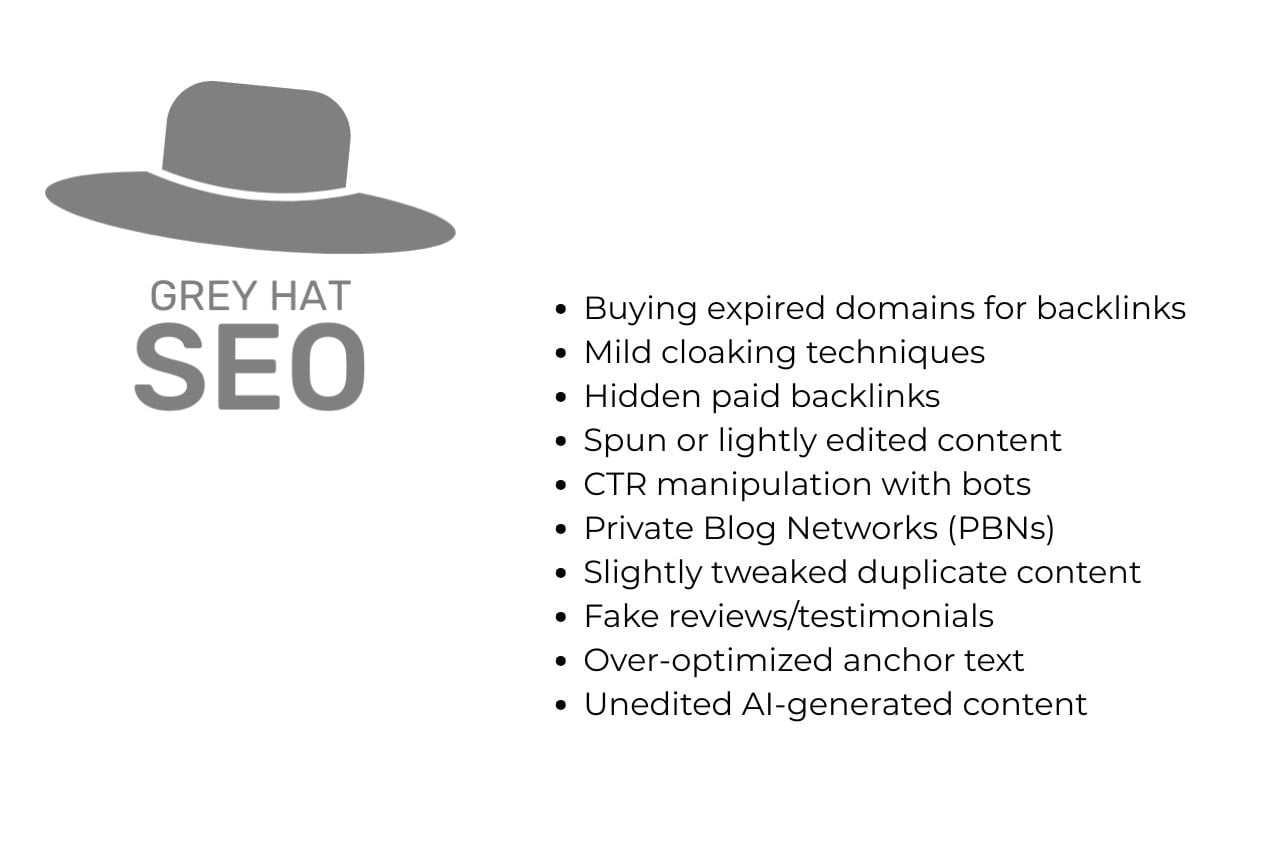
With the proper education, regular monitoring, and a strategic approach, grey hat SEO can be very safe and effective. Here, you have to follow the key rules:
- Monitor Performance: Use tools like Google Search Console to catch unusual ranking drops or traffic changes early.
- Avoid Overuse: Don’t rely solely on grey hat tactics; combine them with white hat SEO tactics to dilute risk.
- Diversify Your SEO: Balance creative, boundary-pushing methods with ethical content creation and genuine outreach.
Grey hat SEO often delivers faster results than pure white hat methods, with less volatility than black hat when managed by knowledgeable practitioners. It’s a practical choice for those who understand the landscape and are prepared to adapt as algorithms evolve.
However, it’s important to be aware of the risks associated with content automation in grey hat SEO. This practice can lead to the creation of bot-generated comments that, while incorporating keywords, ultimately lack coherence and fail to provide value to readers. Search engines can recognize and penalize such tactics, making them a risky choice.
Comparing the Approaches
| Feature | White Hat SEO | Grey Hat SEO (with Education) | Black Hat SEO |
|---|---|---|---|
| Compliance | Strictly follows the rules | Pushes boundaries, not banned | Breaks or bends the rules using black hat strategies |
| Risk Level | Minimal | Low to moderate (if managed) | Volatile |
| Speed of Results | Slow and steady | Moderate to fast | Fast |
| Cost | High (content, outreach, tech) | Moderate | Low upfront |
| Sustainability | Long-term | Medium to long-term | Short-term |
| Reputation Impact | Positive | Neutral to positive | Risky |
| Penalty Risk | Very low | Low (with education) | Medium |
Conclusion
Some people are looking for those quick fixes, while some people are looking for the long game. Smarter SEOs understand the value behind the white hat way and choose it every time. White hat SEO refers to ethical practices that align with search engine guidelines, focusing on quality content and user experience. We call it a black hat, but it just doesn’t stick. I saw brands grow organically and gain trust. In contrast, short-term solutions simply disappear or are punished by Google. Here, genuine
Victories are earned through integrity and intelligence, not deception. Doorway pages, often used in black hat SEO, are deceptive web pages designed to manipulate search engine rankings and can lead to penalties if they do not offer genuine value. Looking to create a long-term asset? Get good links, authentic narratives, and quality site craftsmanship. Let me show you the path, no black magic, no hocus pocus, just honest, hard work. Connect with us today!
FAQs
What is the main difference between black hat and white hat SEO?
Black hat SEO refers to dangerous short-term strategies that violate search engine guidelines. White hat SEO follows best practices and focuses on long-term results. White hat is safer and better for your website’s long-term reputation.
Are black hat SEO methods illegal in Morocco?
So, although black hat SEO by law is not illegal in Morocco, it goes against Google’s guidelines. If so, this can result in your website being severely penalized or even removed from search results altogether.
Can black hat SEO give quick results for Moroccan businesses?
So in this sense, yes black hat SEO can give quick results. These benefits don’t last forever. If you’re breaking the rules, Google will be able to find out fast and impose a penalty on your site.