After working in the SEO field for years, I can safely say there are multiple ways to manipulate your website’s online performance. Whether it’s your reach or your ranking factor, you can manipulate it through the right techniques.
While good content quality and the right backlinks can help your page and website rank higher on the search rankings of Google and other search engines, the higher the CTR, the more traffic you get.
Manipulating CTR isn’t a common practice and might not work for a long time, but it could seriously give you some good results.
In this article, I’ll tell you everything that you need to know about implementing CTR manipulation. From its plus points to problems, and how it’s done, we’ll discuss all.
Key Takeaways
- Click-through rate (CTR) is the percentage of users who click a link after seeing it in search results.
- High CTR indicates relevance and usefulness to search engines, potentially boosting rankings.
- CTR manipulation involves artificially increasing clicks to trick search engines into ranking a page higher.
- Used as a last resort tactic when traditional SEO doesn’t yield results.
- CTR manipulation degrades search result quality by promoting less relevant content.
- CTR manipulation might offer short-term gains but carries long-term risks.
- Sustainable growth comes from valuable content, user trust, and ethical SEO practices.
Introduction to CTR

Click-through rate (CTR) is an essential part of search engine optimization (SEO) in that it captures the percentage of users who will click on a given link or ad after they have viewed it. This information provides insight into how well the content or search listing of a website is grabbing the attention of users.
For instance, if 1,000 individuals view my page on Google and 100 click, that’s a 10% CTR. Pretty simple, huh? But what’s great is that this basic number can tell me a lot about how good my titles and descriptions are.

A high CTR not only directs more traffic to a website but can also have a positive impact on search engine rankings. Search engines such as Google use CTR as one of the signals when deciding how relevant a webpage is to a user’s search term.
If users are clicking a link more, it means that the content is useful, so the likelihood that Google will rank it higher is higher. So even though two pages might be about the same thing, the one that has a stronger CTR can end up farther up on the list.
That’s why I pay attention to CTR when I’m designing my website or online campaigns. It’s not about being noticed—it’s about being clicked. By making slight adjustments, such as my headlines, meta descriptions, or even trying out alternative keywords, I can generate more clicks and be ahead on the search engine results pages.
Understanding CTR Manipulation

CTR manipulation is something that has cropped up increasingly within the world of SEO, and to be honest, it’s a bit of a dodgy game.
CTR manipulation is a technique used by some people to artificially inflate their click-through rates in the hope of enhancing their search engine rankings.
The concept is straightforward: if a search engine notices that more individuals are clicking on a link, it may think that the content is more valuable or relevant and rank it higher. But rather than gaining those clicks organically, some artificially manipulate them to make their content appear more popular than it is.
People tackle it in a few different ways. Some use bots that click on their links in search results automatically. Others rely on micro workers, who essentially are paid a nominal fee to click on a particular website and search for a keyword. I’ve even witnessed people use social media to drive traffic in an attempt to rapidly inflate those figures.
For instance, consider paying groups of users to click your link after a search for “best coffee in town.” It can work temporarily, and your page might move a few spots in Google.
But here’s the thing: this type of tactic qualifies as black hat SEO, and it can blow up in your face. Search engines such as Google are intelligent.
If they detect suspicious activity, such as huge amounts of random country clicks or botnet traffic spikes, they’ll flag it. It could be penalties or having your site delisted entirely from search results. And once that is done, it’s difficult to recover.
So, while it may sound like a quick and easy way to get your website more traffic and ultimately a good name on the SERPs, you have to be very careful about how you are using it.
Why Manipulate CTR?
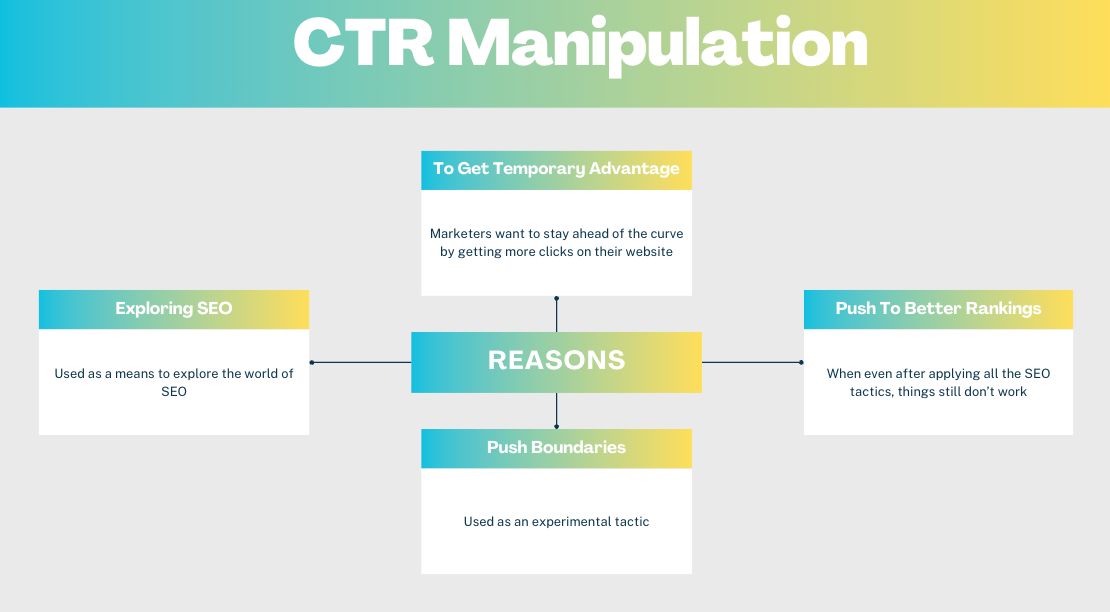
Search rankings are constantly changing, and even tiny adjustments can result in a huge difference in who ends up at the top. That’s why some marketers resort to CTR manipulation—to get a temporary advantage when conventional techniques fail.
Now and then, despite optimizing on-page SEO, speeding the site, and establishing good backlinks, rankings can remain unchanged, usually stalled at page two. In such instances, increasing click-through rates is viewed as a means of pushing a page to the top positions, particularly when all else is optimized.
For others, it’s curiosity and pushing boundaries. Some SEOs manipulate CTR more as an experiment than a tactic, just to try it and see what happens and for how long. It’s not so much about guaranteed results as about investigating the constantly evolving SEO landscape.
Different Ways For CTR Manipulation

I’ve mentioned the two common ways in which you can manipulate CTR. However, there are multiple other ways in which you can do so.
Social Media Shares

Social media is a free and efficient means to increase your click-through rate (CTR). Posting your website or GMB links on the likes of Facebook, Twitter, or YouTube can bring organic traffic—if your followers are attentive and active.
To increase outcomes, post useful GMB content and promote low-cost social ads to them. Traffic from various IPs signals Google with robust behavioral signals, enhancing your exposure. Merging social media with email marketing may also widen your horizon and drive more clicks.
Although social media may not directly affect rankings, they contribute to increased traffic and engagement, both essential in enhancing SEO CTR.
Paid Ads
If what you want is to get traffic quickly, paid advertising such as Google or Microsoft Ads might be more productive than waiting for organic SEO. PPC allows you to target specific people and funnel them straight to your landing pages—but fast, it can cost a lot of money, with most companies spending more than $100,000 per year.
To prevent overspending, it’s wise to collaborate with a digital marketing professional who knows ethical CTR strategies and can optimize your campaigns. Properly managed PPC can double your return, making $2 for each $1 spent.
Social media advertising also generates high traffic—those “Sponsored” listings you notice are a great example. If you have a budget and desire regular traffic, paid advertisements are the way to go. You can even get Google My Business (GMB) views by driving inexpensive traffic through display ads and taking advantage of local targeting features to discover your customers’ origins.
Email Marketing
Email marketing is an easy, efficient means of increasing your CTR. Including blog posts, videos, or GMB links in newsletters generates actual traffic and is an acceptable, safe method of CTR manipulation.
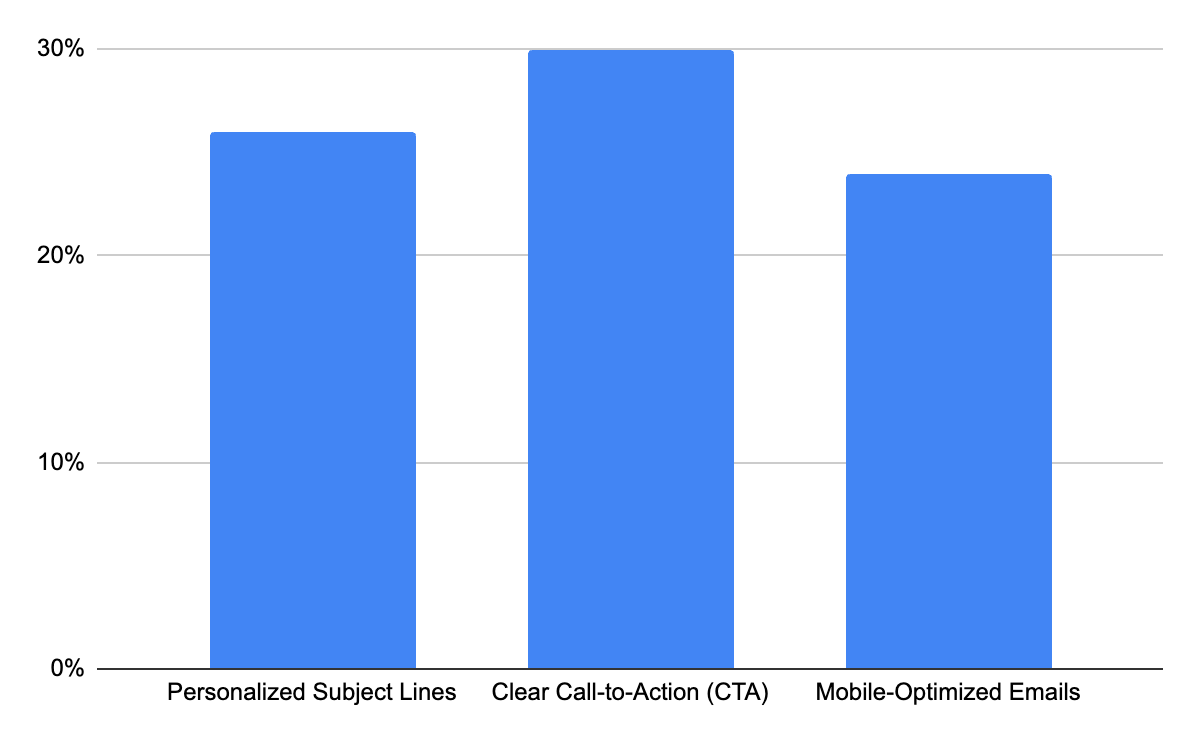
It is particularly effective for getting new or poorly performing pages promoted, and with Bitly or UTM tags, you can monitor results. For GMB, sending blasts of emails that are connected to posts can increase engagement and local rankings.
At a median ROI of $36 per $1 spent, email marketing is a valuable ally—just maintain content relevancy to keep from losing confidence or damaging your SEO.
The Risks of Manipulation
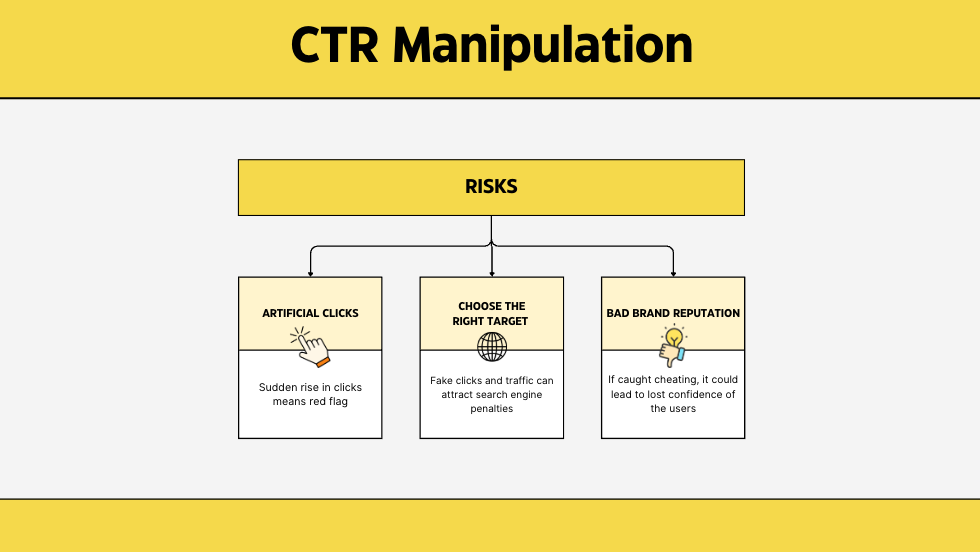
CTR manipulation can look like an easy way to climb the ranks, but it’s fraught with danger as it can violate search engine guidelines. Major search engines, such as Google, prohibit it in strong language, and getting caught means significant penalties, ranging from decreased rankings to being completely removed from the search engine results.
Artificial Clicks
One of the most significant threats is inflating click-through rates using automated bots or software. Such tools tend to produce artificial click patterns, which are likely to be noticed by search engines.
For instance, if suddenly your site attracts hundreds of clicks from random sources with no further interaction, that sends out red flags.
Fake Traffic
There’s the issue of the traffic being fake as well. When there aren’t actual users clicking through, your engagement indicators—such as bounce rate or time on page—are rendered useless. It can be difficult to tell what’s truly succeeding on your website and make disastrous marketing choices as a result.
Picture implementing a campaign relying on fictitious clicks, discovering only later on that actual users just aren’t participating at all.
Bad Brand Reputation
In addition to the technical problems, CTR manipulation can tarnish your brand’s reputation. If users catch on to cheating or arrive on pages that they don’t want, you could lose their confidence, and trust broken is difficult to regain.
In the end, while manipulating CTR might offer a short-term boost, the long-term risks far outweigh the potential benefits.
Can Businesses Grow Without CTR Manipulation? (Ethical SEO Practices)

While CTR manipulation is a great way to get your pages to the top of the SERP ranking list, this can also be done without manipulating CTR and playing it safe. Some ways in which businesses can get better rankings are:
Improving Titles
I’ve noticed that titles can break or make whether or not a person clicks on my content. A clear, simple title informs readers precisely what they can expect—and that’s what generates clicks. I try to avoid overly academic or complex wording unless I’m writing for a more technical audience.
One trick that has worked for me is adding brackets in titles. For instance, when I employed a title such as “How to Boost Local SEO [2025 Playbook]”, I noticed a significant increase in clicks. Research supports this—HubSpot discovered that incorporating brackets can increase CTR by 40%.
I also enjoy using numbers in titles, such as “5 Tools I Use to Rank My Website Better.” Numbered lists tend to grab people’s attention and make content more easily consumable. Research indicates that this type of tactic can enhance CTR by up to 36%.

And whenever I’m not sure which title will do the best, I A/B test a few. Occasionally, a tiny tweak, such as rearranging words or swapping a phrase, can make a huge impact. It’s an excellent way to dial in what actually gets noticed.
Writing Better Meta Descriptions
Meta descriptions are short summaries that help convince people to click your link in search results. I keep mine under 160 characters for desktop and 120 for mobile so they don’t get cut off.
When I write meta descriptions, I’m all about action words and concision. Rather than copy-pasting on-page content, I condense it with a hook—i.e., something like, “Download our free SEO checklist and rank faster today.” I steer clear of keyword stuffing or the same description appearing on several pages. That cheat damages more than it benefits.
What works best for me is specificity, honesty, and the ability to provide a solution. If someone is looking for answers, my meta description must indicate they will find them on my page.
Working On Keyword Cannibalization Problems
Keyword cannibalization happens when multiple pages on your site compete for the same keyword. This can hurt your click-through rates and rankings by splitting traffic between pages that should be focused on one target.
To avoid this, I regularly check my site for overlapping keywords and make sure each page targets a unique keyword or topic. It keeps my SEO cleaner and my content more focused.
Larger sites always need to keep an eye out for this problem because it can cost them a big part of their crawl budget. For smaller sites, it’s less of a concern, but still worth monitoring.
Learn more about how to recover your site from keyword cannibalization in this video!
Using Descriptive URLs
Descriptive URLs are easy, tidy, and inform people precisely what to anticipate on the page. Rather than confusing links cluttered with random numbers and symbols.
Having a uniform and SEO-friendly URL structure on every page also assists search engines in crawling your site correctly. Dirty or disorganized URLs will damage your rankings and visibility.
If that all seems to be a jumble, it’s a good idea to hire a digital marketing team. They will keep you in tip-top shape and current, so you don’t get left behind trying to sort it all out yourself.
Using Social Media And Content Marketing
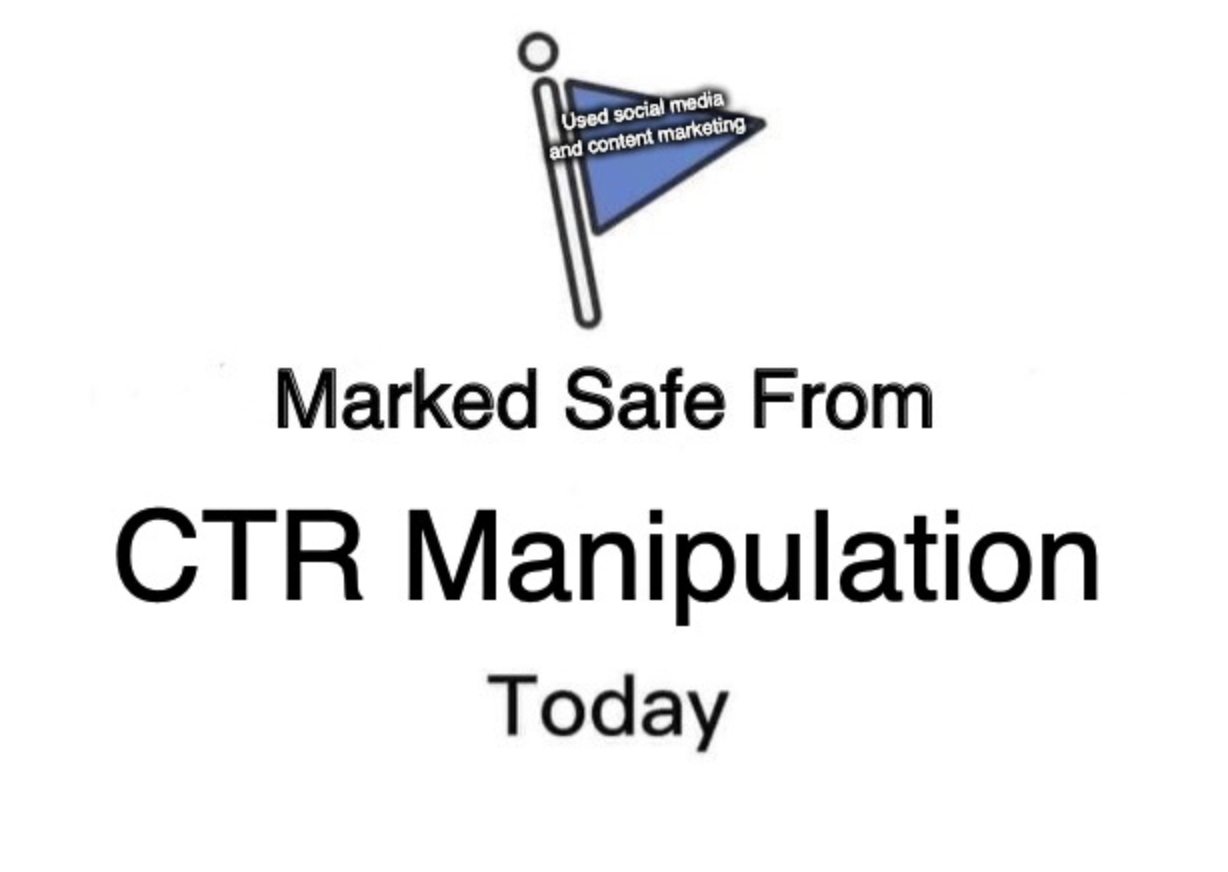
Organic engagement on social media and content marketing is also a strong way to increase CTR. When a company continually posts useful, entertaining, or informative content on websites such as Instagram, LinkedIn, or YouTube, it creates loyalty and trust.
For instance, a local bakery can use Instagram Stories to post behind-the-scenes videos of the baking process, provide tips, or post customer testimonials.
This kind of content not only generates traffic but also increases click-throughs and brand awareness whenever users see the bakery in search results.
Incorporating Structured Data and Rich Snippets
Adding structured data and rich snippets to your site’s code can also increase CTR. Structured data informs search engines about your content more clearly and makes it appear more informative in the SERPs, such as with star ratings, prices, or FAQs in the SERPs.
For instance, a recipe blog that uses structured data can display a preview of cooking time, calories, and a rating in stars below the page title in search results to make it more clickable than a plain-text link.
If I want my content to show up in a featured snippet, I try to follow the format that’s currently ranking for my target keyword. For instance, if the top snippet is a listicle, I’ll write content in a list or step-by-step format.
The two most prevalent snippet types are lists and paragraphs. Paragraph snippets account for almost 50% of the featured snippets total, so I always attempt to answer the primary question clearly in the first paragraph. List snippets, at approximately 37%, do well with how-to articles or top-10 type posts.
In addition to optimizing text, I also try alternative formats such as videos, tables, or other tools such as calculators. These additional aspects make my material more practical and more apt to be taken up by search engines.
Focusing On User Engagement Metrics
Focusing on user engagement metrics and providing a good quality of user experience is important in enhancing CTR and long-term search engine ranking.
If users actively interact with your content—by remaining longer on your website, clicking through several pages, or coming back over and over again—it sends a positive signal to search engines.
For example, a page with quick loading speeds, mobile optimization, clean navigation, and fewer pop-ups will better retain users and decrease bounce rates.
This increased engagement can further be translated to improved rankings and CTR as your page becomes more visible and trustworthy in the minds of users as well as search engines.
The Impact Of Click Through Rate Manipulation On Search Engines

CTR manipulation not only impacts individual websites but can also have a wider effect on search engines overall.
When sites artificially inflate their click-through rates, it can skew search results by promoting less relevant content to higher positions. This gives a false impression of what users really want, which degrades the quality of search results.
Search engines such as Google are serious about this. They’ve implemented strict policies against CTR manipulation and employ sophisticated algorithms to identify suspicious behavior.
For instance, if a website suddenly experiences an influx of bot or micro worker clicks—individuals paid to click links—Google can identify the unnatural behavior. Such strategies can lead to penalties such as lower search rankings or being removed from search listings altogether.
Search engine penalties are no joke, therefore, they are made to favor actual user interaction. They aim to provide useful, relevant content to users based on actual behavior rather than artificial influence.
CTR manipulation violates that purpose by simulating interest and deceiving search engines and users alike. Ultimately, this harms a website’s reputation as much as it hurts the trust placed in the search engine itself.
For example, when a low-quality article is artificially inflated and ranks higher than actually useful content, users are likely to be irritated, bounce back rapidly, and lose trust in the search results. That is why search engines actively fight against CTR manipulation—to ensure fairness and deliver real value to users.
Conclusion
In conclusion, I believe that manipulating CTR might bring quick results, but it’s risky and ultimately unsustainable. Instead, I focus on creating valuable content without keyword stuffing, using social media and content marketing effectively, and providing a great user experience. These strategies help me improve CTR naturally while building trust and long-term visibility online. If you need any help with this technique or any SEO strategies in general, feel free to reach out to a reputable local SEO agency for better results.