Key Takeaways
- Generative AI is revolutionizing content creation, generating text, pictures, audio, and video, rendering complex projects approachable and efficient for creators around the world.
- These AI tools accelerate productivity, enabling individuals and teams to produce greater quantities of better content while spending less time and using fewer resources.
- Human ingenuity is still necessary because when paired with AI, it produces content that is more compelling, more innovative, and more authentic to audiences worldwide.
- Smart prompting and editorial supervision keep AI output factual, on-brand, and ethical.
- Understanding gen AI’s weaknesses — hallucinates, outdated, thin context — enables creators to make smarter content decisions and keep quality consistent.
- The future of AI in content creation holds exciting prospects for even more personalized experiences, interactive narratives, and novel creative possibilities for those willing to adapt.
Generative AI for content creation employs intelligent algorithms to generate new text, images, and videos for blogs, websites, and marketing campaigns—tools already widely used by digital marketers and SEO agencies to save time and spark fresh ideas. With rapid output and personalized controls, these tools make content creation more efficient, adaptable, and scalable. The sections below explore how to use generative AI to craft high-quality content, build authentic narratives, and achieve better results.
What is Generative AI?
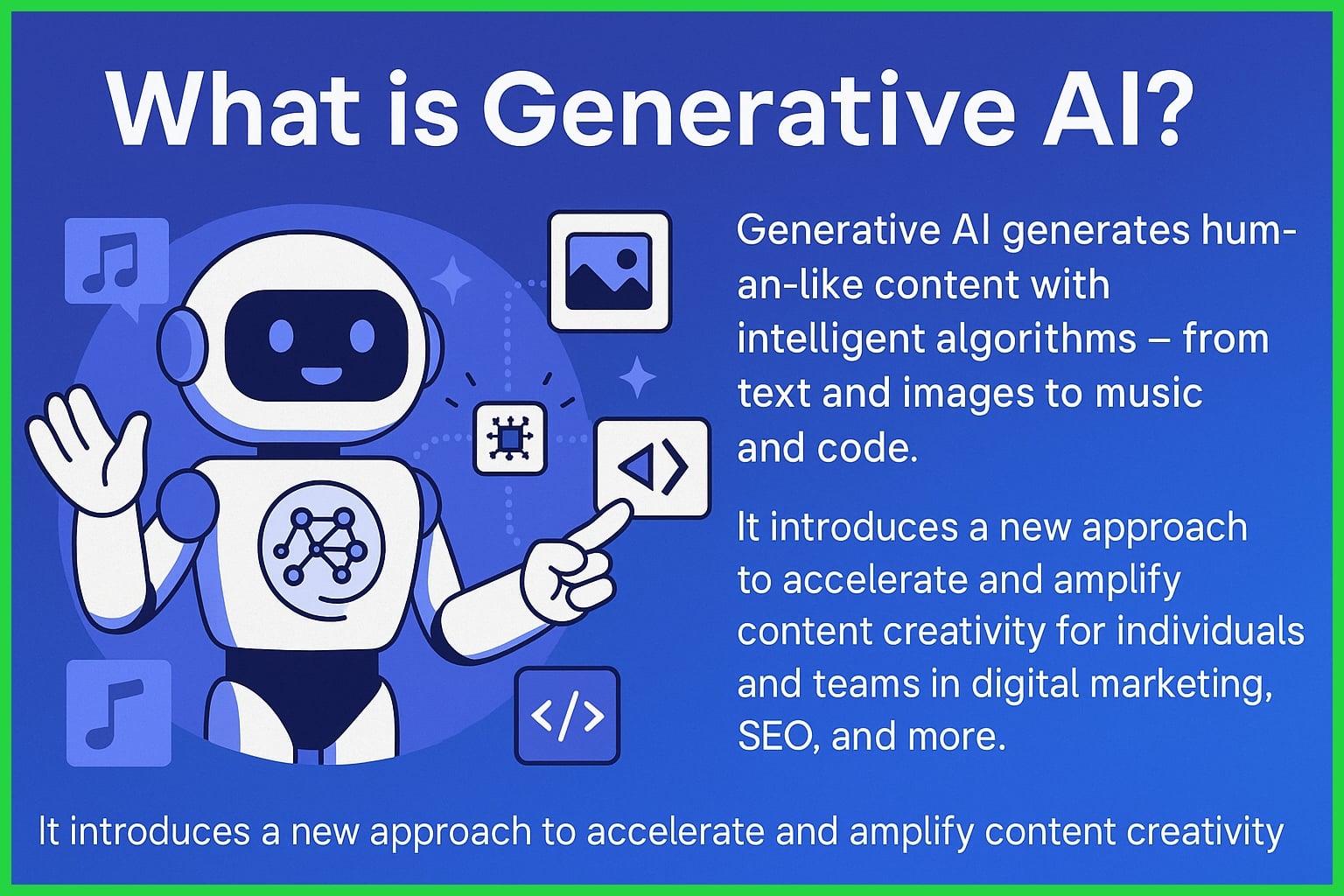
Generative AI generates human-like content with intelligent algorithms — from text and images to music and code. It introduces a new approach to accelerate and amplify content creativity for individuals and teams in digital marketing, SEO, and more.
Fundamentally, machine learning allows these systems to learn from an enormous amount of data, improving with time and producing output tailored to real demands.
|
Type |
What It Makes |
Examples |
|---|---|---|
|
Text |
Articles, blogs, ads, emails |
SEO blogs, product blurbs, social posts |
|
Image |
Artwork, graphics, illustrations |
Website banners, ad visuals, logos |
|
Audio |
Voiceovers, music, sound effects |
Podcast intros, ad jingles, explainer audio |
|
Video |
Clips, trailers, animations |
Promo videos, tutorials, social shorts |
|
Code & Data |
Code, scripts, data reports, and dashboards |
App code, data charts, quick scripts |
1. Text Generation
AI can pen articles, blogs, and even news briefings, simply by studying the finest examples available. For marketing squads, it’s akin to a silent partner that never tires.
It scribes content in a brand’s style and voice, and it does so quickly. It’s not only about speed. AI tools can catch keywords from research and weave them into new, SEO-ready content.
This boosts your site in the rankings, attracting more eyeballs without spending hours at the keyboard. AI assists with drafts, edits, and tweaks so writers can focus more on strategy and less on the fundamentals.
Social media squads harness AI to brainstorm zippy posts and attention-grabbing ads, liberating time for strategic planning.
2. Image Creation
AI isn’t just for text. You can create visuals with it as well. It generates custom images or art that match any theme you desire.
This is useful for digital agencies or brands that want to differentiate themselves but don’t have a full-time designer. AI image generators seamlessly integrate into design tools.
It simplifies creating compelling new pictures for landing pages or promotions. You have more options and quicker turnaround, which is awesome with crazy marketing timelines.
Need a fast pic for a blog or social post? AI can whip up one in seconds. You can try out new looks at no additional fee, keeping your brand fresh and vibrant.
3. Audio Synthesis
Now AI can sound nearly human. It’s utilized for voiceovers and original sounds in podcasts, ads, and explainer videos.
Some brands are even using AI to generate background tunes that match their brand vibe. It’s not just creating new noises. AI can tailor voices or effects based on what your audience prefers as well.
This makes content more personal. For hustling squads, AI edits away hours of audio, so you receive outcomes faster than ever.
4. Video Production
AI accelerates video work. It assists with editing, subtitles, and even selecting the optimal clips for a narrative. Teams can make short trailers or social promos that catch attention.
AI can personalize videos for individual viewers, including adding their names or messages that resonate with them. This raises engagement and allows brands to forge stronger connections.
Automated workflows equal fewer headaches and more creative time.
5. Code & Data
AI assists in coding, creating simple scripts, or fixing bugs. For agencies, this translates into quicker project completions.
It examines information, extracts understanding, and produces accessible visual or textual summaries. Automate the boring parts of code so developers focus on the big ideas.
AI-powered reports help teams make intelligent decisions more quickly, drawing on transparent, up-to-the-minute data.
The Creator’s Advantage
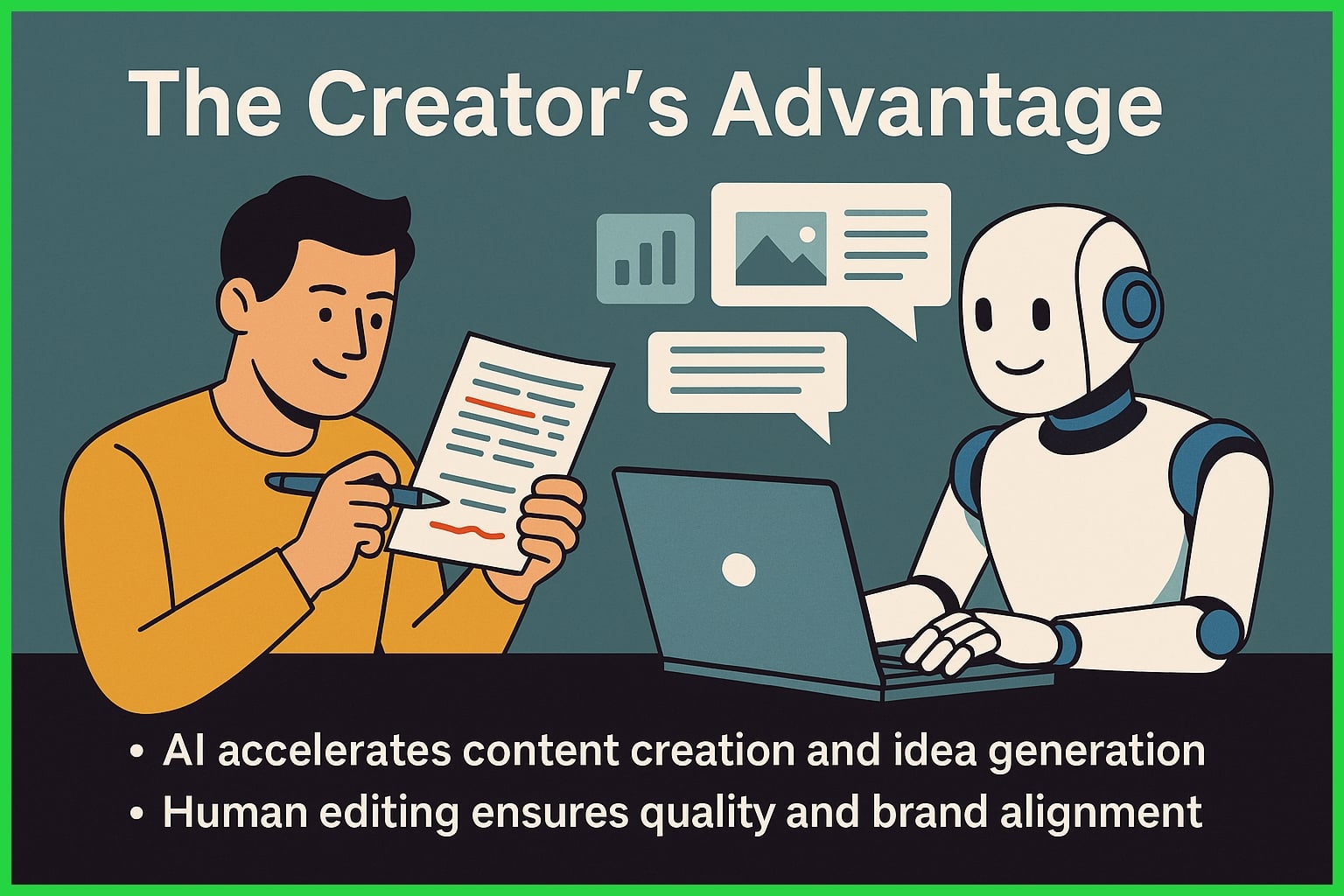
Generative AI provides tangible advantages to content creators. It accelerates creation, aids idea generation, and allows teams to concentrate on larger-scale work. These tools can manage tedious, repetitive tasks so creators can focus on developing thoughtful strategies and narratives.
AI can equip teams to work smarter, and AI content still requires human editing to maintain high quality and ensure it resonates appropriately for each brand. Questions of authorship and originality persist, but the benefits of deploying AI with care can genuinely impact content groups large and small.
More Efficiency
AI tools make life easier by drafting blog posts, social captions, or even headlines. That is, teams waste less time on redundant work, and instead get to do more ideating or campaign planning.
For instance, a digital marketing team can employ AI to craft product descriptions, liberating copywriters for more significant assignments. AI reduces the editorial overhead by providing drafts or outlines, easing the content review and refinement process.
Teams can use AI to generate custom visuals or videos, making content more engaging with no additional design time. By automating these steps, creators can experiment more with new ideas, test more formats, and develop a richer story database to draw from in the future.
Lower Costs
AI reduces expenses for agencies and brands equally. By handling the day-to-day content demands, teams can accomplish more with less manpower. This is particularly beneficial for boutique shops or startups with shoestring budgets.
|
Content Creation Type |
Typical Cost per 1,000 Words |
Staffing Needs |
Turnaround Time |
|---|---|---|---|
|
Traditional (Human-only) |
$100–$400 |
2–3 people |
3–7 days |
|
AI-Assisted |
$20–$60 |
1–2 people |
1–2 days |
Over time, AI-assisted content enables brands to stay fresh without breaking the budget. By focusing on your team’s strengths and letting AI do the heavy lifting, you’re able to stretch resources further and invest in bigger creative goals.
Better SEO
AI can assist in search engine optimization. It proposes keywords, analyzes trends, and drafts meta titles or descriptions that assist in improving rankings. With AI, marketers span more topics and respond to more user questions, rendering the content more valuable.
AI’s SEO benefits include:
- Finds and suggests keywords quickly
- Helps build internal and external links
- Suggests topics based on search trends
- Optimizes headings and metadata for better clicks
AI similarly facilitates content updates, maintaining its relevance for users and search engines alike.
Greater Scale
AI-enabled teams can publish more and publish faster. AI enables creators to personalize their work for multiple audiences, tailoring tone, language, or examples to resonate with each group.
That way, brands can expand their presence around the web — social, email, and beyond — without skipping a step. Customized content in various formats– from infographics to bite-sized videos– keeps folks glued and returning.
Content at scale helps you increase brand awareness and allows brands to be first to report a topic, establishing dominance in their domain.
Choosing Your AI Partner
Choosing your AI partner is central to making generative AI work for content creation. The landscape of AI tools is broad—some specialize in writing, others in images or audio, and some span all. Selecting your perfect AI partner involves considering more than just the tool’s attributes.
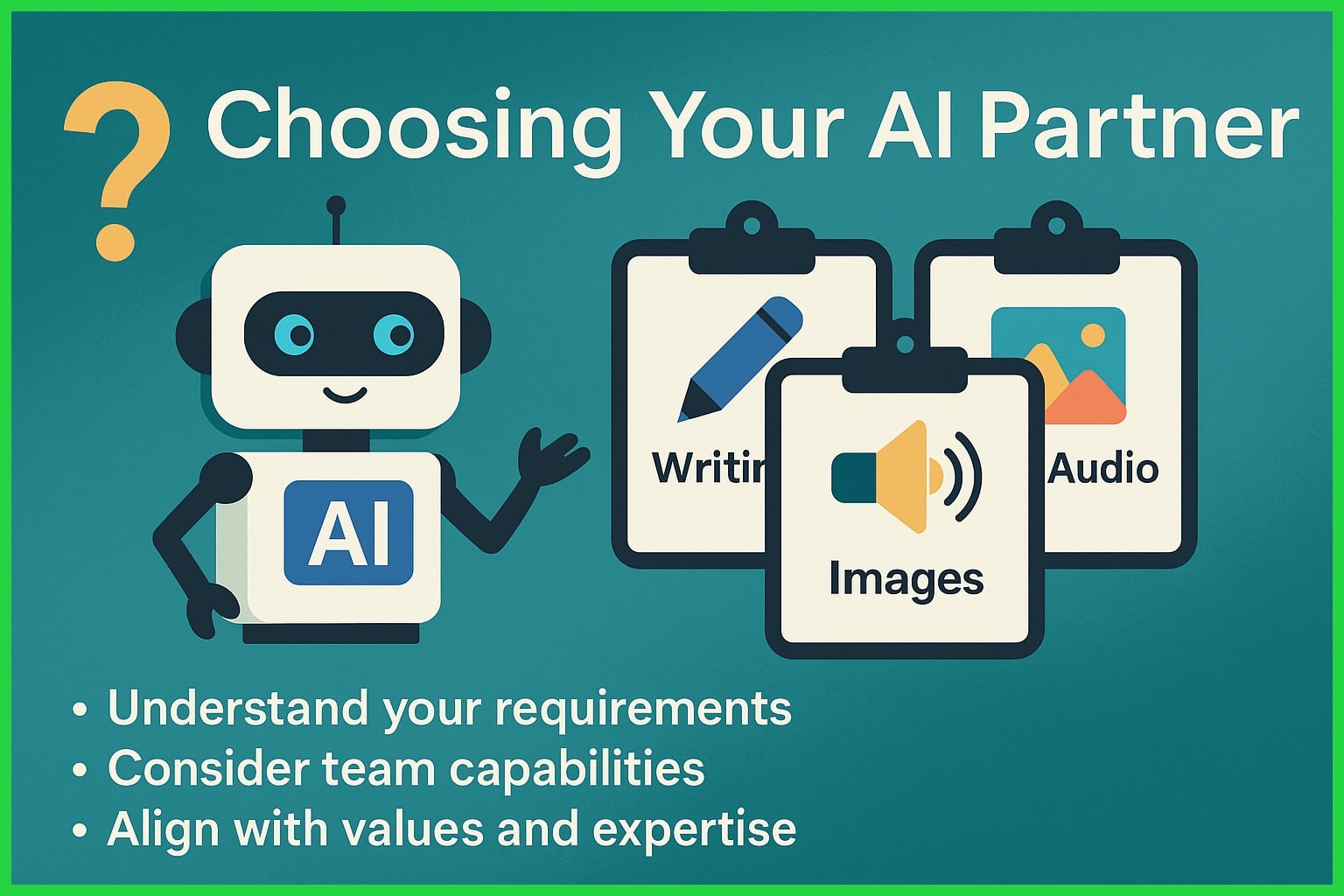
It’s about understanding your requirements, your team’s proficiency, and your business objectives. AI partners must align with your values, responsible AI practices, and industry knowledge for meaningful impact.
- Define clear business objectives for AI use
- Assess the AI partner’s domain knowledge and industry experience
- Review ethical practices, data security, and privacy certifications
- Consider technical compatibility and integration with current workflows
- Check customization, delivery timeline, and pricing models
- Read independent reviews and case studies
- Confirm support and ongoing training options
A thoughtfully selected AI partner delivers more than automation — they help you craft a strategy that suits your brand and produces more compelling, more personalized content.
For Writing
AI writing tools now correct more than typos. They assist in forming your brand’s voice, proofread, and even brainstorm when you’re in a rut. Natural language processing enables these tools to write text that reads like a human, which is essential for creating content that resonates.
- Grammar and spelling checks that go beyond basic proofreading.
- Style suggestions that adjust to your brand’s voice.
- Content idea generation to beat writer’s block.
- Research aid to find facts or trends fast.
- Collaboration tools that let humans fine-tune AI drafts.
AI writing assistants don’t replace writers, but they do liberate time and ignite new thinking. A writer and AI duo can produce more high-quality, on-brand content at a quicker rate.
For Visuals
Image-generating AI has transformed how teams collaborate with images. These can make anything from social media graphics to unique illustrations. The top ones allow you to customize to fit your brand, so each image is special and on-message.
With AI, you transform a rough concept into a refined visual within minutes. Customization is key–be it colors, styles, or layouts, find tools that allow you to mix it up with ease.
AI helps marketing teams keep visuals fresh, and it’s great at making branded materials that pop. The AI visuals can help tell stories, too. For instance, marketers leverage AI to generate blog hero images or brainstorm fast campaign mockups.
For Audio
In other words, good AI audio tools have voice modulation, sound effects, and simple editing. These tools may accelerate podcast production or assist in generating background music for videos. AI can even recommend soundscapes to suit your message.
Tools that automate editing = less time spent on grunt work. Beyond that, AI can analyze listener data and assist you in creating audio that sounds personal and timely.
Personalized audio, such as special intros or custom music, or targeted ads, rises above the noise.
For Strategy
AI assists in strategizing by transforming unprocessed information into lucid insights. It identifies trends, monitors what audiences enjoy, and indicates where to post for optimal reach. Marketers use this to schedule wiser campaigns.
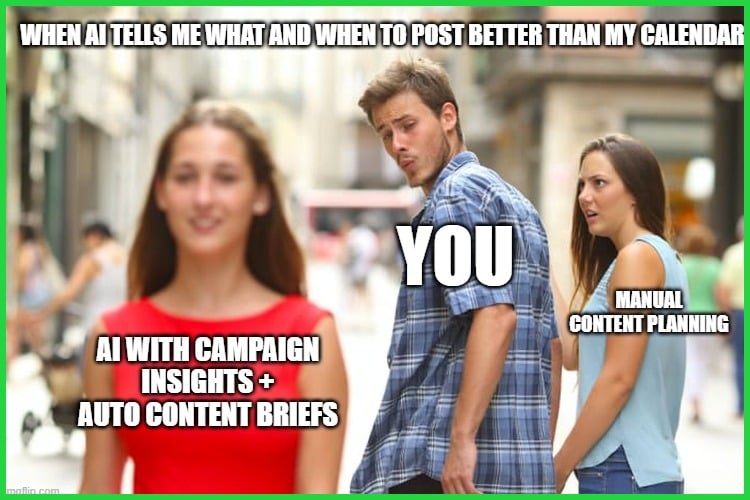
AI personas can steer what to create. The right partner will take these insights and teach you to wield them to optimize your message and improve your results.
The Human-AI Partnership
Human-AI partnerships are transforming the content creation process by combining the strengths of both humans and AI—fast and efficient AI, alongside creative and nuanced humans. This collaboration can ignite innovation, streamline processes, and connect brands with global audiences in a more intimate manner.
By combining AI’s advantages with human expertise, materials are made not only quicker to create but richer as well. The true magic is a partnership, not one side working in isolation.
Strategic Prompting
Writing the perfect prompt is essential when working with AI. An ambiguous prompt returns ambiguous results, but a well-defined one yields spot-on content. For instance, saying to the AI, ‘write a blog post’ will score you a generic article, whereas ‘write a 500-word post on eco-friendly packaging trends for online retailers’ generates targeted, relevant content.
Iterative prompting is another game changer. You begin with a rough draft, observe the AI-generated output, and subsequently adjust your prompt to add intricacy or alter the style. Over time, this back-and-forth hones both the pertinence and excellence of what you receive.
Marketers and agencies, in particular, can leverage this approach to save time, customize campaigns, or produce content that resonates with various customer groups across markets.
Editorial Judgment
No matter how advanced AI gets, human vetting is still crucial. Editors make sure AI output is correct, lucid, and brand-sounding. They fact-check, iron out quirkiness, and add human warmth. It’s particularly important for sectors like healthcare or finance, where a single mistake can have major ramifications.
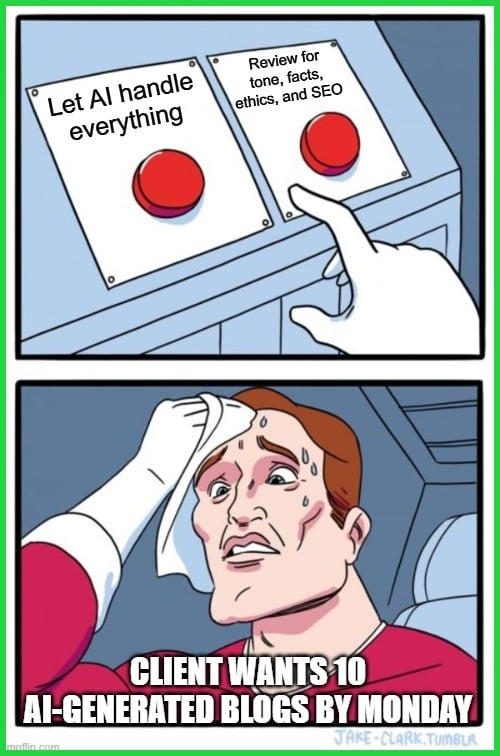
Editorial review ensures the brand’s voice remains consistent. If the AI writes something that seems off-brand, editors intervene to correct it. Agencies often use a checklist like this:
- Check for factual errors and inconsistencies.
- Review tone and language for brand fit.
- Confirm all claims have sources.
- Scan for bias and inappropriate content.
This human layer keeps content trustworthy and engaging.
Ethical Oversight
Responsible AI-assisted writing is required. There’s the potential of perpetuating bias, misinformation, or utilizing content inappropriately around issues of privacy or cultural sensitivity. It is important to be transparent about when and how you’re using the AI with readers and clients, which builds trust.
Explicit rules keep abuse at bay. Teams should establish guidelines for data usage, attribution, and disclosure. Industries such as education and healthcare, as an example, depend on strict supervision to maintain students and patients protected.
With the proper safeguards, AI can represent a positive power, improving content and increasing its accessibility.
Brand Authenticity
Being authentic to your brand counts even with AI. Content ought to remain your values, style, and core message. AI can assist with drafts, ideas, or research, but humans have to provide the final touch to maintain the authentic voice.
When brands keep it real, audiences sense it. They’ll be more inclined to interact, distribute, and believe your content. Truth will make your brands memorable in a world awash in AI.
Navigating AI’s Limitations
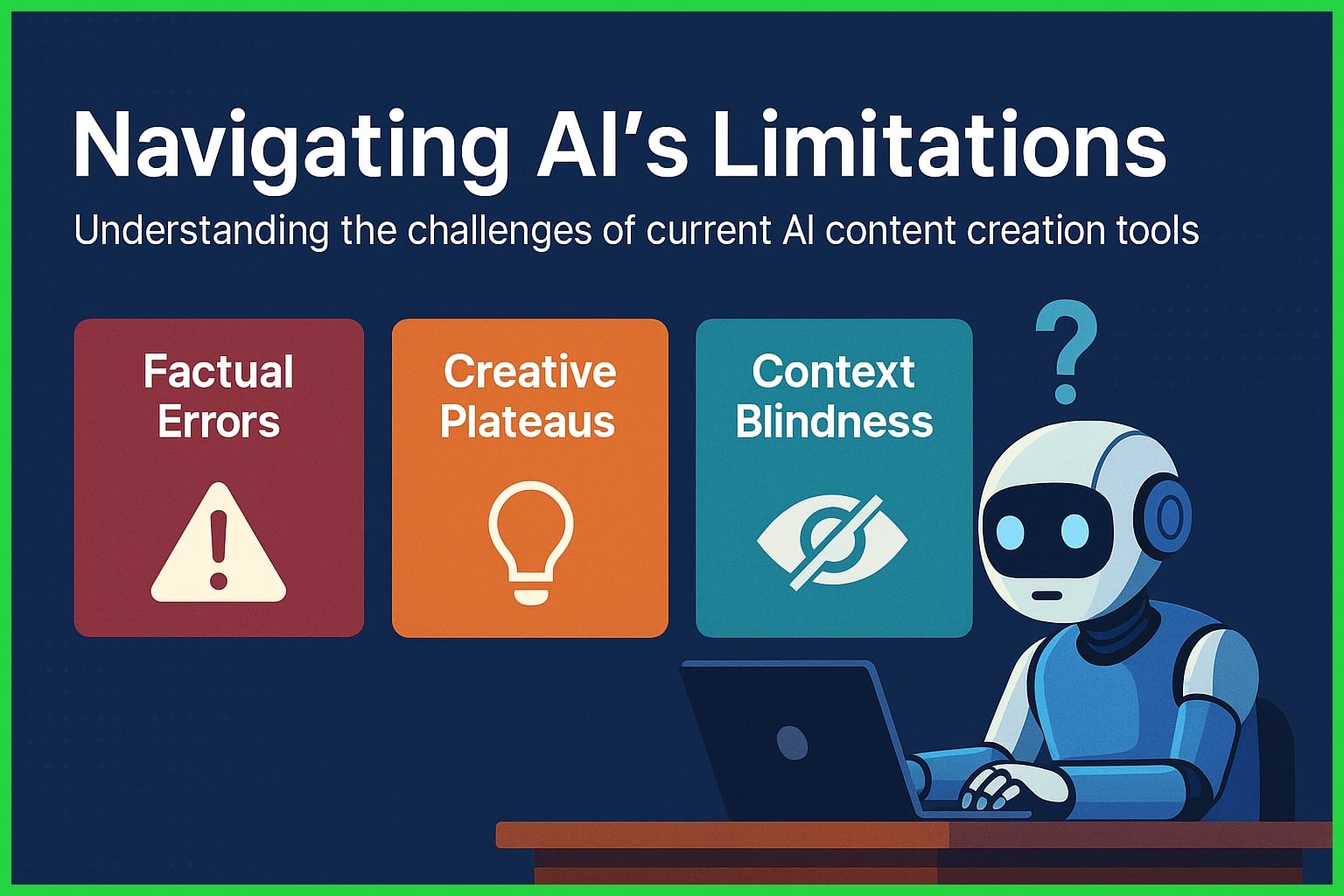
Generative AI can write like the wind, but it’s no magic bullet. Understanding the challenges of current AI content creation tools aids digital marketers, SEO consultants, and agencies in deploying AI more effectively for content ideation. An incisive understanding of AI’s shortcomings allows creative teams to craft wiser tactics, identify problems early, and maintain buyer confidence in a world where AI detectors are now ubiquitous.
Factual Errors
AI frequently ‘hallucinates’ facts, completing missing details with fabricated information or regurgitating inaccurate data from its training set. That danger increases when AI is prompted to generate content about fresh news, technical subjects, or data-intensive material.
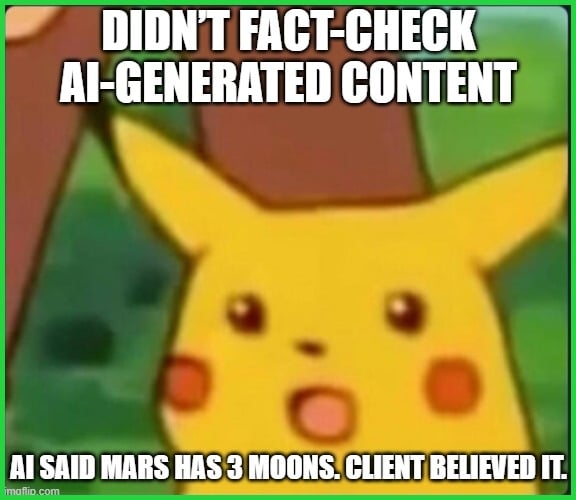
For example, generative AI may get a law wrong, misquote a study, or hallucinate statistics, damaging a brand’s credibility. You have to fact-check everything it outputs. Human review keeps bad info from leaking in, be it a blog post, a product description, or a white paper.
Even if AI draws from seemingly great source material, it might miss recent changes or nuanced context. Agencies that circumvent this phase endanger producing mistakes that diminish their trustworthiness and may even leave them vulnerable to legal issues. With fallout including lost client trust, SEO penalties, or regulatory issues, particularly in finance or health sectors, where accuracy is paramount.
Creative Plateaus
AI content creation tools can identify patterns in input and generate text about it, but they tend to be redundant. As a result, content often reads a little flat or generic, resembling the work of others. It’s akin to asking a machine to write a story; while it may get the facts right, it lacks the creativity and unique angle that only human writers can provide.
Human creativity is the bridge in content ideation. Sure, AI can fast-track the initial draft, but it requires time and genuine skill to prompt it into something that resonates as fresh or insightful. Relying solely on AI content generation can lead to a generic brand image, lacking distinctiveness.
The optimal outcome arises from combining the rapid pace of generative AI models with a writer’s distinct voice. This synergy keeps work fresh and unique, enabling creative teams to produce content that rises above search-engine algorithm updates designed to filter out cheap, boilerplate material.
Context Blindness
AI has a hard time detecting subtle context, tone, cultural nuance, or industry-specific detail. If you don’t provide sufficient context, AI can generate responses that are misguided or even offensive. For instance, unguided AI might deploy language or allusions that aren’t appropriate to the audience, or fall short around sensitive topics.
Which means it’s critical to feed AI precise prompts. When teams overlay their insight, the results fit the brief and honor the reader’s context. Your human touch keeps it grounded and on target, particularly when writing for international or specialized audiences.
Context blindness can cause lost opportunities if AI can’t identify what’s most important to a client or campaign.
Regulatory and Trust Implications
As generative AI expands, so does the need for updated regulations around privacy, data usage, intellectual property, and content ownership. Content teams must stay vigilant about emerging laws, especially in industries like healthcare, education, or finance, where accuracy and compliance are non-negotiable. Leveraging AI content creation tools can help streamline these processes and ensure adherence to regulations.
Equally important is the issue of copyright and content quality. Since much of AI-generated content is built on publicly available data, questions around ownership, attribution, and fair use continue to evolve. Teams should treat AI-generated content the same way they do user-generated content: review it, cite sources when needed, and ensure it meets legal and ethical standards while utilizing effective content ideation strategies.
AI also raises the bar for content quality. As AI-generated content floods the web, only material that is helpful, human-validated, and well-crafted will stand out. Relying on generic AI output alone won’t cut it. Brands that prioritize originality, clarity, and trustworthiness will have a lasting advantage in the age of AI, especially with the right AI tools in their arsenal.
Maintaining compliance, transparency, and a consistent quality bar is no longer optional—it’s now essential to protect your brand and remain competitive in the evolving landscape of digital content.
Future of AI Content
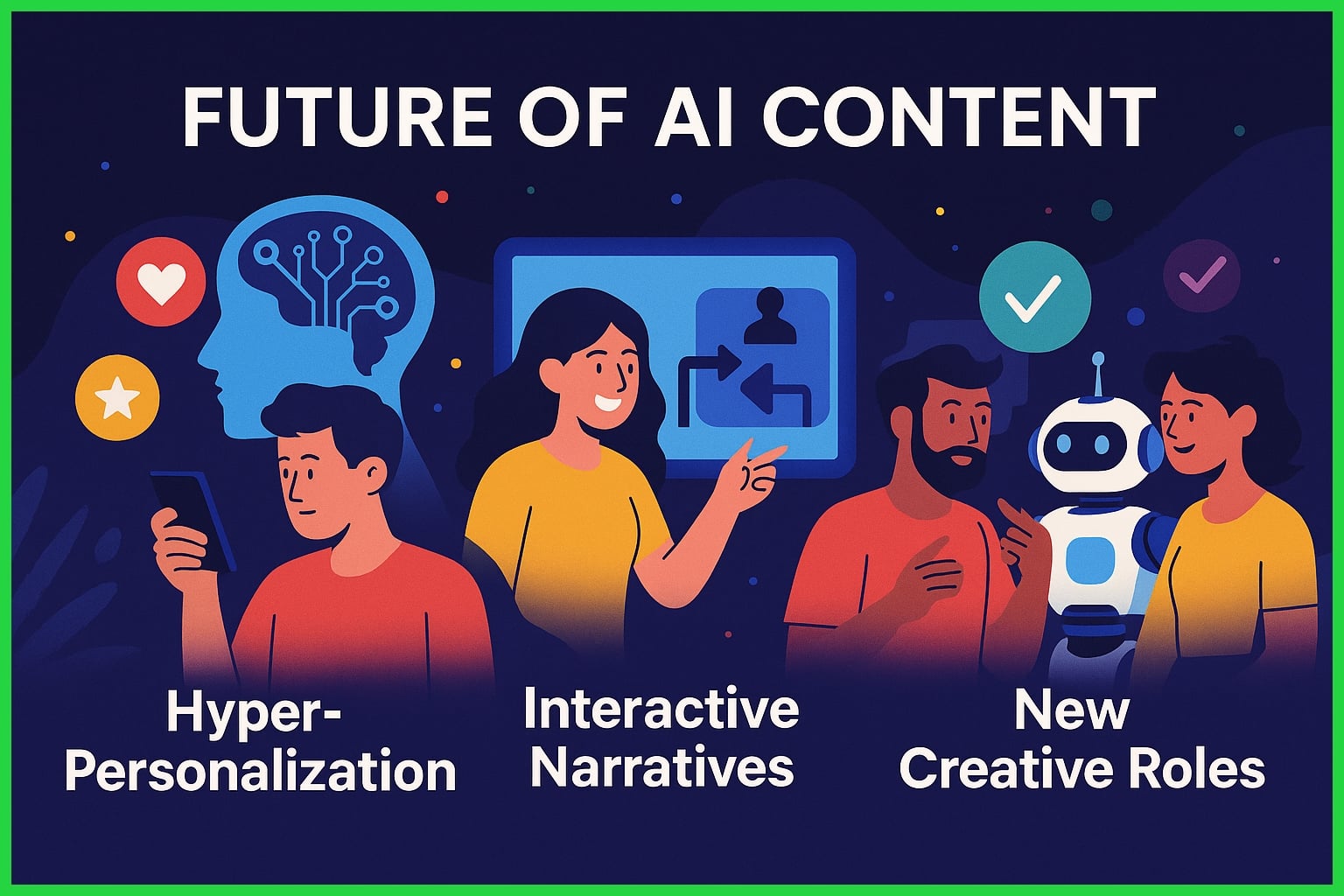
Generative AI is transforming our concepts of content creation, reshaping how we craft, construct, and distribute narratives. What began as plain text utilities is now a tangled jungle of code, video, images, and other domains. With the rise of AI content creation tools, AI could potentially outperform humans in certain creative professions by 2030, presenting new opportunities for content creators while raising hard questions about quality, copyright, and the human role.
Hyper-Personalization
AI gets to know people quickly and can analyze user behavior to enhance the creative process of content ideation. By following what you click, the pace you read, and your preferred stories, AI can generate personalized content that feels uniquely crafted for each individual. For example, news feeds can utilize AI content creation tools to deliver tailored stories, while a fitness app can offer customized meal plans that align with user preferences, ultimately boosting user engagement with the product.
It’s not just about the message—it’s also about timing and delivery. Hyper-personalization opens up avenues for brands and creators to connect with audiences in a way that feels authentic, rather than like broad-based advertising. This approach requires careful management to avoid crossing privacy boundaries or making users feel monitored, ensuring responsible AI use throughout the process.
Interactive Narratives
AI can construct narratives that evolve with your decisions, making it a powerful tool for content ideation. Rather than consuming the same narrative as everyone else, users can alter the storyline, leading to more interactive games, choose-your-own-adventure stories, or chatbots serving as a museum tour guide. With advanced generative AI tools, AI can monitor user reactions, propose plot twists, and improvise new characters, enhancing the creative process.
These AI content creation solutions allow creators to establish branching storylines, enabling users to choose their adventure through the content. This approach makes every visit unique, bringing people back and involving them in the narrative. It empowers brands to experiment, receive immediate feedback, and tailor the user experience in real-time to what’s most effective.
As interactive stories remain novel for many, the emergence of generative AI applications is simplifying their construction. Now, even tiny teams or solo artists can harness these AI content creation tools to experiment with innovative storytelling techniques.
New Creative Roles
The dawn of generative AI is transforming creative professions. Now, there’s demand for people who wrangle AI tools, craft prompts, and evaluate whether the outputs align with the brand. AI management and content strategy skills are must-haves, not nice-to-haves. Content creators must continue to learn to use these tools or lose ground.
Old-school writers and artists working with tech experts — that’s the new normal. It’s not humans against machines. It’s about discovering the optimal blend so squads can move more quickly, vet the mistakes, and ensure what gets released is both innovative and impactful. AI can assist with the legwork, but humans still set the tone, verify information, and add that human spark.
Conclusion
Generative AI disrupts the way people create content. They’re blogging, jump-starting ideas, accelerating projects — people everywhere are using smart tools to write. A fashion brand can pen new style tips every week, while a travel site can publish new city guides within hours. Creators keep their voice strong and style sharp with help from AI. Still, it works best with a real person in the seat–someone who keeps the story real and facts sound. AI presents new opportunities, and the most excellent work emerges from individuals who combine technology with their talent. Looking to make a difference for your agency or clients? Try generative AI and experience the lift for yourself.
Frequently Asked Questions
What is generative AI in content creation?
Generative AI employs sophisticated algorithms to generate original content — text, images, videos — given prompts or data, making it an effective AI content creation tool that automates and accelerates the creative process.
How can generative AI benefit content creators?
Generative AI tools save you time, invigorate your creativity, and streamline your content generation. They enable creators to concentrate on content ideation and original concepts, while AI handles menial tasks.
How do I choose the right generative AI tool?
Compare features and data security, as well as ease of use and fit to your workflow, when selecting AI content creation tools. Seek tools with solid support, clear privacy policies, and good reviews.
Can AI replace human creativity in content creation?
AI can assist with content ideation and rough drafts, yet it cannot replace human ingenuity. Human input ensures authenticity, context, and emotional resonance in creative content.
What are the limitations of generative AI for content creation?
AI content creation tools can hallucinate, miss context, or generate cliché content, often faltering with nuance and originality without human oversight.
Is AI-generated content suitable for all industries?
Although almost all industries can support AI-generated content, sensitive sectors such as healthcare or law demand meticulous human oversight to ensure precision and adherence, highlighting the importance of responsible AI use.
How will generative AI shape the future of content creation?
Generative AI tools will accelerate and personalize content creation, collaborating with humans to generate high-quality, audience-targeted content ideas at scale.