Key Takeaways
- Medical content falls under Google’s YMYL (“Your Money or Your Life”) category because poor health advice can affect someone’s well-being or safety.
- Google gives extra weight to E-E-A-T—Experience, Expertise, Authoritativeness, and Trustworthiness—for health-related searches.
- Great writing alone is not enough. Your article must be clinically accurate, properly sourced, and reviewed by qualified professionals.
- Even an excellent article can stay buried if your website lacks authority from trusted external websites.
- The winning formula is simple: specialized medical content writing + high-quality, relevant backlinks.
- SculptedSearch can help create accurate medical copy, while SirLinksALot helps build the off-page authority needed to compete for page-one rankings.
If you have ever published a well-written health article and watched it disappear beyond page five of Google, you are not alone.
Medical SEO is one of the toughest niches online. A blog post about “best running shoes” can afford a few opinions. But an article about chest pain, diabetes medication, or childhood fever can affect real decisions—and sometimes real lives.
That is why Google treats health content differently. It uses its YMYL standard for topics that could significantly affect a person’s health, financial stability, or safety. For these topics, Google’s systems place more importance on signals of E-E-A-T.
So, how do you actually rank medical content?
You need two things:
- Flawless, expert-backed medical content on the page
- Undeniable trust and authority pointing to your website from off the page
Let’s break down exactly how that works.
Why Health Content Faces Google’s Toughest Filter
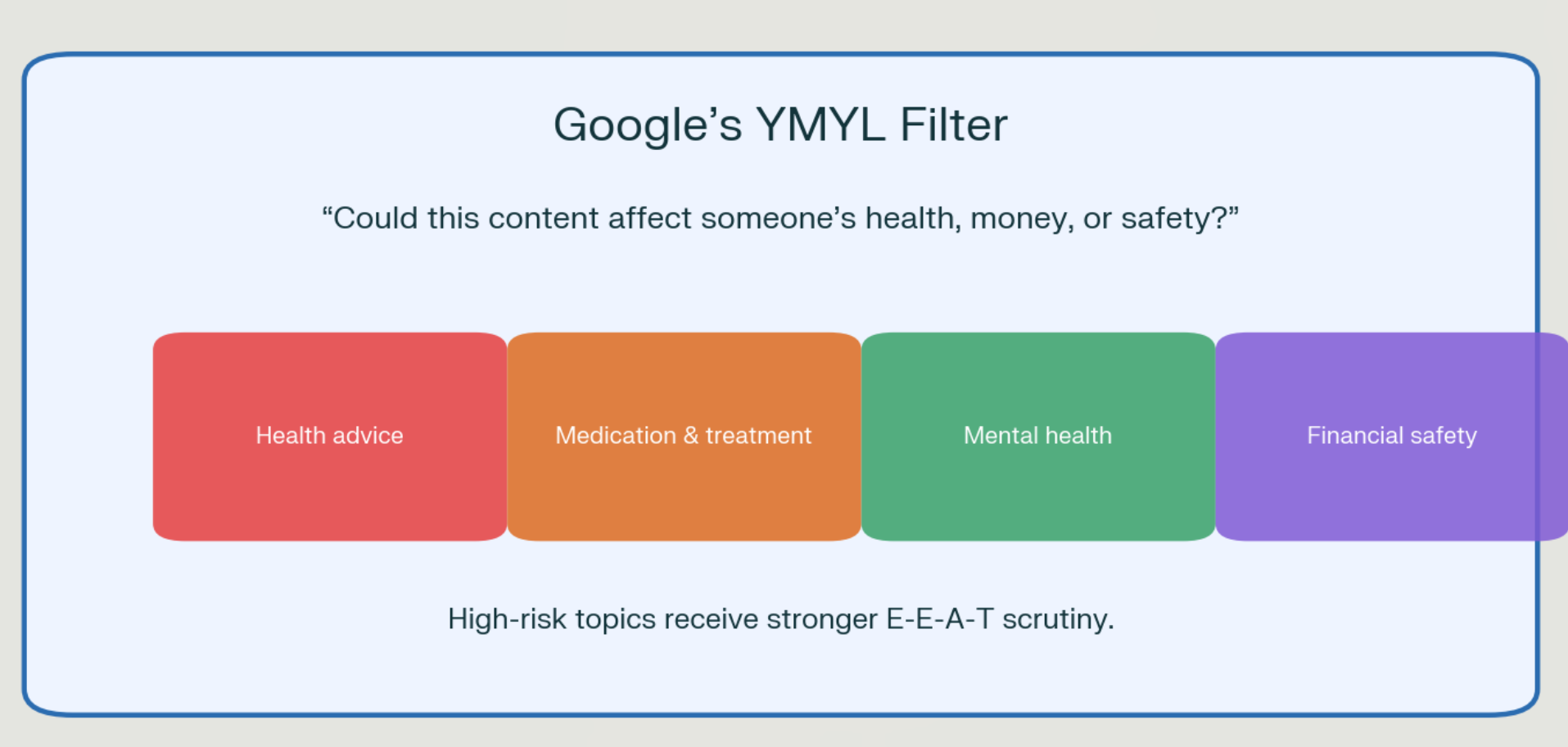
Google wants to avoid showing unreliable health advice. If someone searches “what to do for a severe allergic reaction,” the search engine cannot afford to rank a vague, inaccurate, or AI-generated article above guidance grounded in medical consensus.
That is the core of the YMYL filter.
YMYL includes subjects such as:
- Symptoms, diagnoses, and treatment options
- Medications, supplements, and side effects
- Mental health and addiction
- Pregnancy, childcare, and senior care
- Emergency guidance and safety information
- Health insurance, medical costs, and patient rights
Google’s own guidance says its systems give more weight to content that demonstrates strong E-E-A-T for topics that can significantly impact health, financial stability, safety, or societal wellbeing.
In plain English: the higher the possible harm, the higher Google’s trust requirement.
This does not mean smaller health brands cannot rank. It means they must prove they deserve to rank.
Nailing On-Page E-E-A-T
Many website owners assume medical content writing simply means “write clearly and add keywords.” That approach may work for lifestyle blogs, but it fails in healthcare.
Search engines and readers look for specific clinical details: recognized symptoms, standard terminology, approved treatment pathways, contraindications, and appropriate safety warnings. If your article misses those details—or worse, invents them—it creates a trust problem.
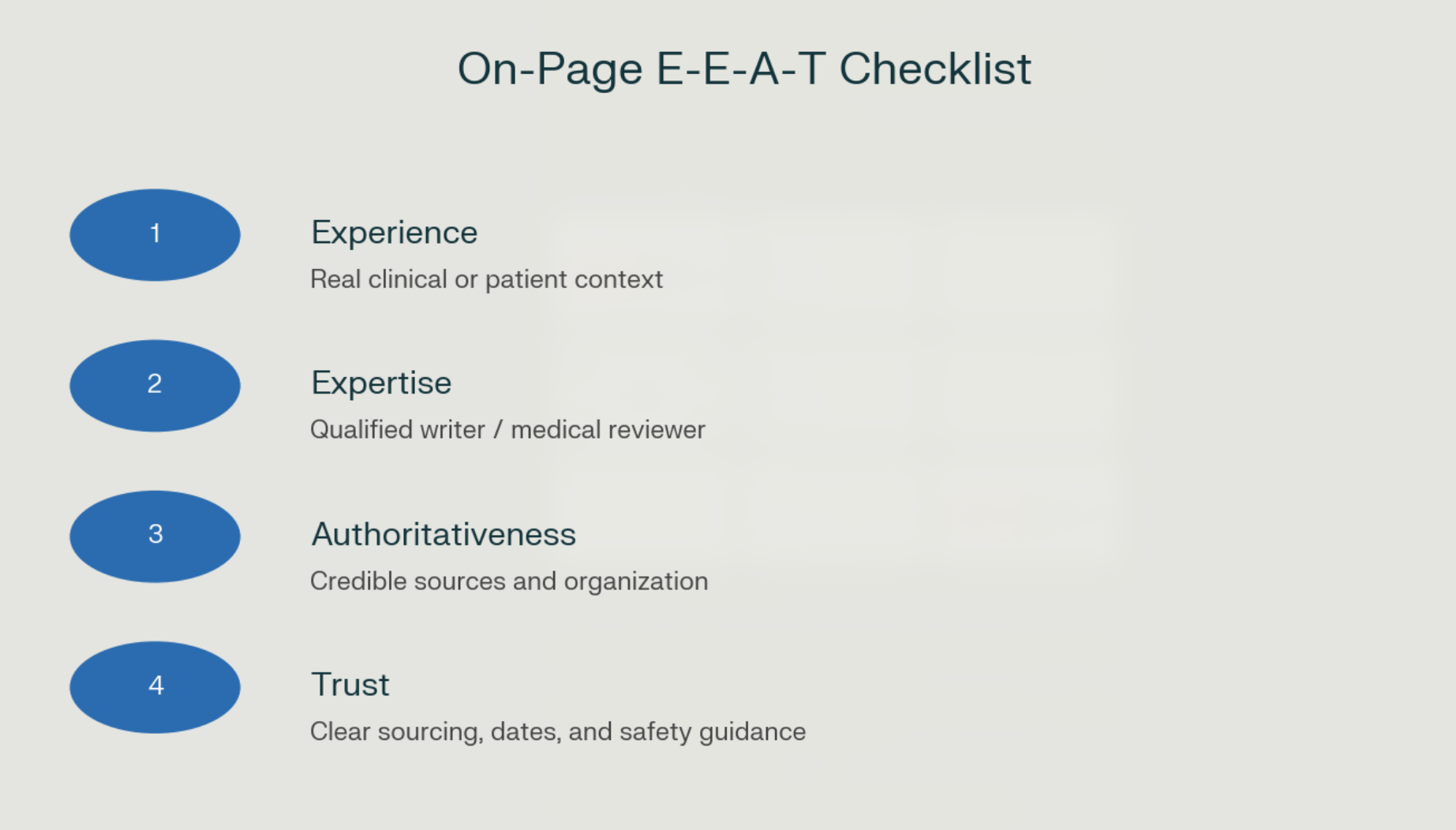
Here is what strong on-page E-E-A-T looks like:
- A real, qualified author: Include the writer’s name, credentials, and a linked biography.
- Medical review: For clinical topics, show who reviewed the content and when.
- Reliable sources: Cite organizations such as the CDC, NIH, WHO, peer-reviewed journals, or recognized medical associations.
- Clear dates: Show when the article was published and last reviewed.
- Balanced advice: Avoid absolute claims such as “this cure works for everyone.”
- Reader safety: Include when someone should seek urgent care or speak with a clinician.
- Accessible language: Explain medical terms without dumbing down the facts.
This is where amateur writers and raw AI chatbots become risky. They can produce fluent paragraphs, but fluency is not clinical accuracy. A chatbot may sound confident while mixing up dosages, symptoms, treatment guidelines, or study findings.
Smart healthcare brands use specialized medical content writing support—such as SculptedSearch—to ensure articles are factually flawless, clinically accurate, and safe for readers. The goal is not just to sound medical. It is to be medically responsible.
For example, an article about type 2 diabetes should not simply say, “Exercise helps control blood sugar.” A stronger article explains how activity affects insulin sensitivity, what types of exercise may help, when a person should consult their doctor, and why individual treatment plans differ.
The Invisible Ceiling: Why Good Content Gets Stuck
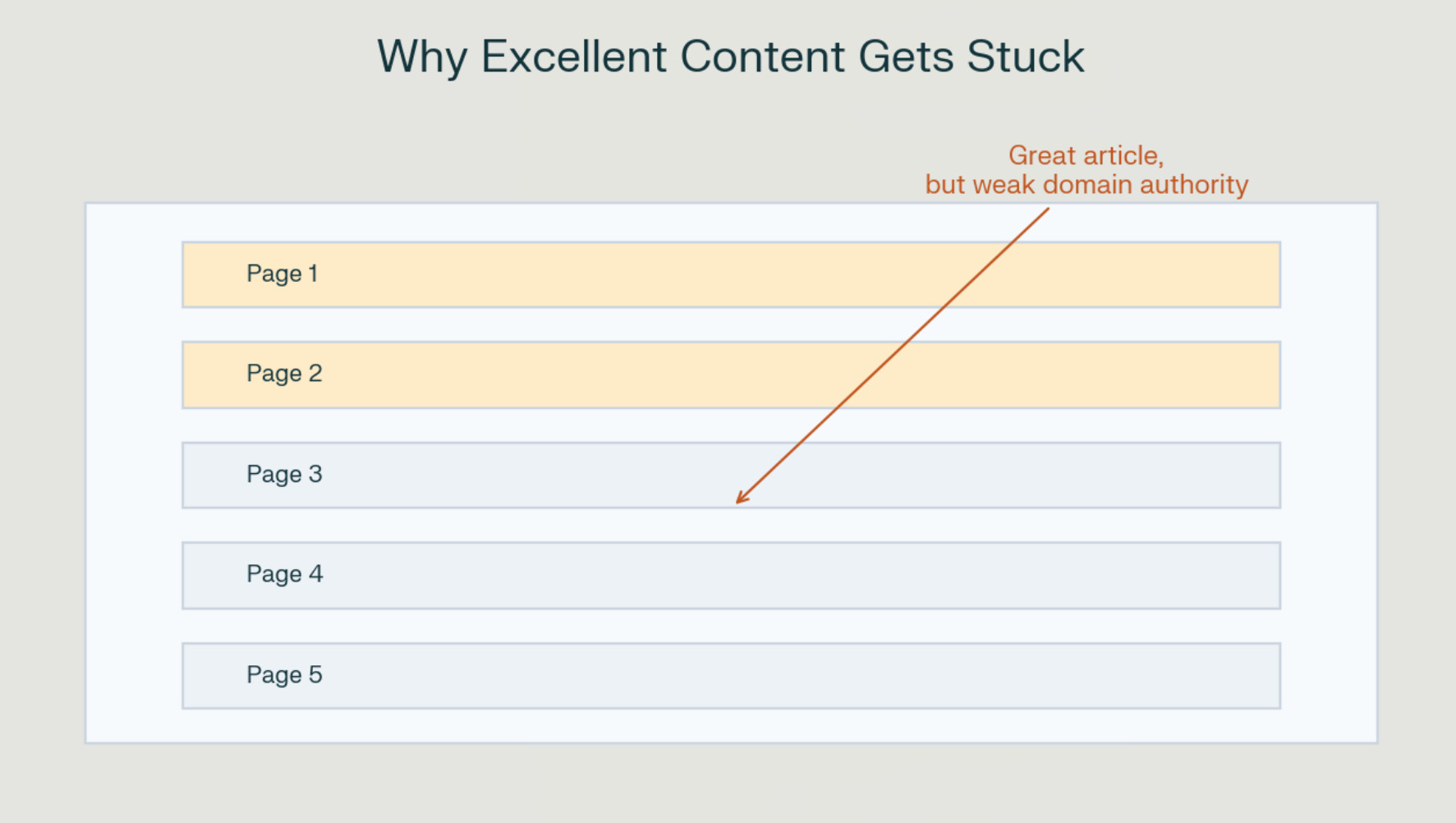
Now we reach the most frustrating part of medical SEO.
You can have a brilliant article. It may be doctor-reviewed, beautifully structured, keyword-optimized, and supported by credible sources. Yet it still sits on page five.
Why?
Because on-page accuracy is only the entry ticket.
Google does not judge your article in isolation. It also asks:
- Does this website have a history of publishing trustworthy health information?
- Do credible websites reference or recommend this brand?
- Is this site recognized by other relevant organizations?
- Can this page compete with hospitals, universities, government health agencies, and major publishers?
In competitive health searches, you may be competing against Mayo Clinic, Healthline, WebMD, NHS, Cleveland Clinic, or government health pages. These sites already have years of recognition, citations, brand searches, and links from trusted sources.
That creates an “invisible ceiling.” Your content may be good enough to rank, but your domain may not yet be trusted enough to outrank established authorities.
Think of it like applying for a specialist hospital role. Your CV may be excellent, but the hospital also wants references, credentials, and proof that other respected professionals trust your work.
Medical SEO works the same way.
Building Undeniable Trust With SirLinksALot
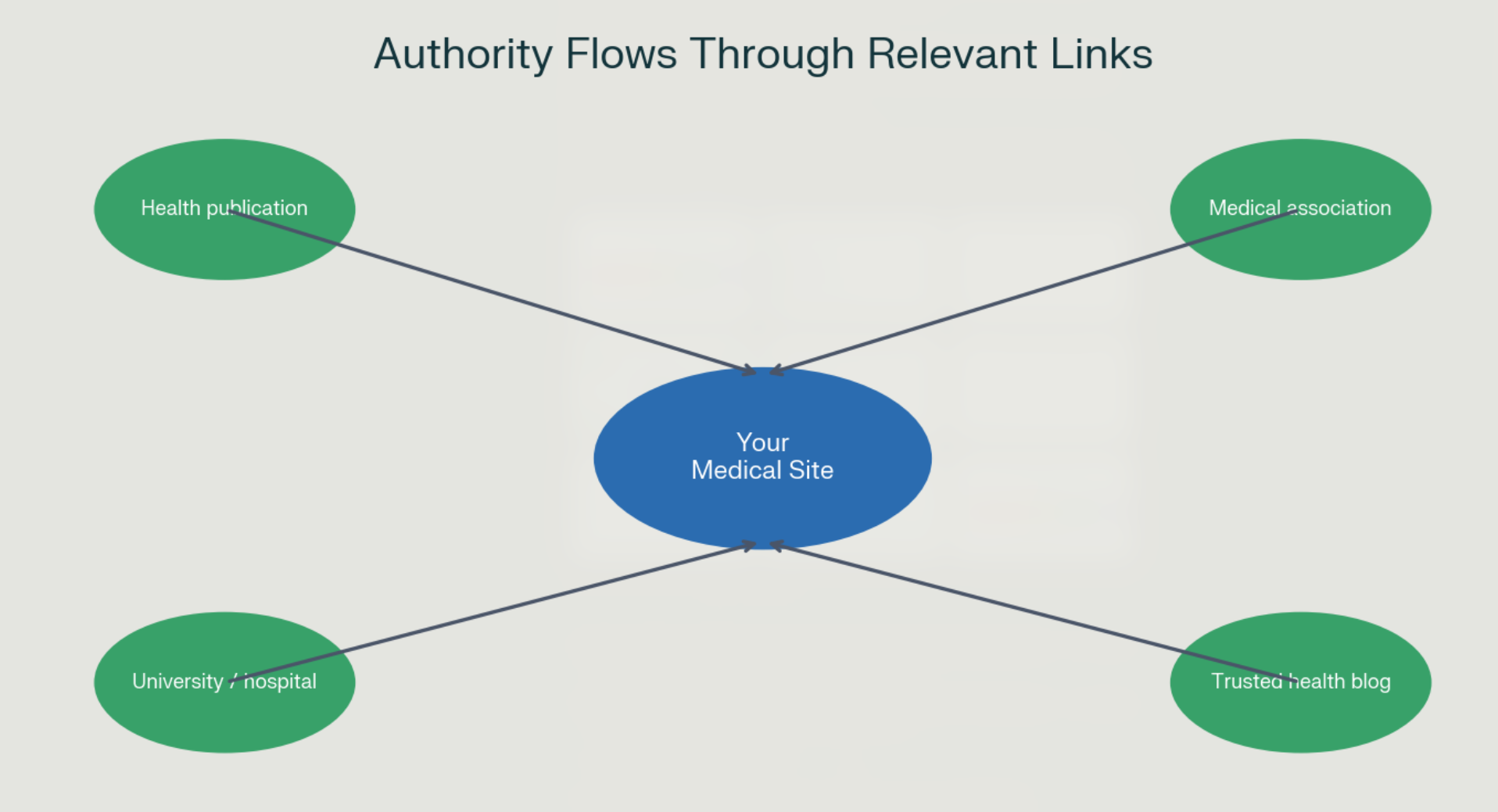
This is where off-page authority becomes essential.
Backlinks are links from other websites to yours. When relevant, reputable websites link to your medical content, they act like public votes of confidence. They help search engines understand that your site is not just publishing content—it is being recognized by the wider web.
But not all links are equal.
A link from a random, unrelated directory will not help much. In healthcare, relevance and quality matter even more. Links from medical publications, hospitals, universities, health journalists, professional associations, and established patient-education platforms carry far more meaningful trust than generic spam links.
This is why SirLinksALot is the authority-building engine behind the strategy.
SirLinksALot helps brands pursue premium guest posts and niche edits—links placed within relevant, existing content on trusted websites. Instead of chasing random link volume, you build a more credible backlink profile around your medical topics.
For example, if you publish an in-depth guide on managing migraine triggers, a link from a wellness publication, neurology-focused site, or health news outlet is far more valuable than 100 links from unrelated blogs.
A smarter approach looks like this:
- Create a genuinely useful, medically reviewed resource.
- Identify relevant health, wellness, medical, and local-health websites.
- Earn editorially placed links through guest posts, expert commentary, resource mentions, and niche edits.
- Build links steadily rather than suddenly acquiring hundreds of low-quality links.
- Point authority to both cornerstone guides and supporting articles.
That is how you give Google a reason to see your site as a legitimate health resource—not just another blog trying to rank.
A Practical Workflow You Can Use Today
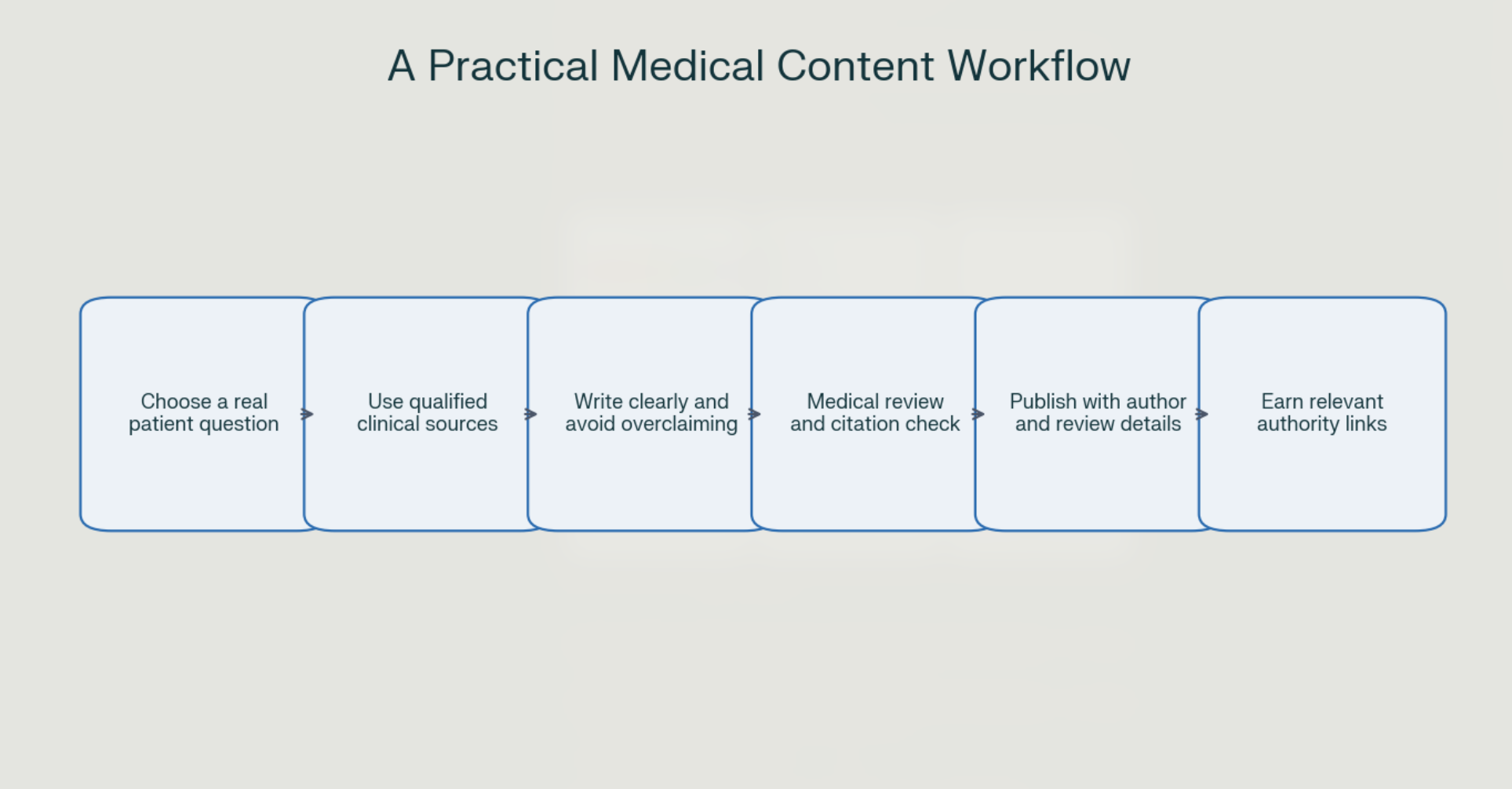
If you want to rank medical content without cutting corners, follow a repeatable process.
1. Start with a real patient question
Do not write “Diabetes: Everything You Need to Know.” That is too broad. Write “What Early Signs of Type 2 Diabetes Should Adults Watch For?” or “Can You Reverse Prediabetes Without Medication?”
Specific questions attract specific readers and make it easier to demonstrate expertise.
2. Use authoritative sources
Use primary and respected sources whenever possible:
- Peer-reviewed studies
- Clinical guidelines
- Government health agencies
- Medical associations
- Hospital and university health libraries
Avoid relying on forums, anonymous blogs, or outdated articles.
3. Write for humans first
Use short sentences. Define terms. Use headings, examples, and bullet points. A worried parent should be able to understand your article at 11 p.m. without needing a medical dictionary.
4. Add medical review
For clinical content, have a qualified healthcare professional review the draft. Then display their name, credentials, review date, and bio.
5. Publish complete trust signals
Your article should make it easy to answer:
- Who wrote this?
- Who reviewed it?
- What sources support it?
- When was it last updated?
- What should the reader do next?
6. Build authority after publishing
Once the content is live, promote it to relevant publications and earn links from trustworthy sites. This is the step many medical brands skip—and it is often the reason their content never reaches page one.
The Winning Formula
Medical SEO is not a mystery. It is a discipline.
You need accurate, people-first content that meets Google’s YMYL expectations. Then you need external validation that tells Google your website is worthy of visibility.
The formula is:
Expert medical content writing + relevant, high-authority backlinks = medical content that can compete.
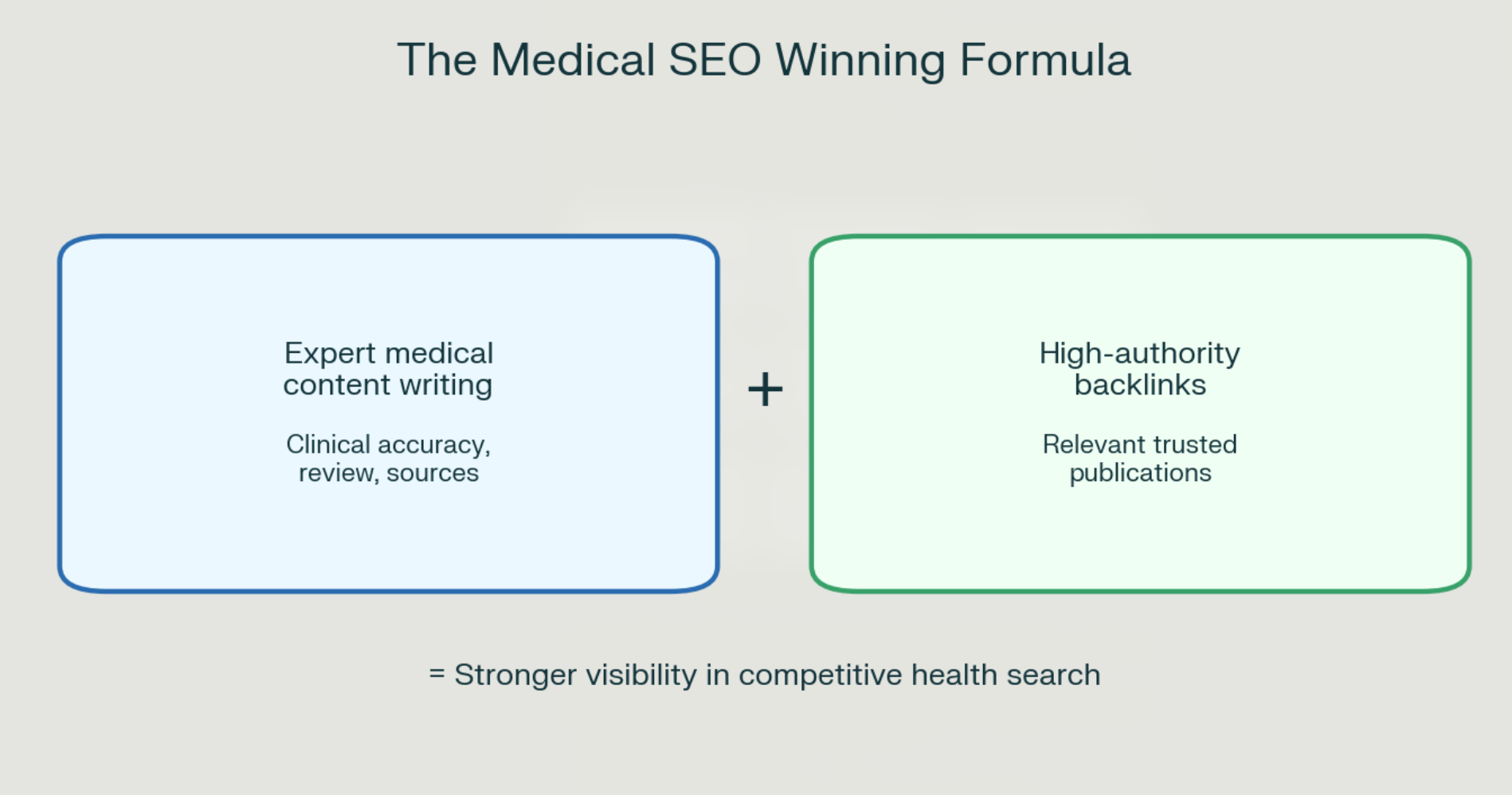
SculptedSearch helps you get the first part right: clinically sound, carefully structured medical copy that protects readers and demonstrates expertise.
SirLinksALot helps you solve the second part: building the authority signals that push that content beyond the invisible ceiling.
When both parts work together, you do not merely survive the medical search results. You give your brand a real chance to dominate them.
Conclusion
Ranking medical content is not about tricking Google. It is about earning trust.
Health searches demand accuracy because the stakes are personal. Your article may guide someone through symptoms, treatment choices, prevention, or a health emergency. That responsibility should shape every part of your strategy.
Start with specialized medical content writing that is accurate, sourced, and medically reviewed. Then strengthen your site with relevant, high-quality backlinks through SirLinksALot.
Content earns attention. Authority earns rankings. Together, they help your medical brand become the result people—and Google—can trust.
FAQs
What does YMYL mean in SEO?
YMYL means “Your Money or Your Life.” It refers to topics that can significantly affect someone’s health, finances, safety, or wellbeing. Google applies stricter quality expectations to these subjects.
Is E-E-A-T a direct Google ranking factor?
Google describes E-E-A-T as a set of qualities its systems look for, especially for YMYL topics. It is not a single switch you can turn on, but improving experience, expertise, authoritativeness, and trust can strengthen the signals Google uses to assess content.
Can AI write medical content?
AI can help with research organization, outlines, and drafts, but it should not publish unsupervised medical advice. Medical content needs expert review, accurate sourcing, and careful fact-checking because small errors can create real harm.
How many backlinks does a medical website need?
There is no magic number. One relevant link from a trusted health publication can be more valuable than dozens of unrelated, low-quality links. Focus on relevance, authority, editorial placement, and steady growth.
Why is my medically reviewed article not ranking?
Your article may be strong, but your domain may lack enough external authority to compete with established hospitals, universities, and major health publishers. Pair expert content with a focused authority-building strategy.