Key Takeaways
- International SEO opens doors to new markets by tailoring your website for different countries and languages, going far beyond simple translation.
- Having a grasp of cultural differences, regional search habits, and distinct local characteristics will help you better reach local audiences and beat competitors in every region.
- Careful planning around site structure, technical setup, and content localization ensures your site remains fast, accessible, and relevant to global visitors.
- Continuous primary research is key to finding out what each target market does differently. Analytics and adaptation allow us to rise to their expectations and positively exceed them!
- Local backlinks, community involvement, and regionally relevant content will build trust and prove your brand’s authority across the globe.
- Align your global SEO efforts with your overall business goals. International SEO is a major commitment. This builds the foundation for inclusive economic prosperity and enduring global competitiveness.
Thinking about taking your business global? Cool—but here’s the thing: just because your website ranks well at home doesn’t mean people in Tokyo, Berlin, or Sydney will even see it. That’s where international SEO comes in.
At its core, it’s all about making your site show up for the right people in the right places. That could mean using local keywords, translating your content, or tweaking things so search engines know exactly which country (or language) you’re trying to target.
Because let’s be real—what works in Texas probably won’t cut it in Tokyo. Search habits, languages, even the platforms people use to find stuff online—it’s all different. International SEO makes sure you’re not just visible abroad, but actually competitive.
In this post, we’ll walk you through the basics, show you how to set up a global-friendly strategy, and share tips for reaching customers beyond the U.S. Ready to make your site a worldwide player? Let’s dive in.
What Exactly Is International SEO?
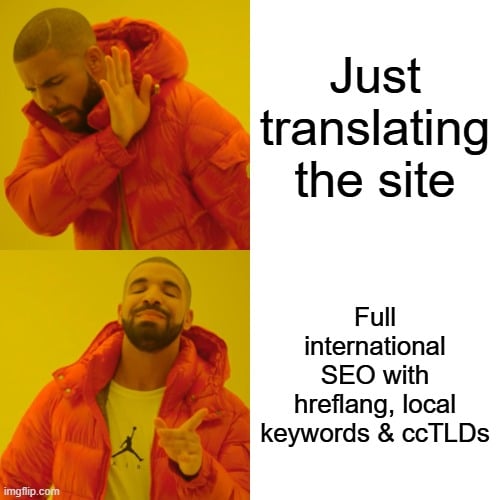 International SEO is the practice of optimizing websites to rank prominently in search results across multiple countries. This approach goes beyond mere translation; it focuses on understanding how people in different regions search, their interests, and what matters to them, making it the most cost-effective method. By utilizing language targeting, businesses can enhance their visibility in foreign markets.
In practical terms, implementing hreflang attributes is essential for structuring your website to best serve each market. This requires a careful strategy regarding your domain structure, including options like ccTLDs, subdirectories, or subdomains. Each choice has its pros and cons in controlling reach versus authority, which is crucial for international expansion.
Using ISO codes in URLs and hreflang tags effectively communicates to search engines the intended audience for your content, thus helping to avoid duplicate content issues. By focusing on the local user experience, businesses can better attract international visitors and improve their international SEO rankings.
1. Defining Global SEO
Global SEO can be as simple as trying to reach people beyond the borders of a single country. It means considering language, local idioms, and cultural behavior.
As an example, Japan may search for shoes by style, but in Brazil, by color. Understanding these habits allows brands to present the most relevant content. No matter how strong your global strategy, it always begins with research.
You have to know what people are clicking, how they’re searching, and what they want to see on a site! Creating local links as well as using local imagery, colors, symbols, etc., will help make your site feel at home wherever it goes.
2. Core Goals
In reality, International SEO’s core goal is creating an easy, native experience for users. Not just switching out vocabulary terms. Content must align with local preferences, from visuals to site structure.
This involves continuously monitoring content’s performance and making data-informed adjustments to improve user engagement in each market.
3. Global vs. Local SEO: Key Differences

Global SEO, on the other hand, takes a broader approach, analyzing several countries at a time, identifying overarching trends, and targeting more general keywords. Local SEO focuses down, perhaps even targeting a single city, using different neighborhood colloquialisms.
User intent can change quickly. For example, a person in Texas may look for “BBQ around me,” while a person in Paris wants “restaurant barbecue.” That’s going to change how we do keyword research and develop content.
Is Your Business Ready to Go Global?
We’re going to take it step by step. Going global is no small feat. It doesn’t mean you should only focus on your existing domestic market. Imagine what new opportunities your business might be pursuing three to five years down the road!
It also raises new challenges and questions regarding your capacity to reach and serve people across borders. Here’s how to figure out whether or not your business is really ready to go global with international SEO.
Spotting Global Market Opportunities
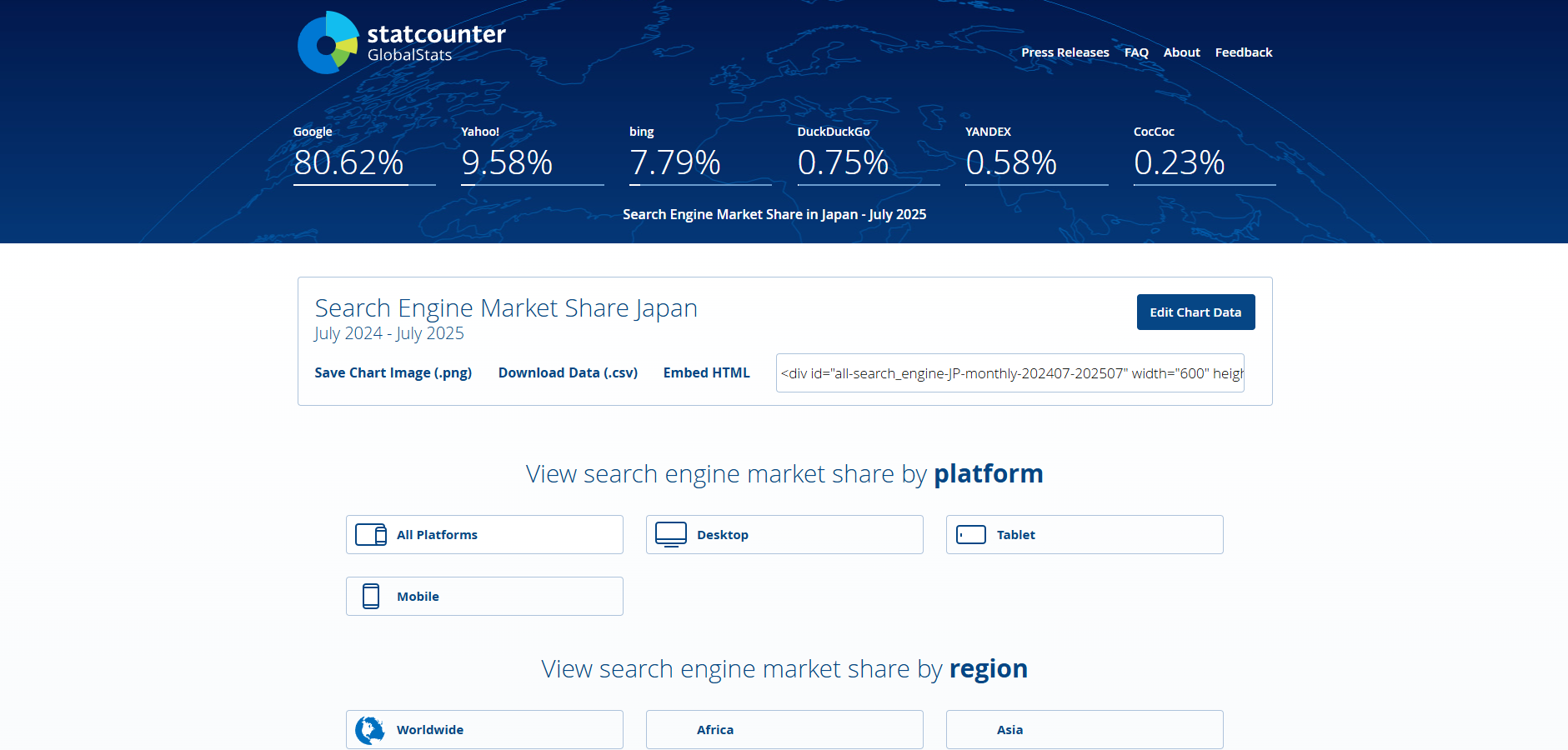
Search for economic trends with sites such as Statista or Google Market Finder. Stay tuned as buyer behavior continues to change! For instance, people in Germany might do more shopping on mobile, while consumers in Brazil may be desktop-first.
To identify areas with increasing demand for your products, take advantage of free or low-cost market research resources. Engage with localized knowledge & expertise—oftentimes, just a conversation with an in-market resource provides you with the unfiltered reality.
Knowing how people search is the most important thing. Keywords vary from country to country, and sometimes even state to state. Miss those differences, and you could be missing 11% of your future customers.
Gauging Your Current International Traffic
Look at your international analytics first. Tools such as Google Analytics can help you understand where your visitors are coming from, what they’re doing on your site, and how long they’re staying.
Identify trends in click-through, bounce rates, and conversion rates. Establish measurable goals with specific targets and timelines, so you can determine whether you are expanding.
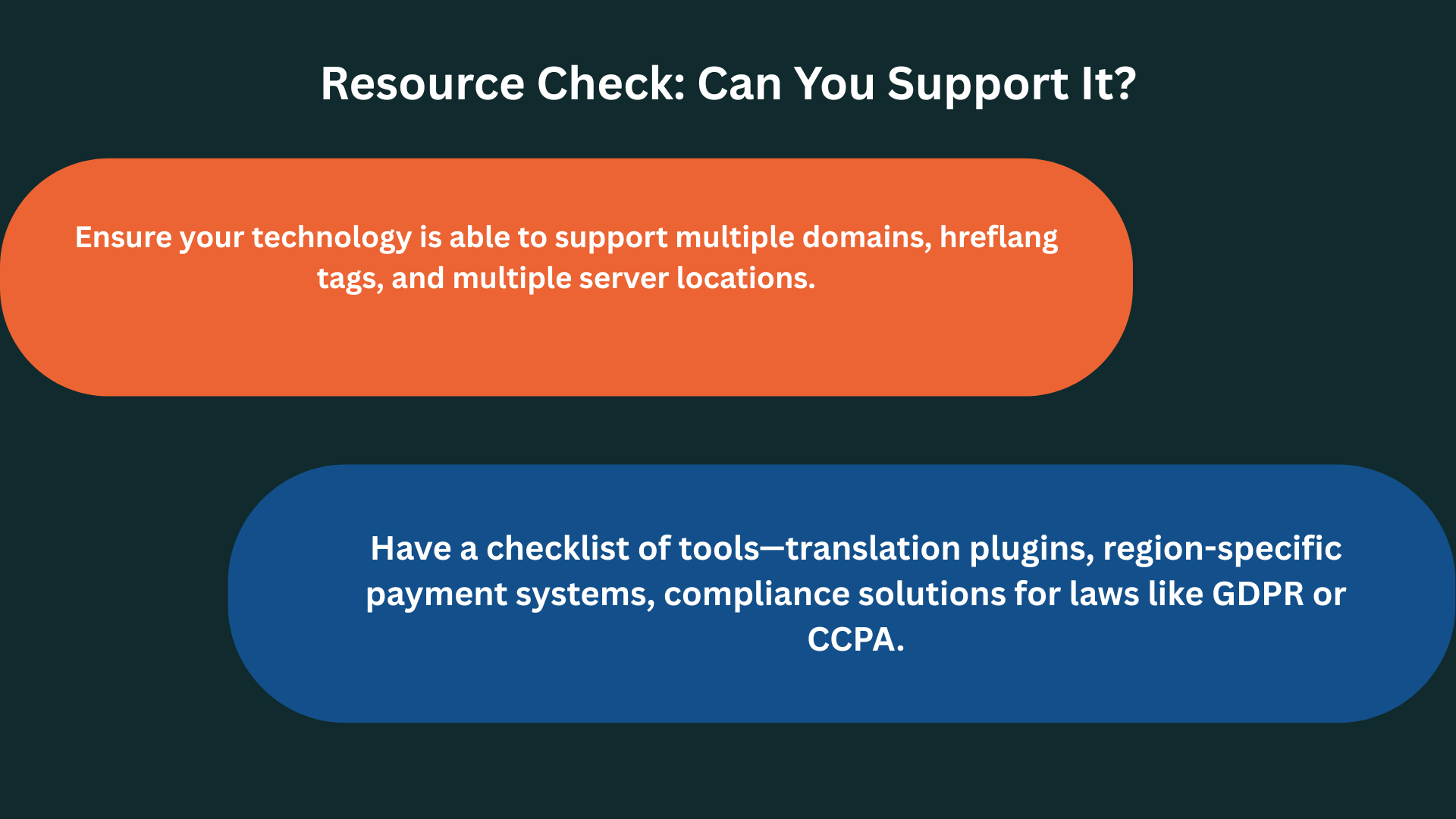
Aligning Global SEO With Business Goals
Align your global SEO strategy with your overall business objectives—such as increasing brand visibility or revenue. Have KPIs that are appropriate for each region.
Forge those connections across other teams, and continue to reassess your strategy to set yourself up for sustainable success in the future.
Strategic Groundwork for Global Success

Each global SEO victory begins with strategic groundwork. Laying out an action plan helps to ensure transparency—what’s the top priority, who’s responsible for each task, and when you’ll review progress.
Getting the right people around the table from the start fosters ownership. It helps to ensure that everyone remains focused on the same outcome, which is especially important when you’re collaborating across languages and international borders.
Staying on top of these milestones allows you to identify successes as well as areas that require a different strategy as the market evolves.
Target Market Research
Getting to know your target market isn’t just crunching numbers—it’s about figuring out what makes people tick.
- What do they care about?
- How do they talk?
- What are they buying (and from whom)?
Surveys, interviews, and even casual conversations can give you insights you’ll never find in spreadsheets. Sure, demographics like age and income are helpful, but the real gold comes from hearing stories straight from locals. Wrap it all into a simple report so your team sees the wins and knows where the gaps are.
Uncovering Cultural Nuances for Impact
Culture shapes how people see your brand. A design, phrase, or symbol that works in one country might totally flop in another.

Test your content with local eyes before rolling it out. A quick sniff test can save you from embarrassing blunders—and help your brand feel authentic, not foreign.
Technical SEO: The Global Blueprint
No matter which technical SEO topics you’re looking to tackle, getting international SEO right requires establishing a great technical base. The groundwork starts with a site structure that helps people and search engines find the right pages for each region.
Smart use of server locations and Content Delivery Networks (CDNs) keeps your website fast and reliable for users around the globe. Address technical barriers such as proper indexing and mobile experience. This ensures that your content gets in front of the right people, regardless of where they’re located.
Choosing Your International Site Structure
Choosing your international site structure involves three primary options: country-code top-level domains (CCTLDs), such as example.fr, subdomains, such as fr.example.com, and subdirectories, such as example.com/fr/. Each has its own strengths.
CCTLDs create greater levels of trust in local markets, but they require additional effort to maintain and increase. Subdomains allow you to easily segment content, but they can complicate the sharing of domain authority. Subdirectories are straightforward and most often recommended because they consolidate authority and are easier to manage.
|
Structure |
Pros |
Cons |
|---|---|---|
|
CCTLD (.fr) |
Local trust, geo-targeting |
Costly, more upkeep |
|
Subdomain |
Flexible, clear separation |
Harder to build authority |
|
Subdirectory |
Easy upkeep, shares authority |
Less local trust |
For the majority of businesses, subdirectories are the Goldilocks option—easy, effective, and easy to grow.
Mastering Hreflang for Right Audiences
When implemented correctly, hreflang tags are a powerful tool for helping search engines serve the appropriate language or regional version of your page. With the proper setup, searchers will always end up on the page intended for them.
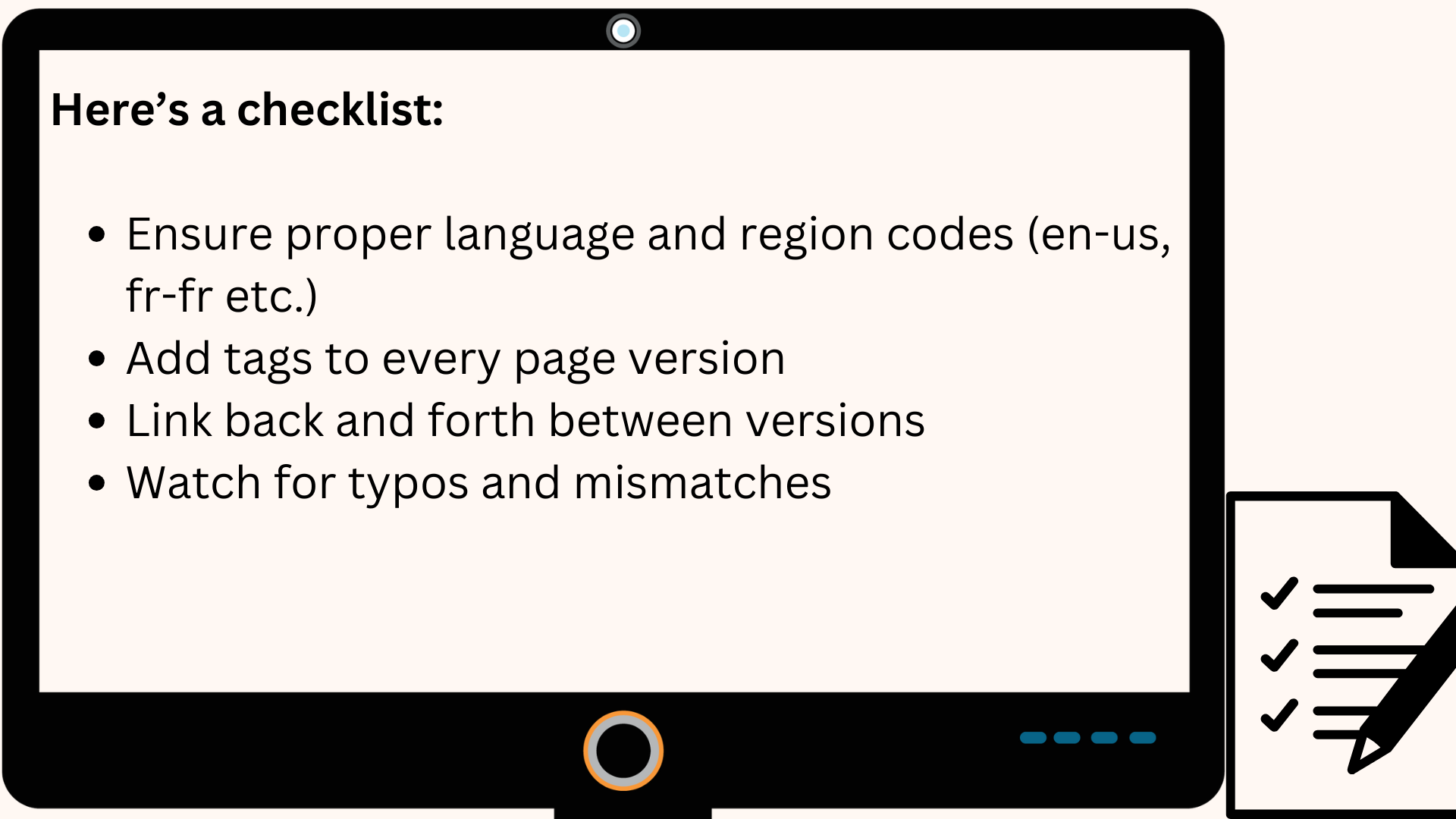
One of the biggest mistakes is failing to include reciprocal links. Or, like many, you simply forget to update these tags every time you create or revise content. Monitor your tags regularly with Google Search Console to identify mistakes as soon as possible.
Optimizing Server Location and CDN
Server location and CDN are crucial aspects of your site’s performance. Where your site is hosted is important. U.S.-based sites that have significant traffic from Europe or Asia will benefit from speed increases by utilizing a CDN.
CDNs save copies of your site geographically closer to users, dramatically reducing page load times. Tools such as GTmetrix or Google PageSpeed Insights will demonstrate the effect on speed that server location has. Conduct a CDN log review and speed test quarterly to make sure you keep ahead of the game.
Ensuring Global Site Speed, Mobile-Friendliness
Besides, no one wants to wait on a slow site. Load time and mobile design are critical factors. Google is increasingly focused on load time and mobile friendliness. Implement clean designs, optimize images, and reduce heavy code.
Test your site on as many various brands of phones and tablets as you can.

Addressing Global Indexing Challenges
Global Indexing Issues arise when pages are incorrectly configured. Even something as simple as duplicate content, broken links, or missing tags can create a barrier for search engines.
Ensure that all versions of your site are crawlable. Utilize Google Search Console for each regional or language variant. Schedule dedicated time each month to address crawl errors and regularly update sitemaps.
Content That Resonates Across Cultures
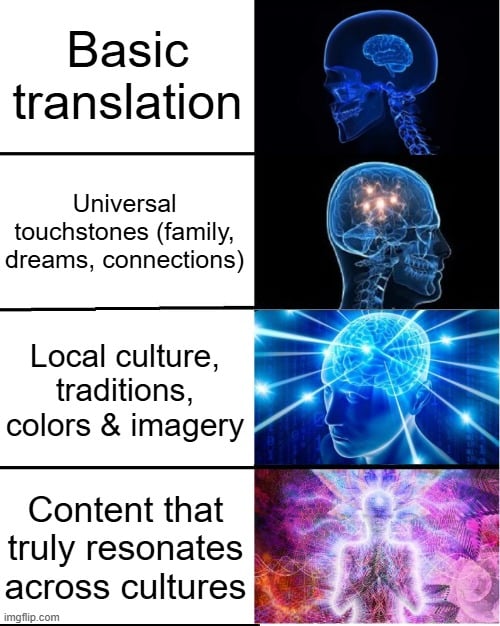
In international SEO, content that resonates across cultures is deeper than that – it’s more than words on a page. It requires a sensitivity to what moves people from all cultures and backgrounds. You need to engage them on their turf and talk the language that makes them feel most at ease.
Usually, this begins by appealing to universal touchstones that people understand, such as the connections between family members or the pursuit of dreams. For success, that’s not the end of the story. Authentic resonance occurs when you align with local culture and traditions.
It’s equally about employing colors and imagery that are of particular significance in various locales.
True Localization: Beyond Word-for-Word
True localization goes beyond word-for-word translation, but it’s about making your content resonate to the people you’re trying to reach. Don’t just translate—consider how a word or image will be received in various cultures.
So, for instance, a “thumbs up” emoji might be well-received in the U.S., but not in all countries.
To do this right, check if your content:
- Uses language that feels natural
- Reflects local humor and values
- Avoids words or images that might offend
- Aligns with how locals in that region speak and search
Building Authority in New Markets
Breaking into a new market goes beyond simply translating a website. It’s not just about creating the perception of trust. Attend where the natives search digitally and culturally assimilate into the new world!
For digital marketers and SEO agencies, authority is a long game—measured in years, not weeks. You want to start by getting in tune with local customs and laws, whether that’s GDPR or CCPA. Get to know how everyone browses, clicks, and engages in every market!
Earning Quality Local Backlinks
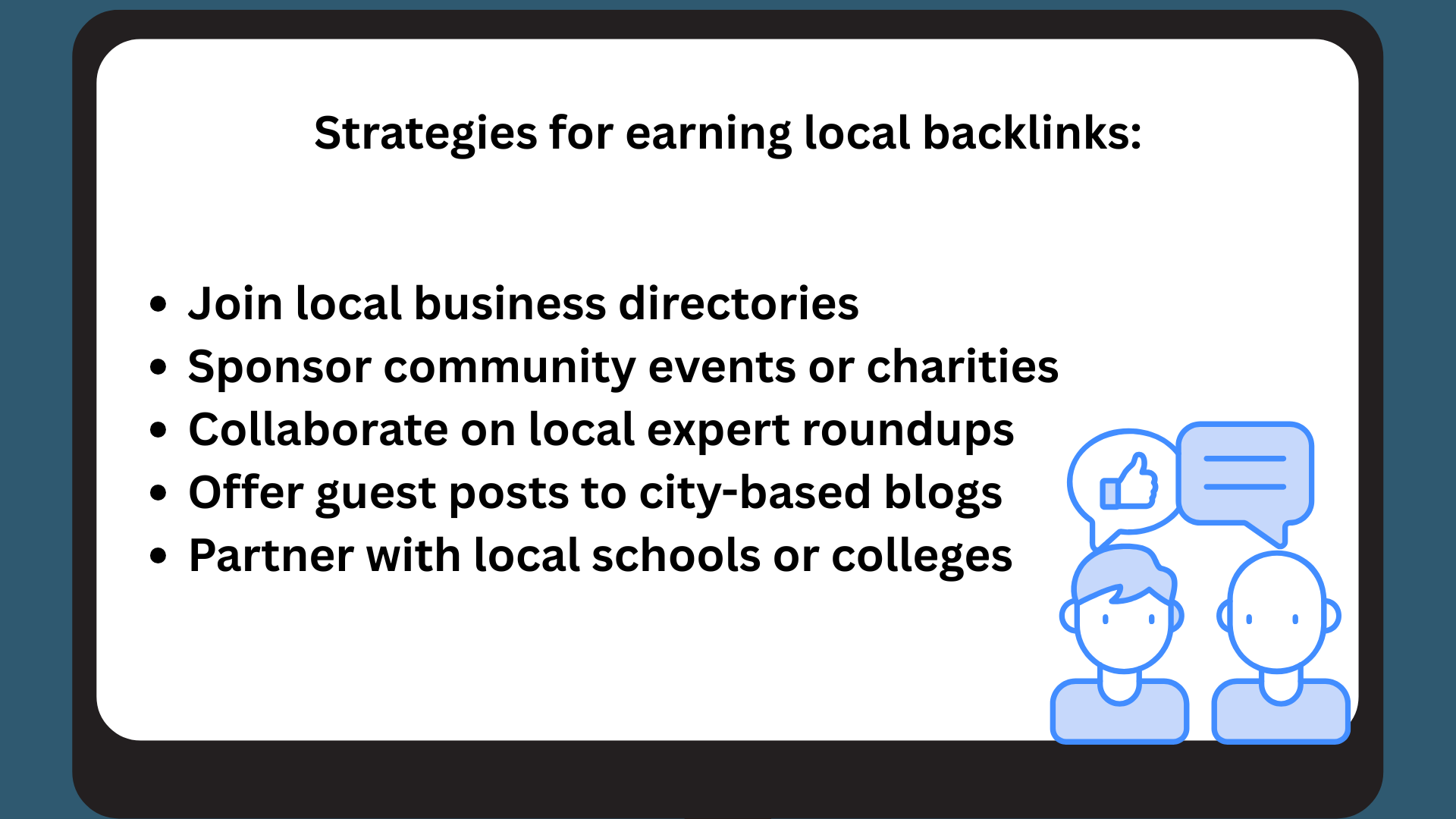
Quality backlinks from top local authorities make your site look more trustworthy or credible at a glance. Begin with a backlink gap audit, putting your links to the test against those of near-peak competitors.
Or, build foundation links via citation services such as Bright Local or Whitespark to ensure these reliable local citations exist. Engage with businesses in your area, sponsor and support local events, and contact local and regional media for authentic stories or interviews.
Getting guest posts on local blogs or media outlets provides another avenue. Utilize local ccTLDs and ensure that your physical address is listed on Google Maps to increase local trust. Keep a close eye on your backlinks, removing those that appear suspicious.
Engaging With Local Communities Online
Participating in local discussions, whether they be on forums, Facebook groups, or community events helps build your reputation. Create connections with local opinion shapers—they understand the audience and have the credibility you lack.
An ongoing schedule of virtual town halls, project updates, and opportunities for public feedback lets locals know that you’re here to stay. Document how many people are engaging so you know what’s resonating.
Considering Non-Google Search Engines
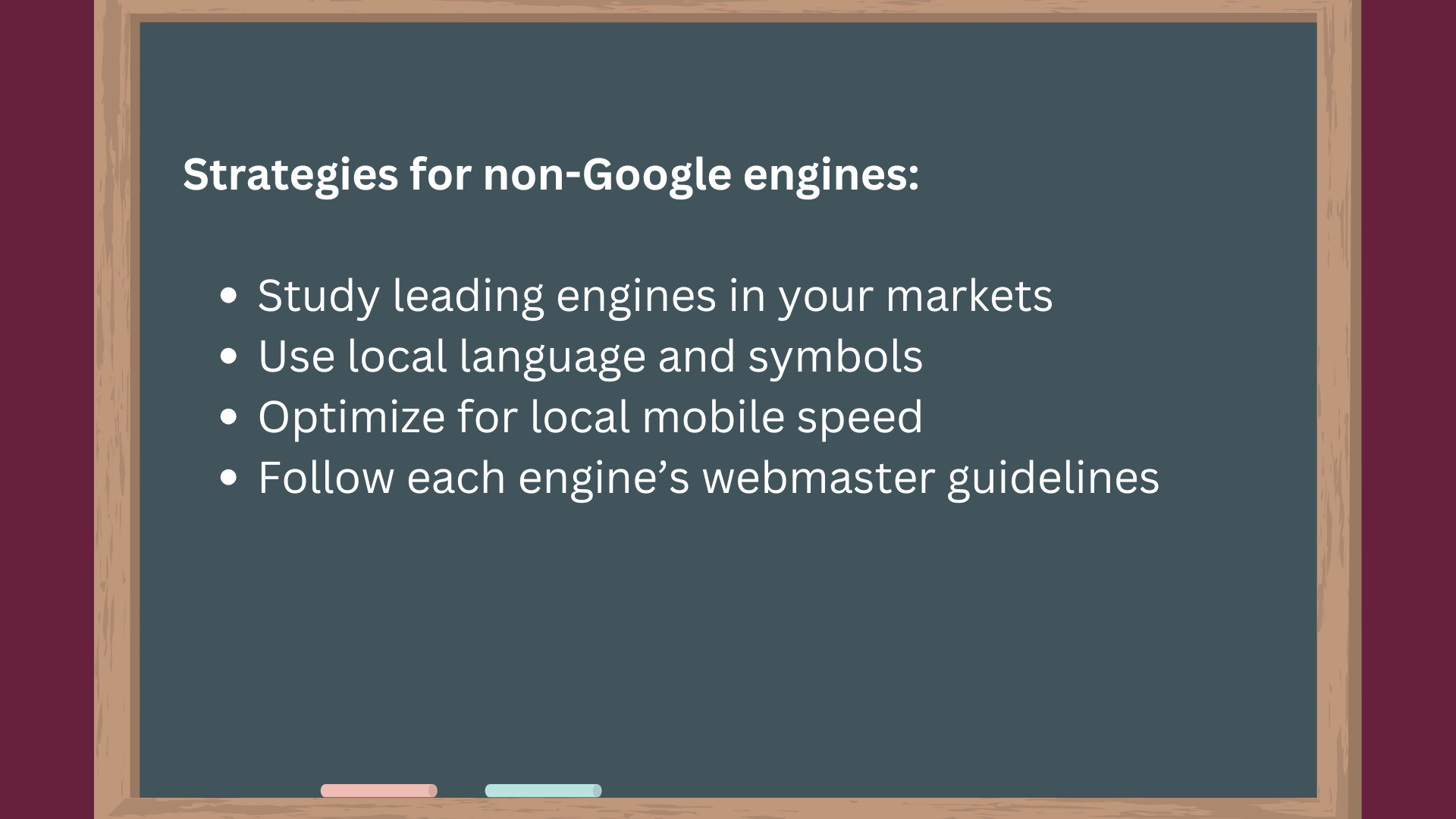
In some markets, Yandex or Baidu is the preferred search engine over Google. Understand their idiosyncrasies when Yandex may prioritize local content or when Baidu may require content to be heavily moderated.
Optimize meta titles, meta descriptions, and URL structure for each page.
Measuring Impact and Staying Agile
Driving tangible results with international SEO requires constant number-crunching and a willingness to pivot. Determining success requires a clear understanding of your markers—what did the trick last month in Texas may not even make a dent in Tokyo. For those working with brands across borders, tracking real data is the only way to know if your efforts connect with locals or fall flat.
Establishing these metrics provides definition to drive decision-making and illuminate where to improve, quickly.
Key Metrics for International Performance
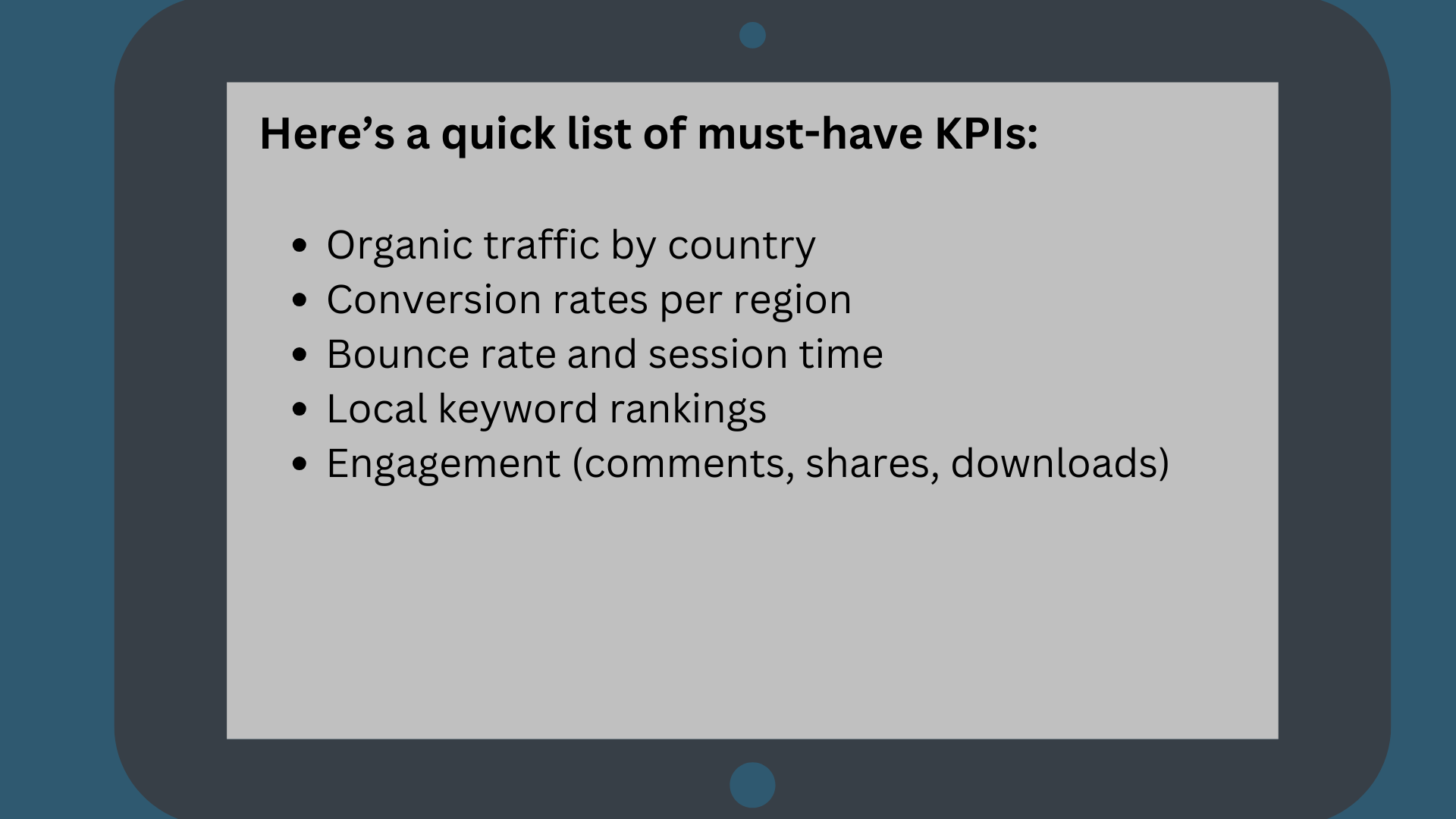
When you’re taking your business global, a hunch won’t cut it. The key metrics to keep an eye on are organic traffic, lead conversion rates, and overall user engagement with your website. So, if your bounce rate suddenly increased in Germany or sales have stopped in Brazil, the data speaks volumes.
Below is a table showing how you might compare performance by region:
|
Region |
Organic Visits |
Conversion Rate (%) |
Avg. Session Time (min) |
|---|---|---|---|
|
North America |
15,000 |
3.1 |
4.5 |
|
Europe |
10,200 |
2.4 |
3.9 |
|
Asia |
8,500 |
2.9 |
4.2 |
Benchmarks allow you to identify areas in which you’re underperforming and areas in which you’re over-performing.
Tools for Tracking Global SEO
To stay ahead, you need to be armed with the right tools. Google Analytics, SEMrush, Ahrefs, and Moz are just a few that allow you to track traffic, rankings, and behavior by region. Other good options are Screaming Frog for site audits and Google Search Console for query data.
Together, each tool provides a valuable piece to the big picture story. Measure impact, abandon what’s not, and stay agile and up-to-date with your tools as priorities change.
- Google Analytics
- SEMrush
- Ahrefs
- Moz
- Screaming Frog
- Google Search Console
The most effective tools are those that easily illustrate trends and gaps. Plan to review your setup regularly and be willing to replace tools as your global efforts expand.
Future-Proofing: Emerging Trends & Value
International SEO is not a static thing. Voice search, mobile-first design, and AI-driven content—these trends are reshaping the landscape. Future-proofing and staying ahead of the curve requires agility in testing and adapting new concepts, while learning from every pilot market.
- Track search trends in target regions
- Prioritize mobile-first and voice search readiness
- Localize content for culture, not just language
- Audit site health often
- Foster a culture of quick action and learning
When it comes to global SEO, you’re going to need to play the long game. It creates an invaluable equity of brand awareness, brand trust, and brand loyalty across diverse markets.
Conclusion
Taking SEO global is a lot like turning your local food truck into a headliner at a massive international festival. You can’t just roll up with the same old menu and expect everyone to line up—you’ve got to know what each crowd is hungry for.
The good news? You don’t need fancy tricks to make it work. With simple steps, quality content, and a strategy tailored to each audience, you can connect with people across borders. Just like Austin brands know one menu doesn’t fit everyone, your website and messaging need that same flexibility.
Show up locally, speak their language, and build trust with proof that you’re the real deal. Keep track of what’s working, ditch what’s not, and stay adaptable as new markets evolve.
Ready to take your brand worldwide? Get in touch with SirLinksALot—we’ll help you break through barriers and make international SEO feel like second nature.
Frequently Asked Questions
What is international SEO?
International SEO is the practice of optimizing your site for global audiences, ensuring that people across the globe or those who speak different languages can find you. This involves implementing hreflang attributes and employing unique tactics to enhance visibility and rankings on a global scale.
How do I know if my business is ready for international SEO?
If you currently receive website traffic from outside your country or intend to scale your business internationally, then it’s time to think about international SEO strategies. Ensure you have the resources and demand to support your expansion into different regions before leaping into international markets.
What are the first steps in creating an international SEO strategy?
Conduct thorough market research, create a strategy based on your analysis of target countries, and focus on your website’s technical setup, ensuring you have the appropriate localized content and keywords for different regions.
Why is technical SEO important for international websites?
Technical SEO is what ensures that search engines can find, understand, and ultimately show your content to the right people globally. This includes implementing hreflang attributes, desired site structure, and quick loading speeds for international audiences.
How can I create content that resonates with diverse cultures?
Incorporate regional colloquialisms, anecdotes, and context to enhance local relevance. To ensure your message resonates with the culture you’re targeting, international content should incorporate elements that help build familiarity and trust.
How do I build authority in new international markets?
Earn quality backlinks from local websites, collaborate with regional influencers, and get listed in local directories to enhance your international SEO strategies. Each of these steps increases both trust and visibility in each new market.
How do I measure the success of my international SEO efforts?
Track traffic, rankings, and conversions from each target country using international SEO strategies. Leverage tools such as Google Analytics and Search Console to monitor growth and refine your foreign SEO strategy.