Key Takeaways
- By claiming and keeping your Google Business Profile up to date, your dealership will stand out in local car searches, making it easier for nearby buyers to find you.
- Steady local citations, great reviews from customers, and community involvement all help create trust and send more visitors to your online showroom.
- Mobile optimization makes certain local buyers have a seamless browsing experience on their phones or tablets.
- Strategic keyword research–including location-based and model-specific terms—gets your dealership in front of serious shoppers at every step along their car-buying journey.
- Engaging content such as walkarounds, financing tips, and service advice not only educates but resonates with your local community, inspiring loyalty and word of mouth.
- Regularly monitoring your SEO performance through ranking reports, traffic, and lead analysis keeps your digital strategy on target and lets you adjust and optimize for even greater effectiveness.
Car dealer SEO is all about helping car dealerships show up where buyers are actually looking—on Google. When someone searches for a new ride in Texas, the right SEO strategy can make sure your dealership appears front and center. That means more clicks, more visits, and more cars driving off your lot.
By fine-tuning keywords, polishing up listings, and making simple page tweaks, dealerships can outshine local competitors and capture more leads. In this post, we’ll walk through proven steps, share real results, and give you local tips to boost your online visibility and turn searches into sales.
Your Digital Showroom
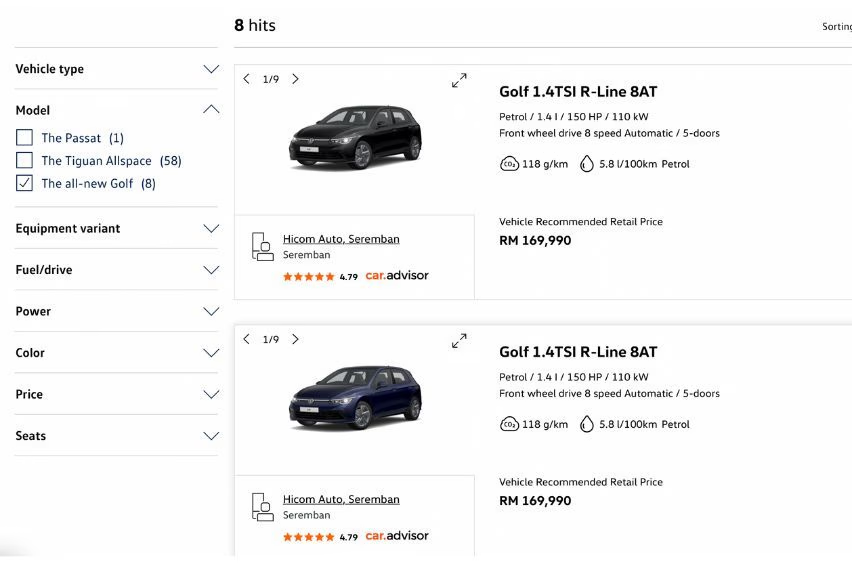 That digital showroom has become the first destination for car shoppers in Austin and elsewhere. As car-buying habits change, the necessity for a powerful online presence through effective automotive SEO strategies is greater than ever. Over 60% of car searches begin on mobile, and nearly 40% of all dealership site visitors come from organic search results.
Your eShowroom is more than a website; it’s your prime sales floor. Implementing solid SEO efforts is what gets you seen and trusted by potential car buyers.
- Claim and optimize your Google Business Profile for visibility
- Use local citations to boost credibility and search rankings
- Get positive online reviews to build trust and reputation
- Make your website mobile-friendly for seamless browsing
- Adapt content for voice search to catch local queries
- Optimize Core Web Vitals for faster loading and quality UX
- A/B test, try to see what works for visitors
1. Google Business Profile
Be sure to claim and verify your Google Business Profile. This is what appears when someone looks you up on Google Maps or Search. Update it frequently—maintain your hours, phone number, and address up-to-date.
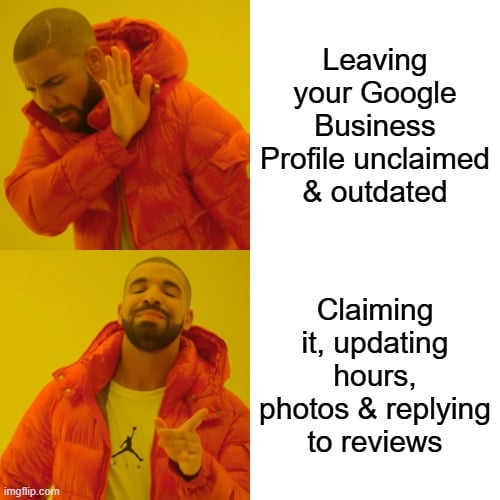 Include obvious, vivid images of your lot, cars, and even your employees. Shoppers want to go to a dealership that appears vibrant and authentic. Remember to respond to customer questions and reviews here, as well. It demonstrates that you’re interested and attentive to your local buyers.
2. Local Citations
List your dealership in trusted local directories like Yelp, Yellow Pages, and even local news sites.
- Always use the same name, address, and phone number.
- Consistency tells Google your business is legit.
- Check your listings every few months to fix errors or duplicates.
Think of citations as a community stamp of approval. The more accurate they are, the more trustworthy your dealership looks — both to search engines and buyers.
3. Online Reviews
Reviews build trust faster than ads.
- Ask happy customers to leave reviews on Google, Yelp, or Facebook.
- A steady flow of new reviews makes your dealership look active.
- Reply to every review — positive or negative — to show you care.
Bonus: Highlight good reviews on your site or socials. Use feedback to spot areas for improvement. Reviews don’t just boost your SEO; they shape a better customer experience.
4. Mobile Optimization
Most shoppers will check your site on their phone.
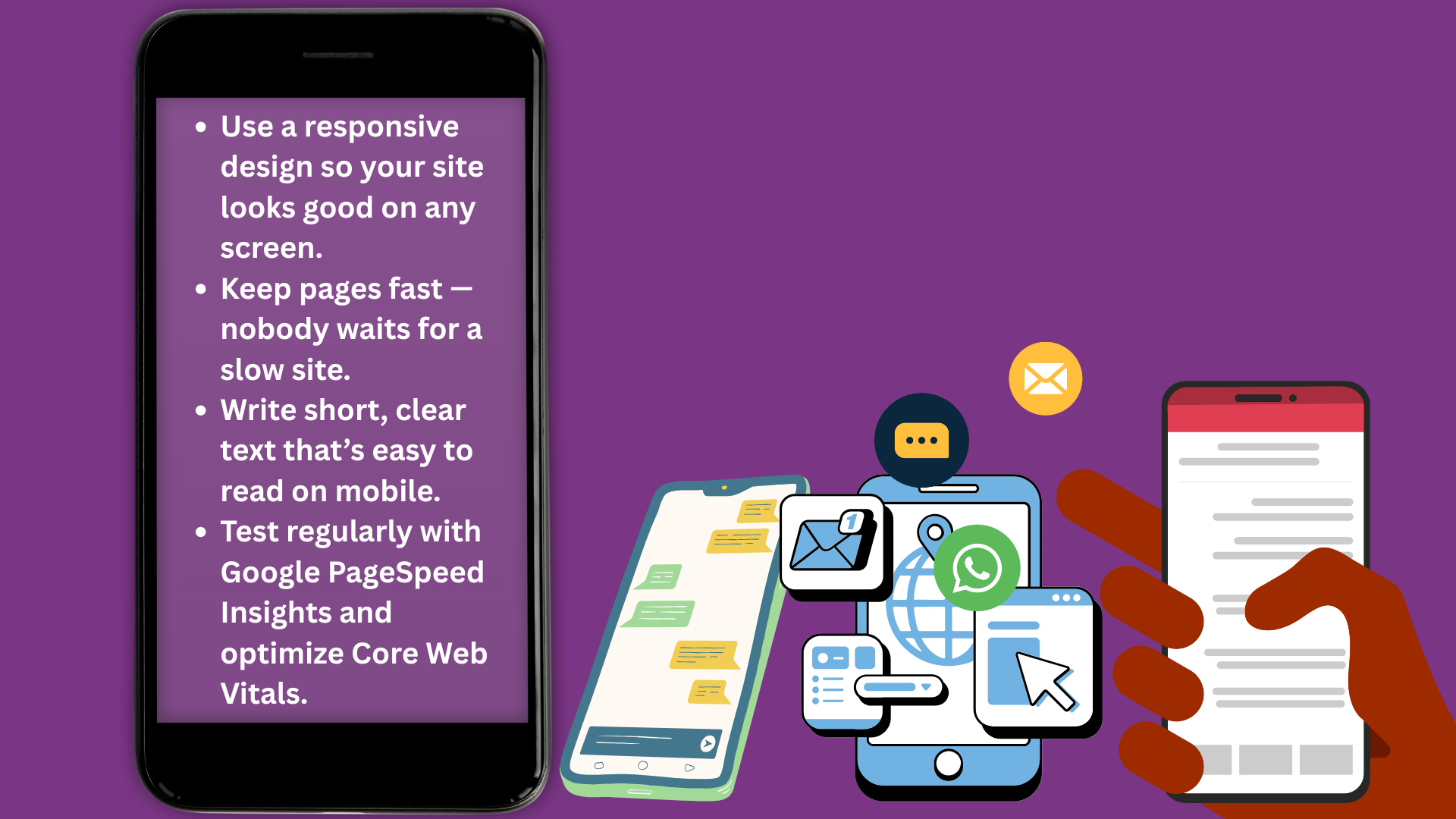
A mobile-friendly site = more leads, fewer bounces.
5. Voice Search
Voice search is growing fast.
- Use natural, conversational keywords like “best used car dealer in Austin.”
- Create FAQ pages with real buyer questions and answers.
- Add structured data so Google can showcase your answers.
By optimizing for voice, you’ll be the dealer that shows up when shoppers ask their smart speakers for help.
Website Foundation
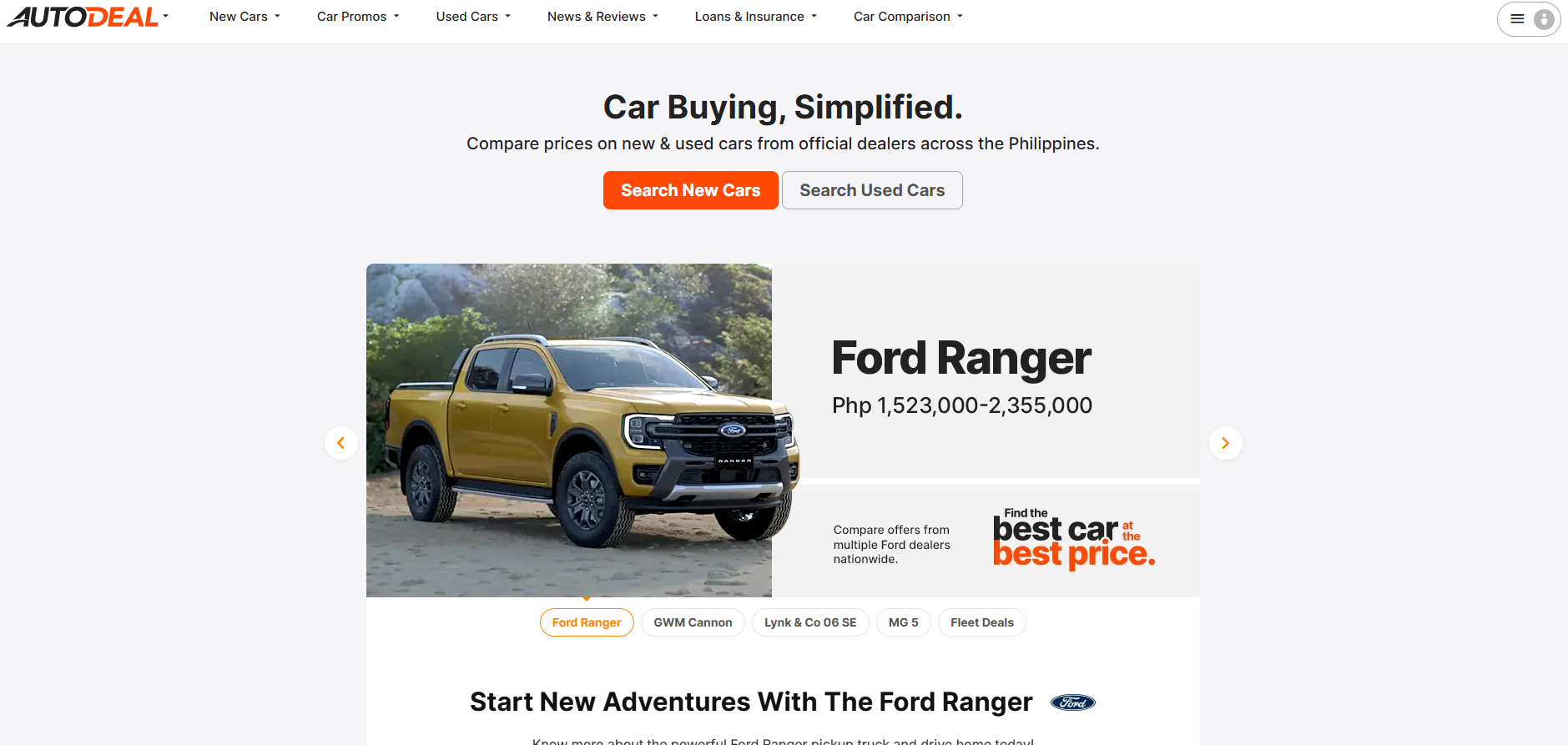
Your website is the base of your dealership’s SEO. If it’s slow, confusing, or broken, both Google and buyers will move on. In Texas, where shoppers want fast answers on cars and financing, a strong website foundation can make or break your leads.
Technical Health
Here’s what to do:
- Fix broken links & 404s: Dead ends frustrate shoppers and hurt rankings. Use tools like Google Search Console to spot and fix them.
- Optimize images: Compress car photos so they load quickly. Add alt text to help Google (and screen readers) understand each picture.
- Create an XML sitemap: Think of it as a roadmap that helps Google find your inventory, specials, and finance pages faster.
- Monitor uptime: If your site crashes on a busy Saturday, you lose sales. Make sure your site stays online 24/7.
Site Structure
Here are a few tips for you:
- Organize your site into clear categories: New Cars, Used Cars, Service, Financing.
- Use short, descriptive URLs like:
/used-cars/ford-f-150-austin. - Add breadcrumbs so visitors can backtrack with one click.
- Keep it “flat” — most pages should be no more than 3 clicks from the homepage.
- Link related pages (e.g., from a Ford F-150 page to financing options) to keep shoppers engaged.
User Experience
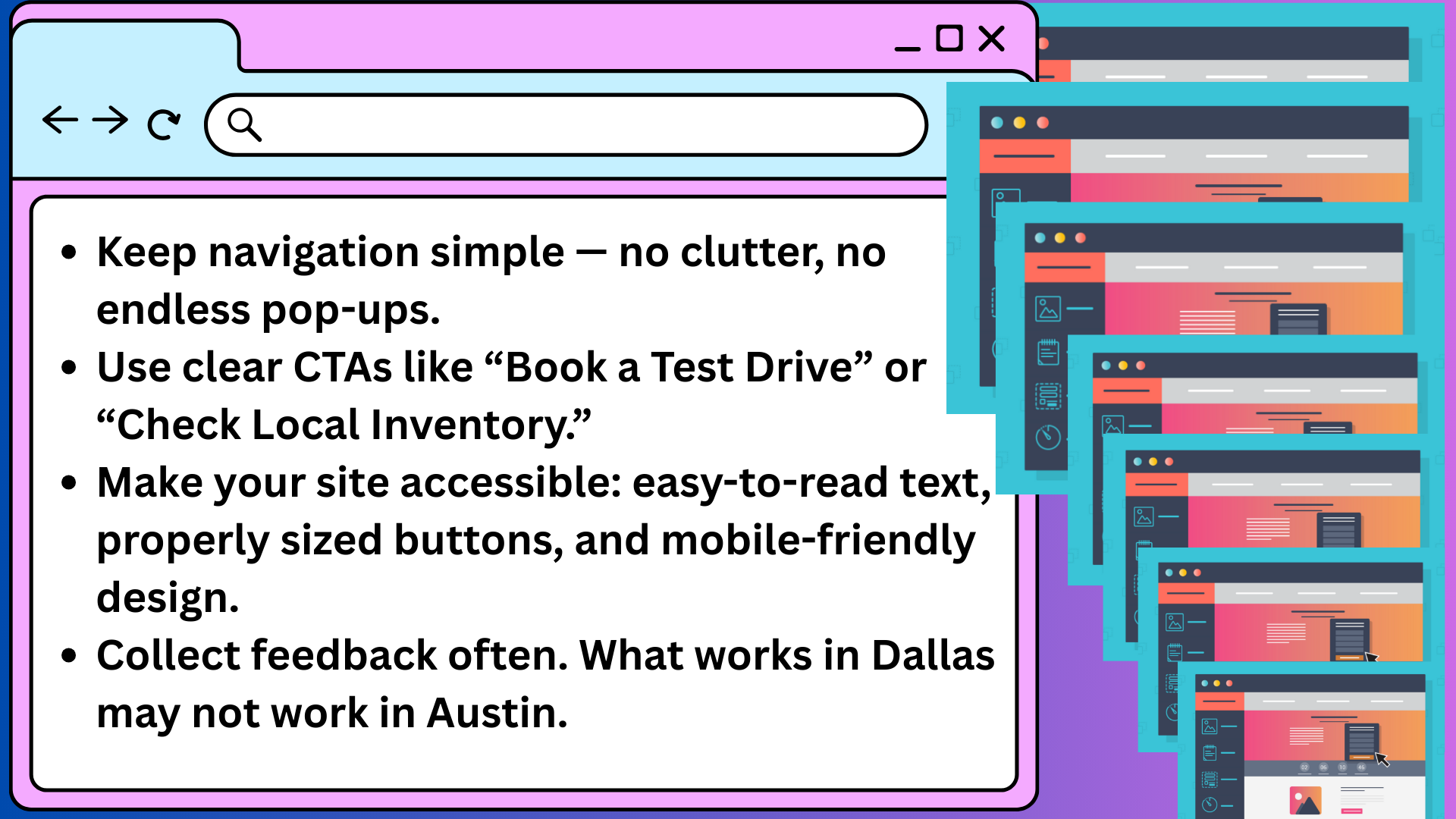
Strategic Keywords
Keywords are the base of car dealer SEO. The goal isn’t just chasing popular terms — it’s picking words that guide buyers naturally through your site.
- Do keyword research for industry terms and your dealership’s unique offers.
- Add keywords naturally into model pages, blogs, and landing pages.
- Check what local competitors rank for to spot gaps.
- Use long-tail keywords like “used Honda Accord under 20000 Austin” to catch ready-to-buy shoppers.
- Revisit your list often — search behavior changes fast.
Buyer Intent
Not all searches mean someone’s ready to buy.
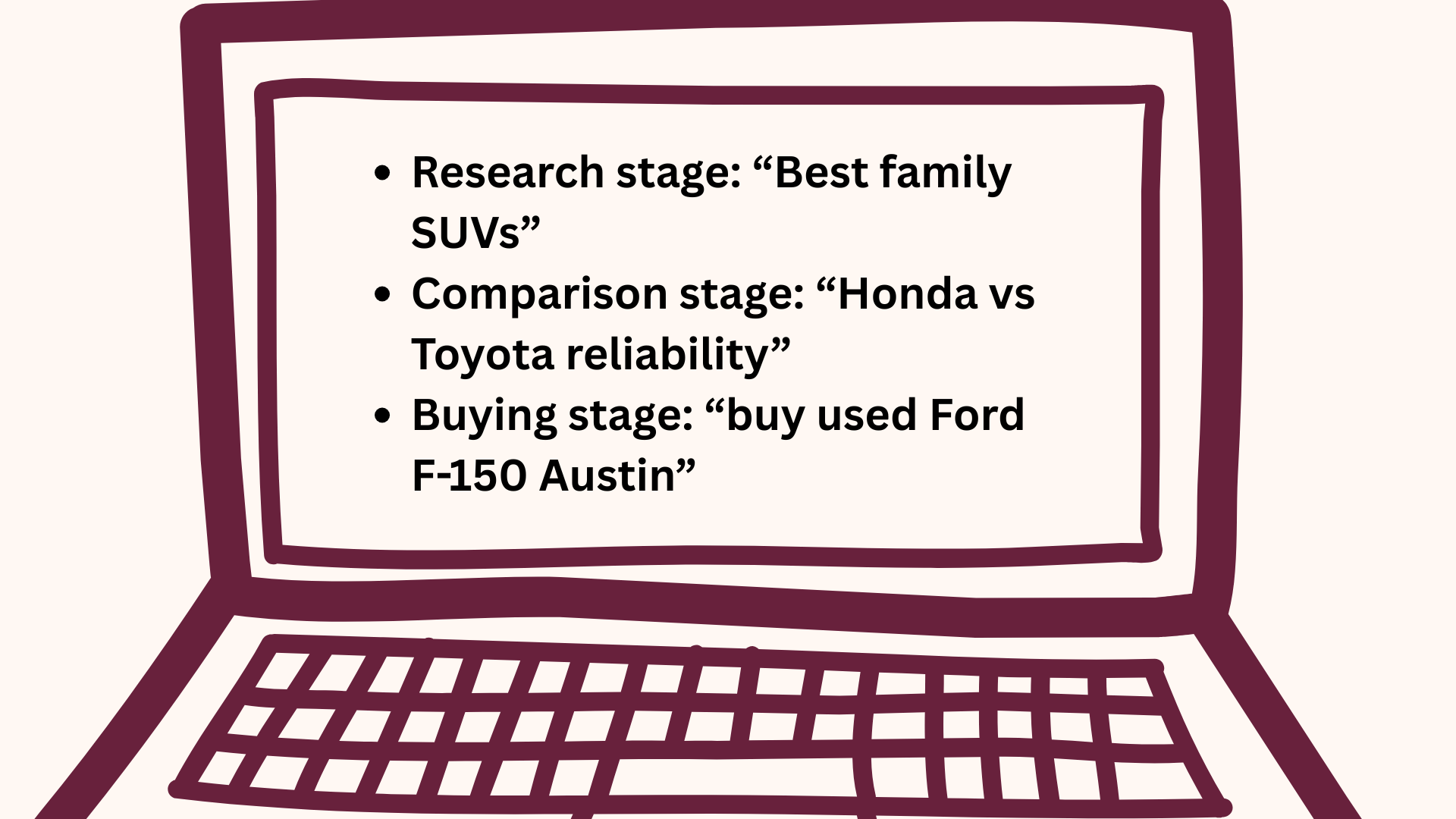
Use analytics to see which keywords drive leads vs. casual traffic. Create content for each stage: information pages for research and landing pages for purchase.
Model Specifics
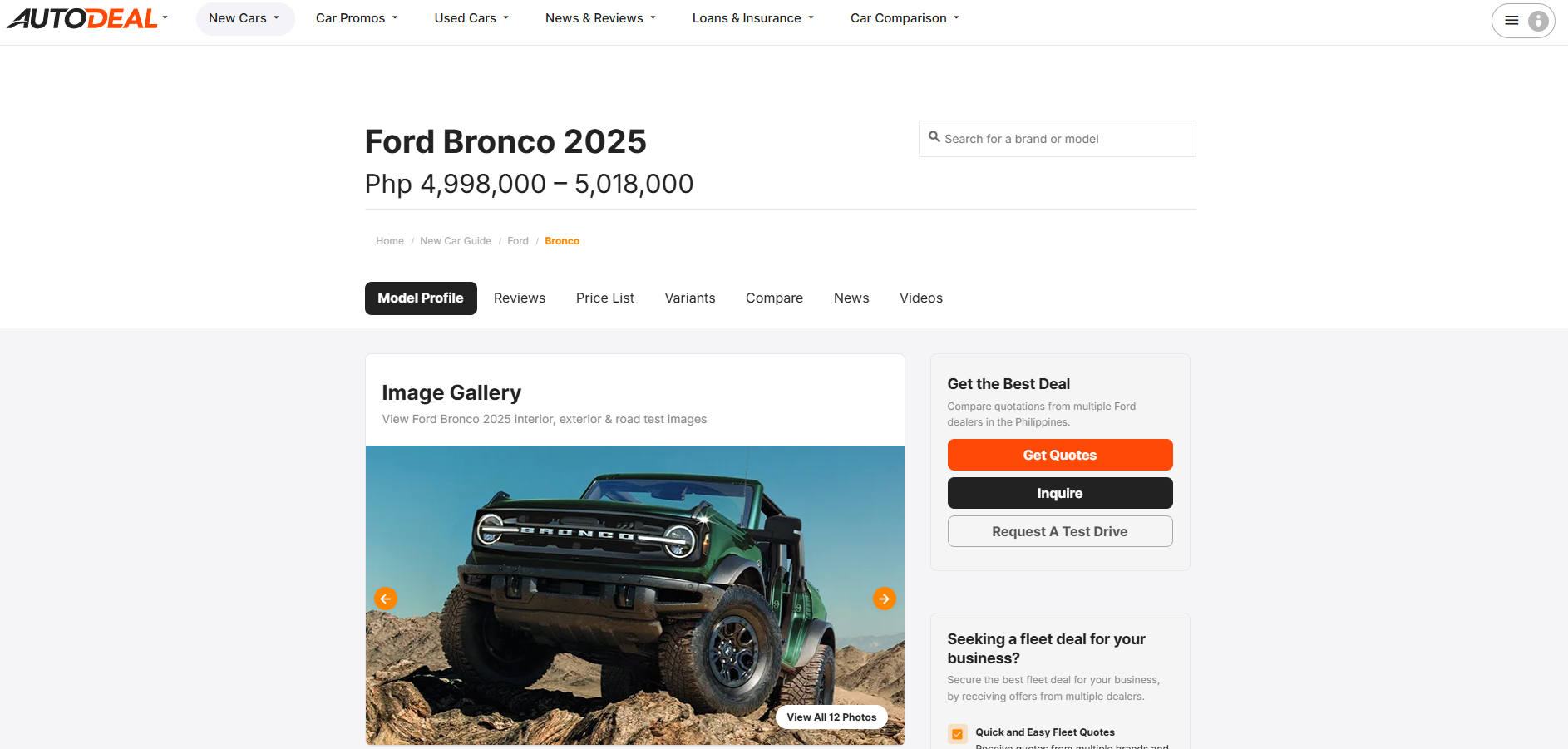
Every car listing should stand out.
- Include full specs and details.
- Add crisp photos or videos.
- Share stories or reviews from happy buyers.
- Highlight unique perks — rare trims, special features, or unbeatable prices.
This builds trust and helps turn browsers into buyers.
Geographic Targeting
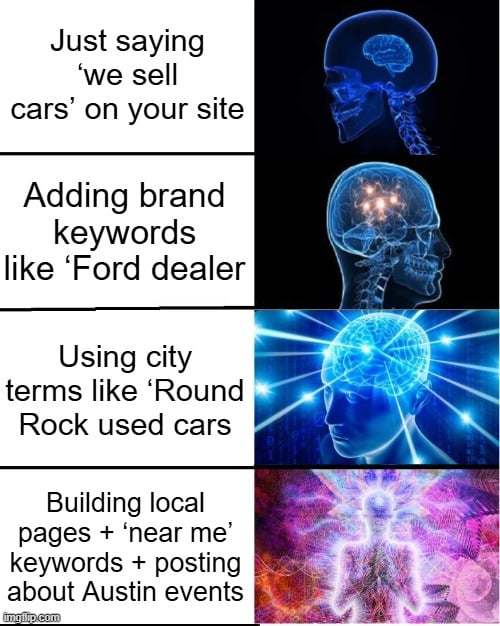
Local SEO = more foot traffic.
- Use city/neighborhood names like “Round Rock used cars.”
- Create separate pages for each area you serve.
- Add “near me” terms such as “car dealer near me” or “used trucks near me.”
- Join or sponsor local events, then post about them.
This shows Google (and shoppers) you’re part of the Austin community.
Community SEO
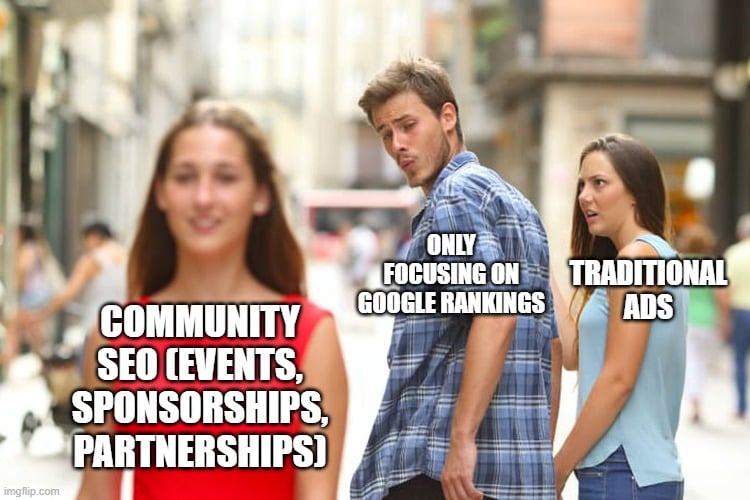
U.S. Car dealers can enhance their web presence by connecting their brand to local lifestyle. It’s not only about maintaining your visibility on Google—it’s about being the neighbor folks are familiar with. A strong community bond will earn you local links, genuine reviews, and repeat customers!
Local events, sponsorships, and school partnerships can all play a big part, especially when you tie in the right search terms and keep your content fresh.
Sponsorships
- Obtain links from local groups and sites, which increases your local ranking.
- Build trust by standing for things neighbors care about.
- Build word-of-mouth as your logo flashes at games or fundraisers.
- Demonstrate genuine engagement, not merely advertisements, which causes your brand to linger.
Sponsorships are more than a logo on a banner. They’re a foot in the door with local readers. Post stories and photos of the sponsored events on your site and social channels.
Track how these efforts impact visits, mentions, and reviews. You’ll begin to see what works and where to apply your efforts next.
Performance Metrics
Performance Metrics were the lifeblood of any such successful car dealer SEO plan. They display what’s working, what’s not, and where to concentrate next. With so many consumers shopping online–particularly from mobile phones–U.S. Dealers should pay attention to these critical metrics to remain competitive.
Here’s a quick look at some core metrics you’ll want to track:
|
Metric |
What It Shows |
Why It Matters |
|---|---|---|
|
Lead Conversion Rate |
% of visitors who become leads |
Measures site effectiveness |
|
Organic Traffic |
Number of visitors from search engines |
Shows SEO impact |
|
Bounce Rate |
% of users who leave fast |
Flags problems with content or UX |
|
CTR |
Click-through rate on listings/pages |
Measures engagement |
|
Mobile Friendliness |
Site performance on mobile devices |
63% of car searches are mobile |
|
Video Engagement |
Views and actions on videos |
75% of buyers influenced by video |
|
Keyword Rankings |
Position for important search terms |
Tracks visibility and SEO success |
Lead Tracking
Here’s what you can do:
- Use a CRM connected to your site.
- Every form or “Contact” click syncs to the CRM.
- Track lead sources: Google, ads, or social.
- Not all leads are equal — find which ones bring real buyers.
- Test forms on mobile (many Austin leads come from phones).
- Use patterns to refine SEO and send targeted follow-ups.
Ranking Reports
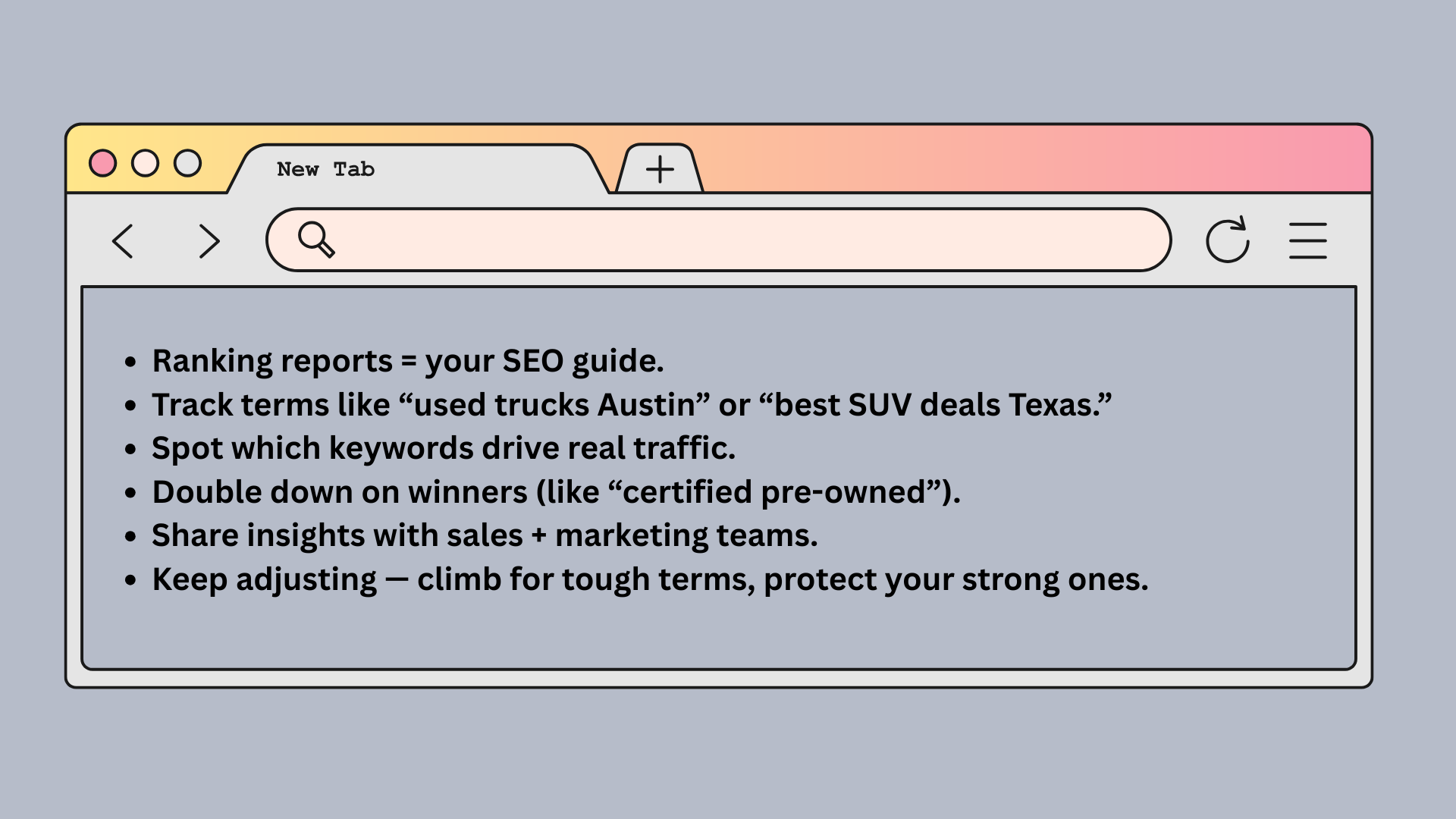
Traffic Analysis
Traffic analysis is where you’ll see how people use your site. The optimal method? Rely on tools such as Google Analytics to observe which pages receive the most traffic, the duration of visitors’ stay, and their exit points.
|
Page |
Users |
Avg. Time on Page |
Bounce Rate |
|---|---|---|---|
|
Home |
3,212 |
1:14 min |
48% |
|
Inventory |
2,204 |
2:01 min |
34% |
|
Specials |
1,089 |
0:59 min |
51% |
If your inventory page receives a lot of visits but a lot of bounces, it could be time for richer photos, more video walkarounds, or faster load times. Good traffic analysis means you don’t guess what to fix—you know.
Goal Setting and Optimization
Have one clear, real world goal–increase mobile leads by 10%, or be in the top three for “Austin car dealer”. Review your progress monthly, and be prepared to pivot.
Tweak your SEO if your stats decline, or dig in when you find something effective.
Conclusion
SEO for Austin car dealers isn’t just about showing up online — it’s about making sure people find you fast and feel confident about visiting your lot. Local keywords, real reviews, and a site that’s easy to use all add up to steady traffic and stronger sales.
Think of SEO like a tune-up: keep it fresh, keep it consistent, and your dealership stays ahead of the competition. Dealers who track results and adjust quickly see more visitors in the showroom — and more cars driving off the lot.
Ready to rev up your Austin SEO? The team at SirLinksalot can help you outpace competitors and turn clicks into customers.
Frequently Asked Questions
What is car dealer SEO?
Car dealership SEO involves optimizing your dealership website to improve its ranking in local search engine results, which helps in attracting more potential car buyers.
Why is a strong website foundation important for my dealership?
A strong website platform for car dealerships provides quick load speed, smartphone optimization, and simple navigation, which enhances credibility with both visitors and search engines, boosting your dealership ranking and sales.
How do strategic keywords help car dealerships?
Smart automotive SEO keywords align with what local car shoppers type into the web. Utilizing these keywords helps your car dealership show up in front of more potential buyers on Google.
What makes content compelling for car dealer websites?
Good content, as part of an effective automotive SEO strategy, responds to actual customer questions, displays your inventory, and showcases local expertise.
How does community SEO benefit my dealership?
Community SEO enhances your dealership website’s visibility through local partnerships, events, and reviews, connecting you with potential car buyers in Austin.
What performance metrics should I track for car dealer SEO?
Monitor traffic, leads, and rankings as part of your automotive SEO strategy; these metrics reveal effective areas and opportunities for enhancement.
Do car dealers really need SEO in Austin, Texas?
Yes, Austin’s market is aggressive. Implementing a solid automotive SEO strategy makes your car dealership shine, connects with more local buyers, and brings more feet into your showroom.