You’ve undoubtedly heard the term “organic traffic” used as if it were some sort of internet gold if you’ve ever dabbled in digital marketing or attempted to expand a website.
Then there is Google Ads, the ostentatious, pay-to-play cousin that, if you are prepared to pay, puts your website at the top of search results right away.
The question is, though: is Google Ads traffic genuinely regarded as organic? Spoiler alert, not quite. Let’s see why is that and what consits of legit organic web traffic.
Key Takeaways
- Google Ads offers instant targeted traffic via paid advertising, and organic traffic builds up over time through SEO for long-term authenticity and sustainable growth.
- Organic traffic is obtained from free search results based on SEO elements such as keywords, quality content, backlinks, and a proper user experience.
- Although Google Ads traffic is paid, ads indirectly increase organic traffic by raising awareness of the brand and inviting return visits.
- Merging Google Ads with SEO provides a well-rounded strategy that leverages both immediate visibility and long-term search rankings.
How Effective Are Google Ads and Organic Traffic?
When it comes to digital marketing, I’ve found that using both Google Ads and organic traffic strategies gives the best results. They each play a different role, but together, they can really boost your online presence.
Google Ads works well to obtain fast, focused traffic. I can place ads that appear exactly when consumers are looking for what I provide, driving instantaneous visits to my website. Organic traffic, on the contrary, which is obtained by adopting good SEO practices, takes time to establish but provides long-term exposure and credibility with the search engines as well as the consumers.
What I’ve learned is that understanding how these two work together is key. While my Google Ads campaigns help me attract the right people right away, my organic content keeps working behind the scenes to build credibility over time.
By integrating both, I’m not only enhancing my site’s visibility—I’m enhancing search engine result page rankings too. When I effectively utilize keywords both in my ads and in my content, I get more traffic and higher results overall.
It’s all about achieving that balance between paid and organic growth to expand sustainably and remain visible online.
Understanding Organic Search
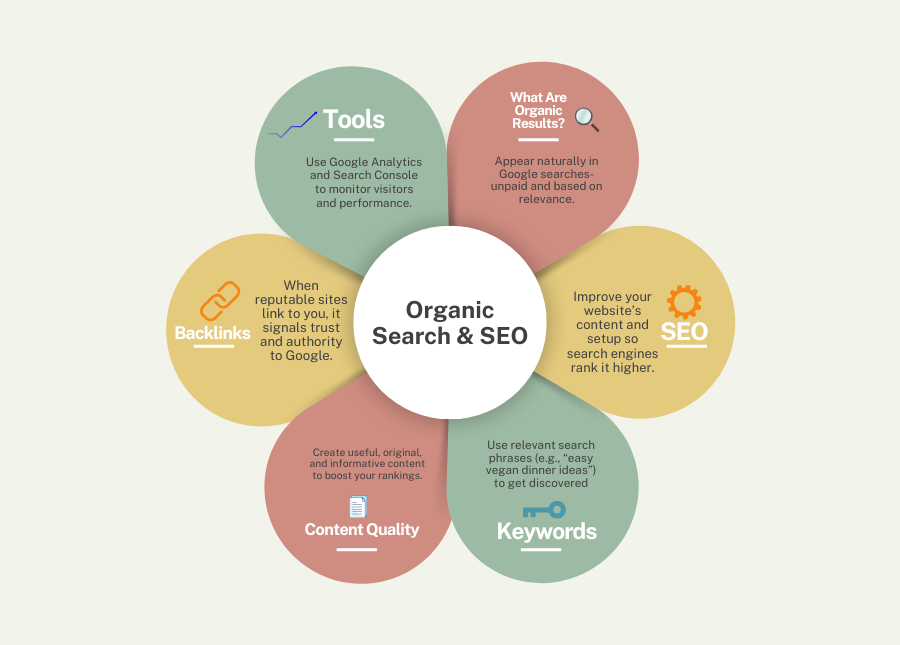
When you Google something and notice those results that aren’t labeled as ads—that’s what we refer to as organic search results. They appear organically based on the relevance of the content, not because someone is paying to be there.
To increase your position in those natural results, you must practice SEO (Search Engine Optimization). Essentially, it’s a matter of adjusting your site’s content and configuration so search engines such as Google believe it’s worth displaying to individuals.
Suppose you have a healthy recipe blog. Using keywords such as “easy vegan dinner ideas” can make your blog posts appear when someone does a search for that.
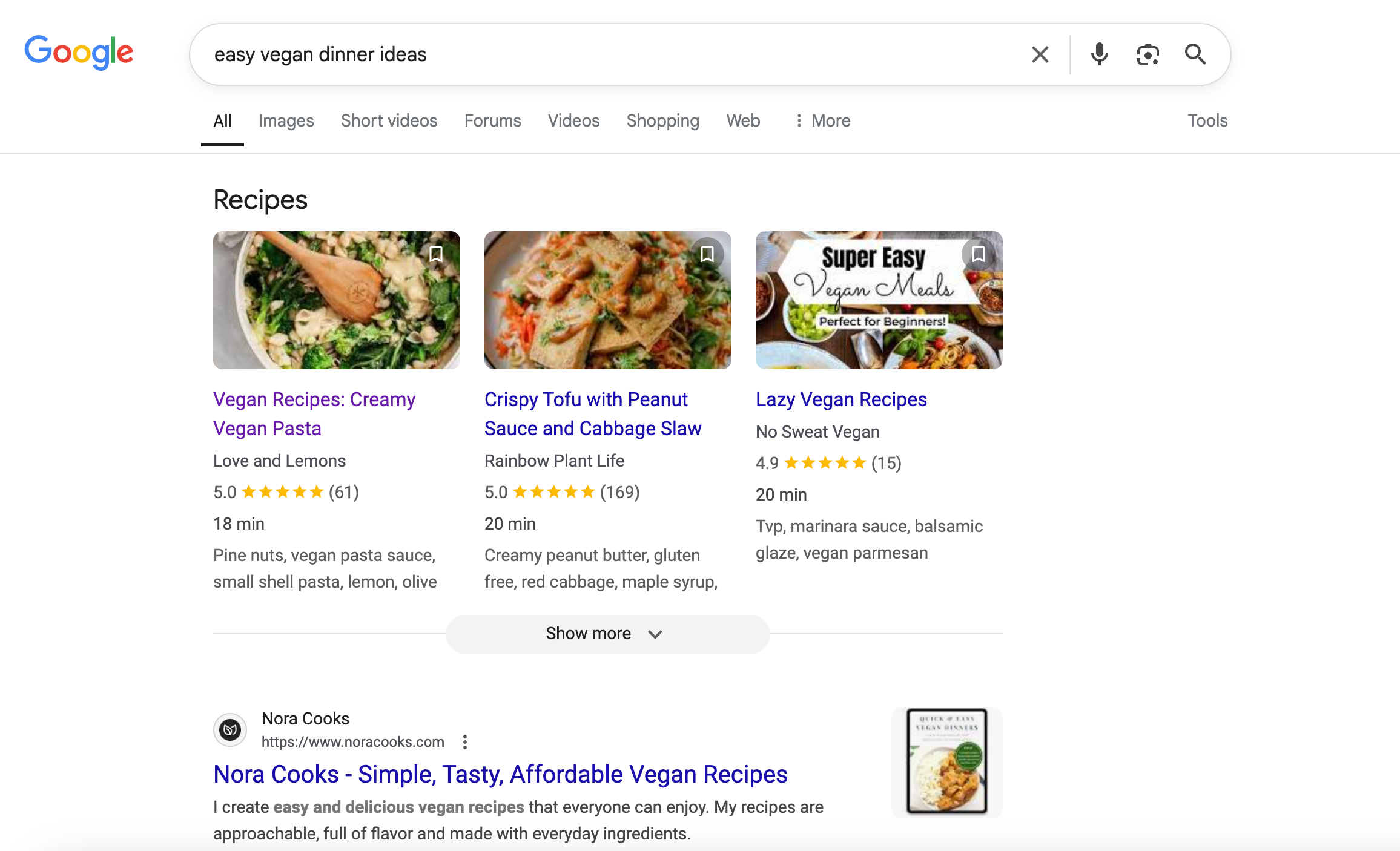
What determines where your website shows up in the list? Such as whether you use the correct and relevant keywords, create useful content, and whether other reputable websites link back to yours (that is known as a backlink).
For instance, if a popular food blog is linking to your smoothie recipe, Google recognizes that as a thumbs-up and may bump your page up.
Want to know how your website’s doing? Google Analytics and Google Search Console are really useful tools. They allow you to monitor who’s visiting your site, what they’re looking for, and how well you’re performing.
Understanding Google Ads
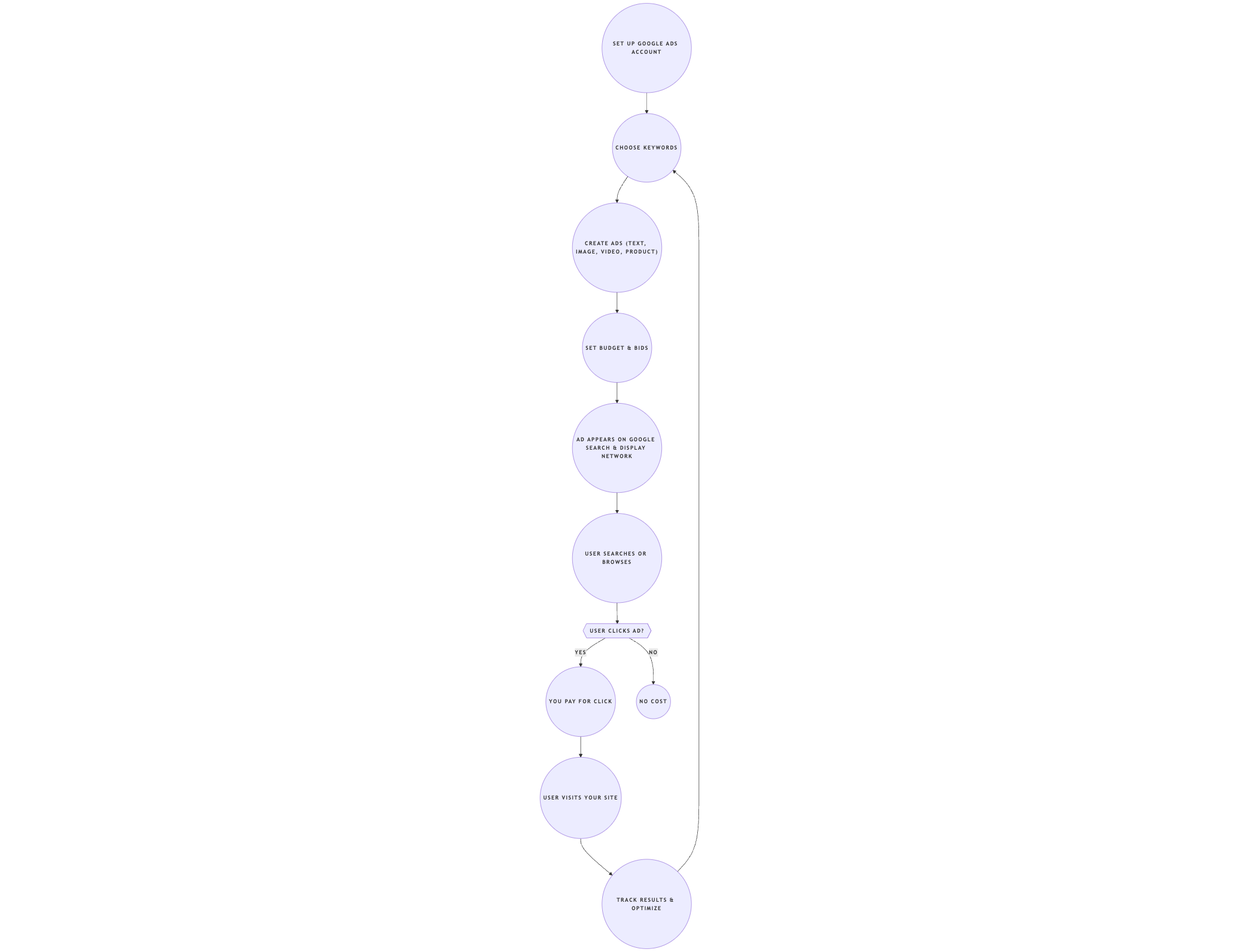
Google Ads, commonly referred to as PPC (Pay-Per-Click), is an advertising payment model for companies to have their ads placed on Google’s search pages and on websites within the Google Display Network.
Rather than waiting to appear in organic search, you can pay to be displayed right at the top when individuals search for something related to your business. It begins with selecting the proper keywords—words your prospective customers are entering into Google.
For instance, if you have a skincare shop, you could bid on phrases such as “facial moisturizers” so that your ad appears when a user searches for that.
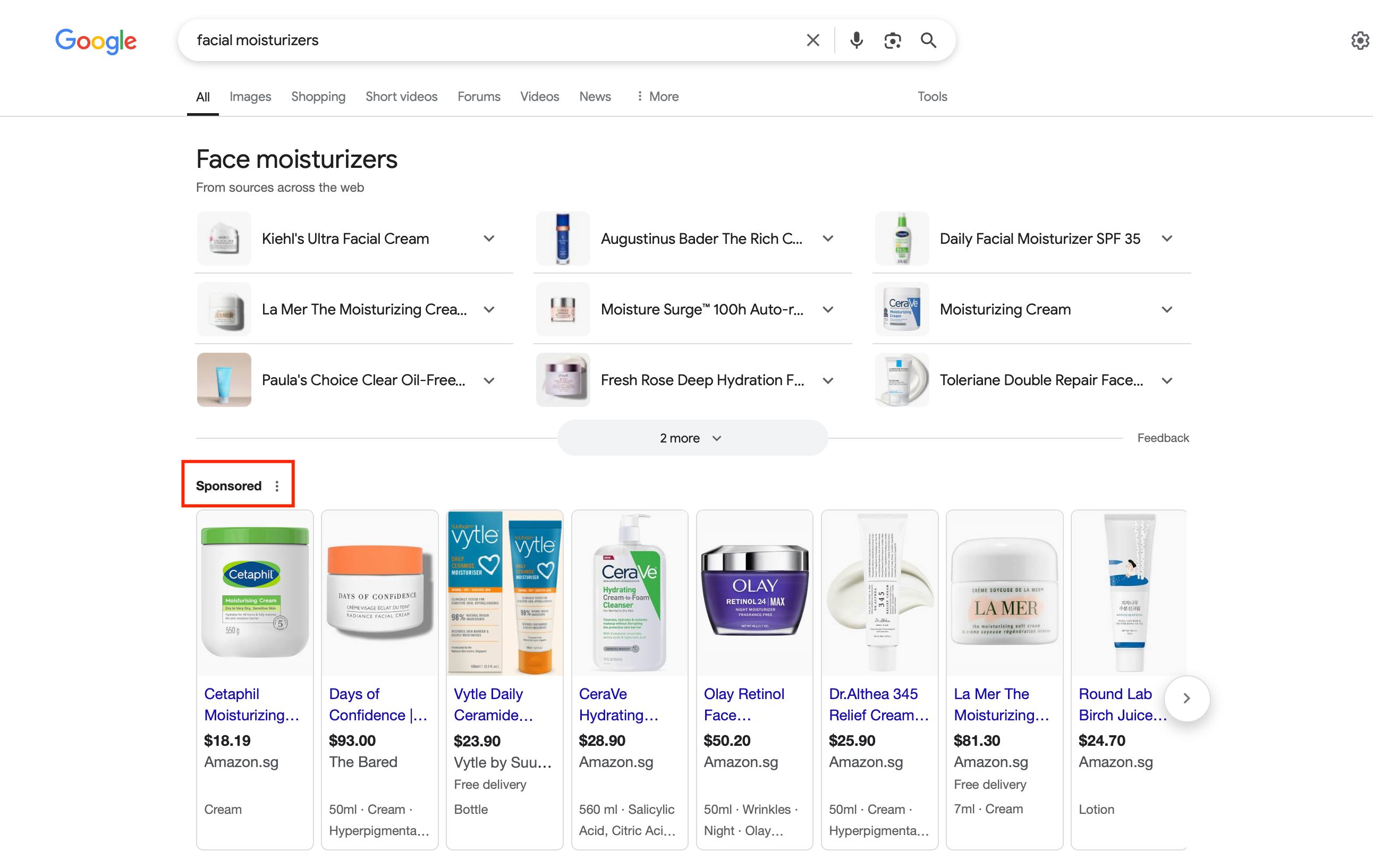
Another great thing about Google Ads is that you control your budget. You can set daily budget limits, and you only pay for each click, so you’re not throwing money at just being visible.
Google also offers you the ability to design various forms of ads, whether text-based, image-based, videos, or product listings. You can tailor them to fit your brand and entice your desired customer.
In addition to all that, Google Ads has strong tracking features that allow you to watch exactly how your ads are doing.
You’ll be able to tell what’s working out and what’s failing, and then you can adjust and get the most out of your money.
Is Google Ads Organic Traffic?
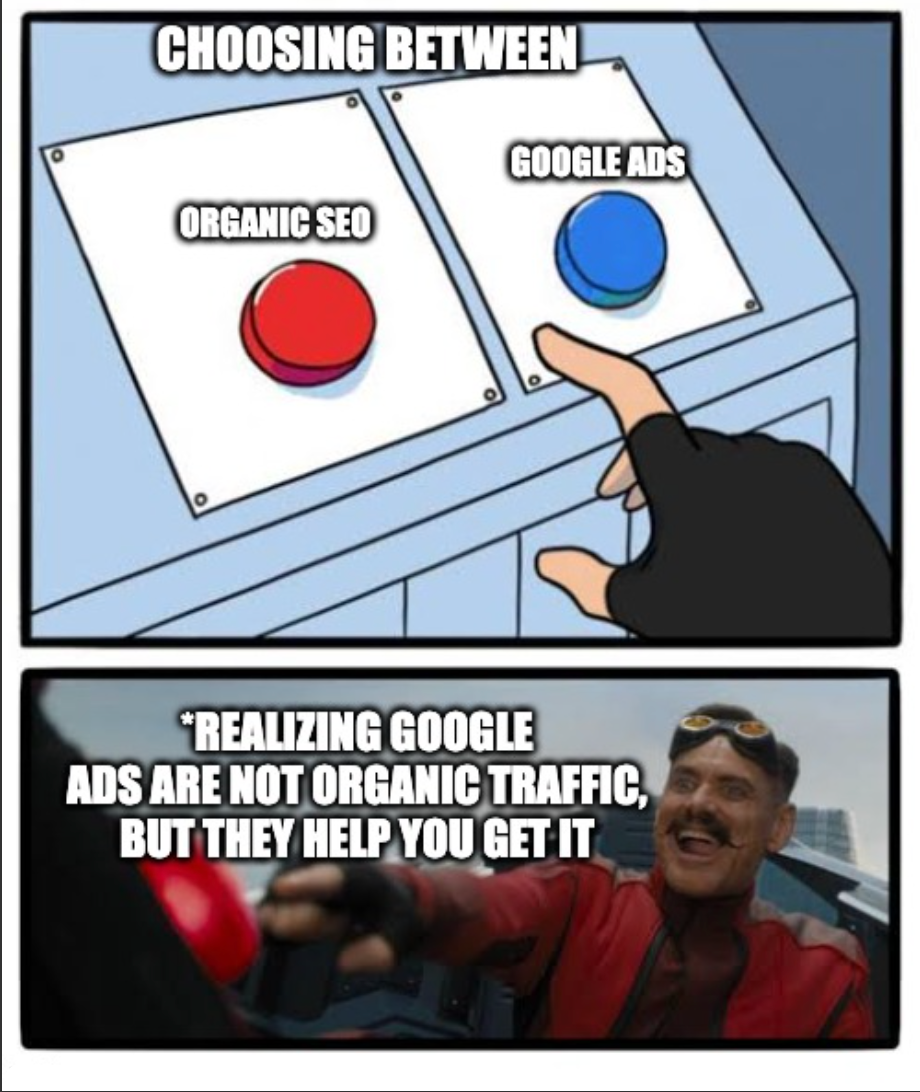
Google Ads doesn’t create organic traffic directly—because by definition, organic traffic is from unpaid search results.
Google Ads is a pay-for-play strategy, so any traffic you receive from it counts as paid traffic. With that said, I have found that running ads can indirectly increase organic traffic over time.
For instance, if a person clicks on one of my ads, they like what they see, and then they go looking for my brand or return to my site again without clicking on another ad—that second visit is organic traffic. But that only truly occurs if my site has good SEO and a good user experience.
What has worked for me is implementing upper-funnel Google Ads or Demand Gen campaigns, in order to expose my brand to more eyes.
These kinds of ads create awareness, and afterwards, individuals tend to look for my business themselves. And if I put those together with Search Ads, I have a complete funnel strategy—driving in both paid clicks and long-term organic growth.
It’s not a one-or-the-other case for sure. The two can coexist together if you use your brain. Objective of Google ad is lead generation but if you wish to use traffic then I would highly suggest to improve your seo skill.
SEO is such a big potential in terms of driving natural traffic, and I’ve seen the difference over time. Small things that always make a difference for me is:
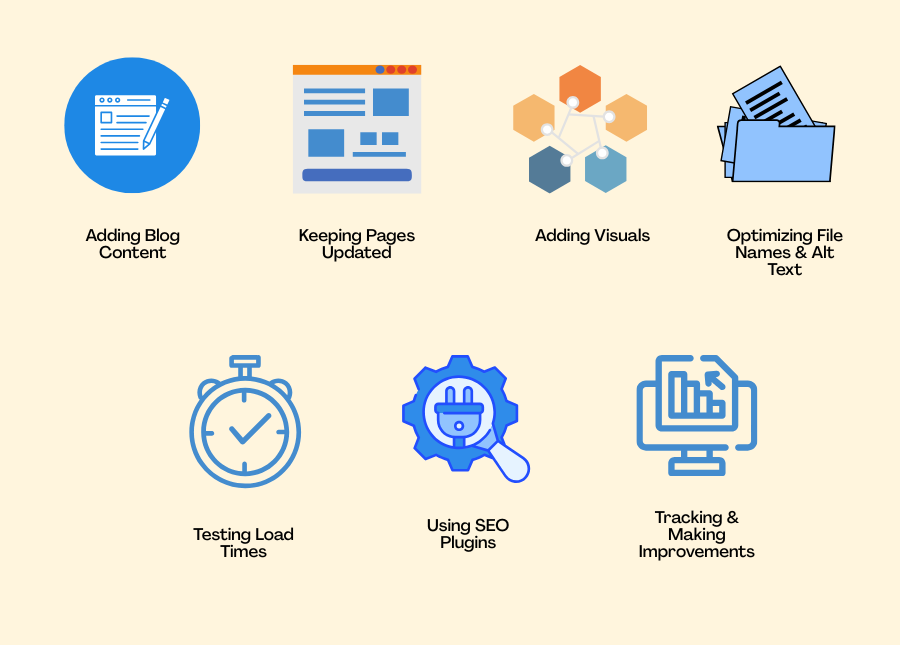
- Adding informative content to my blog frequently so that I don’t stagnate and rank for more keywords and give people a reason to visit again
- Ensuring that my web page pages are always fresh with concise high-quality content
- Emphasizing visuals by incorporating infographics and images to enhance the content’s attractiveness
- Optimized filename and alt text for improved SEO
- Regularly testing for load time and performance fixes to ensure things remain fast
- Using plugins such as Yoast or Rank Math for WordPress to remain on top of on-page SEO
- Remaining consistent, monitoring performance, and continue making small changes that equate to big results
All that being said, many people wonder if paying for Google Ads, particularly when you’re shelling out a sizable chunk of cash, gets you an edge in organic rankings somehow.
Believe me, I thought so too. But the fact is, Google doesn’t favor advertisers at all in organic search.
Just because you’re paying for advertisements doesn’t necessarily mean that your pages are going to show up higher in the free results. Google separates those things out in their algorithm, and you can’t “purchase” superior organic listings by paying money on advertisements.
Of course, using Google Ads—particularly Display Ads, which are generally more affordable than pricey Search Ads—is still capable of benefiting your organic rankings indirectly. And here’s why: everything is all about user behavior.
The more visibility your brand gets through ads, the more likely they are to remember you and click on your website later through an organic search. That added interaction—clicks, visits, time on page—can send good signals to Google’s algorithm, which could over time help improve your rankings.
So no, Google Ads doesn’t affect SEO—but the visibility it generates can have a ripple effect that can help improve your organic presence.
Benefits Of Organic SEO
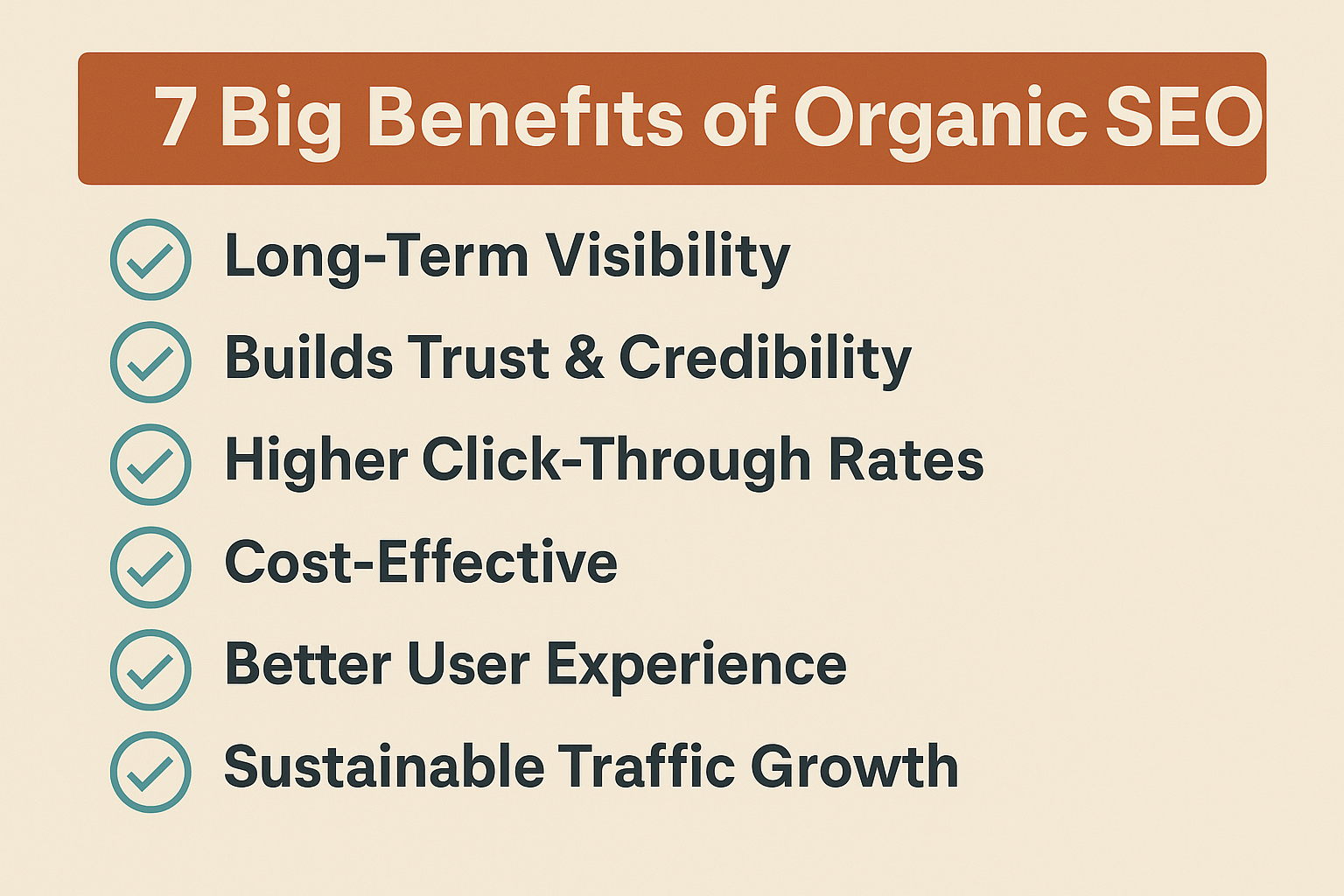
Organic SEO is a great way to create long-term visibility and trust for your site. When your website appears at the top of Google’s organic search rankings, it’s pretty much like getting a gold star. It indicates to individuals (and other search engines) that your content is helpful and trustworthy.
And honestly, most people are more likely to click on organic leads and listings than paid ads because they see them as more genuine.
For example, if I’m searching for “best hiking boots,” I’ll usually skip the ads and go straight to the blog or store that shows up organically—because it feels more credible.
One of the best things? It costs nothing per click. As opposed to advertising, you’re not spending money each time someone stops by your site.
That makes organic SEO a remarkably cost-saving method for driving traffic, particularly if you have a lean budget.
And, as an added bonus, when you’re optimizing your content for search engines, you’re also making your site more usable.
Simple navigation, quicker loading times, and useful content all contribute to a more usable experience—and that can translate to longer time spent on your site, more clicks, and even more sales or signups. It’s win-win all the way around.
Benefits Of Google Ads
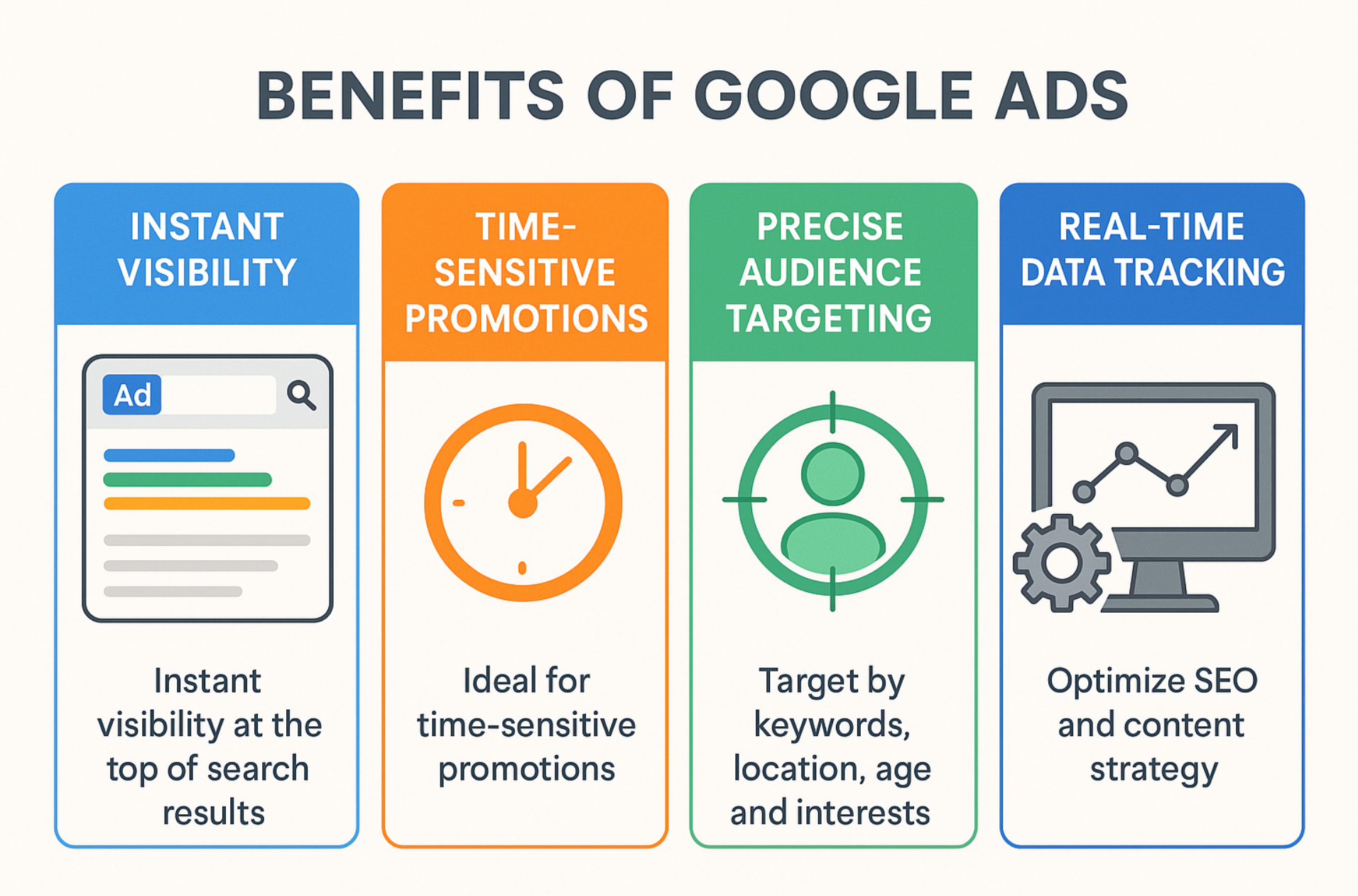
Google Ads are a fantastic way to increase website traffic and visibility right away. Ads appear almost instantly at the top of Google search results, in contrast to SEO, which takes time to build up.
This makes them ideal for promotions that have a deadline, such as when I’m launching a new product or having a weekend sale and want people to see it quickly.
What I most enjoy about Google Ads is the targeted nature. I can decide precisely who views my ads based on keywords, where they are, age, interests—you pick it.
Let’s say I’m promoting a local coffee shop. I can target individuals looking for “coffee near me” within a few miles of where I am. That way, I’m not paying to show ads to individuals who won’t be visiting.
On top of that, having Google Ads up and running lets me tap into all the useful data. I can track what people are looking for, what headlines they click, and what they do after interacting with my site.
These are the best inputs on improving my SEO and content strategy—I basically get to see what is working live and make changes on the fly.
Measuring the Impact of Google Ads and Organic SEO
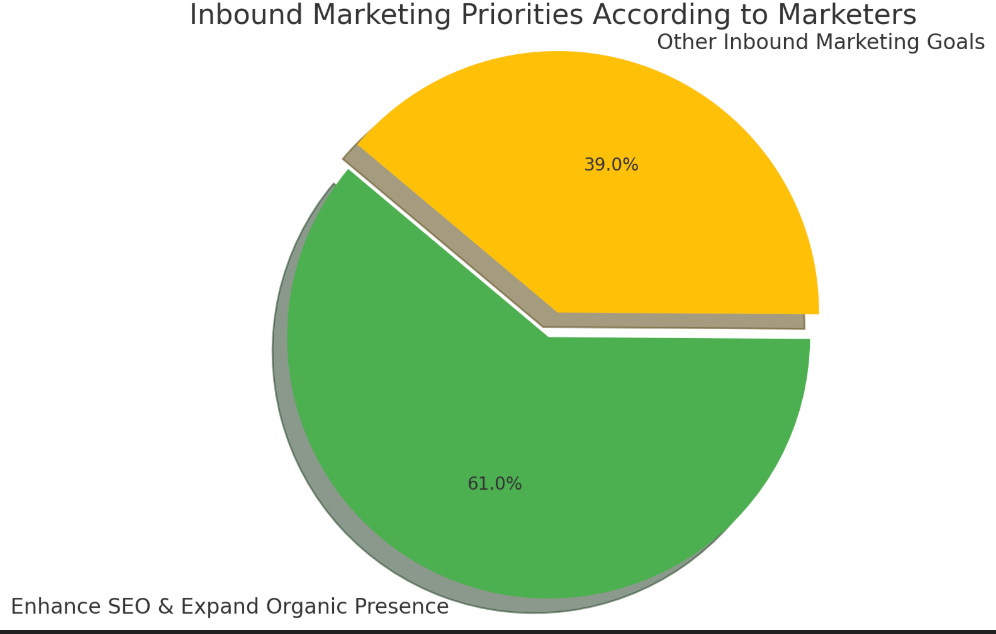
If you’re doing Google Ads and SEO, it’s really important to measure what actually works. I love knowing where my traffic is, which pages are converting, and what variations make a concrete impact.
Google Search Console and Google Analytics are life-savers—fun fact: 61% of marketers report that enhancing SEO and expanding organic presence is their highest-priority inbound marketing goal.
These tools enable me to view everything from traffic sources to the behavior of the users so I can make wiser choices.
To become even more specific, I use UTM parameters on my ads and campaigns. It’s an easy way to see exactly which ad or social post led someone to my site. This type of insight allows me to refine not just my paid campaigns, but also my SEO and content strategy.
For instance, the marketers who monitor campaigns using UTMs and analytics software are more than twice as likely to realize increased ROI as those who do not.
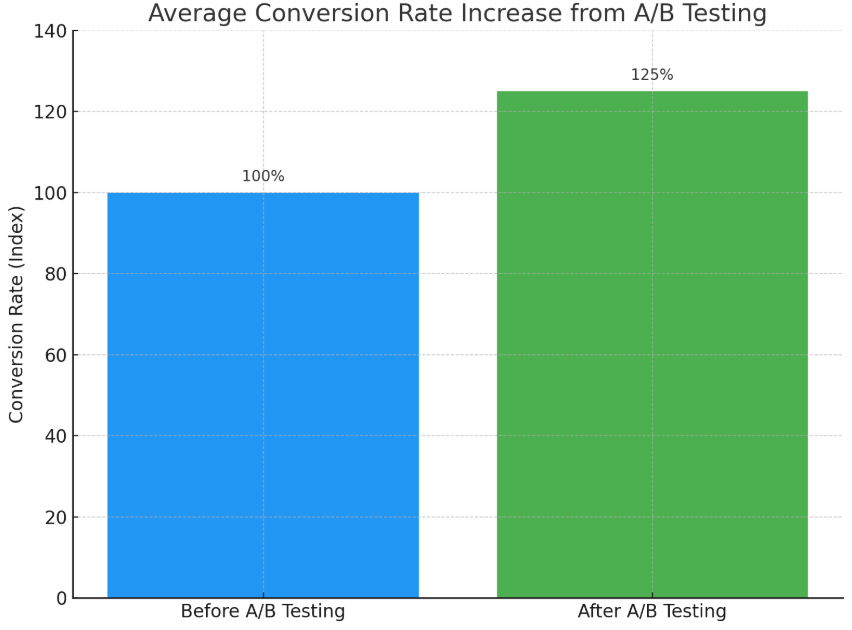
A/B testing additionally generated excellent results for me. Small changes can have a big impact, whether you’re experimenting with different ad headlines or changing SEO meta titles.
In reality, businesses that use A/B testing report an average increase in conversion rates of 20–30%. Ultimately, it all comes down to using the data to improve what is working, eliminate what isn’t, and continue increasing your traffic and conversions.
Things to Consider When Choosing Your Strategy
There are a few things I would like you to think about before you actually land on a strategy:
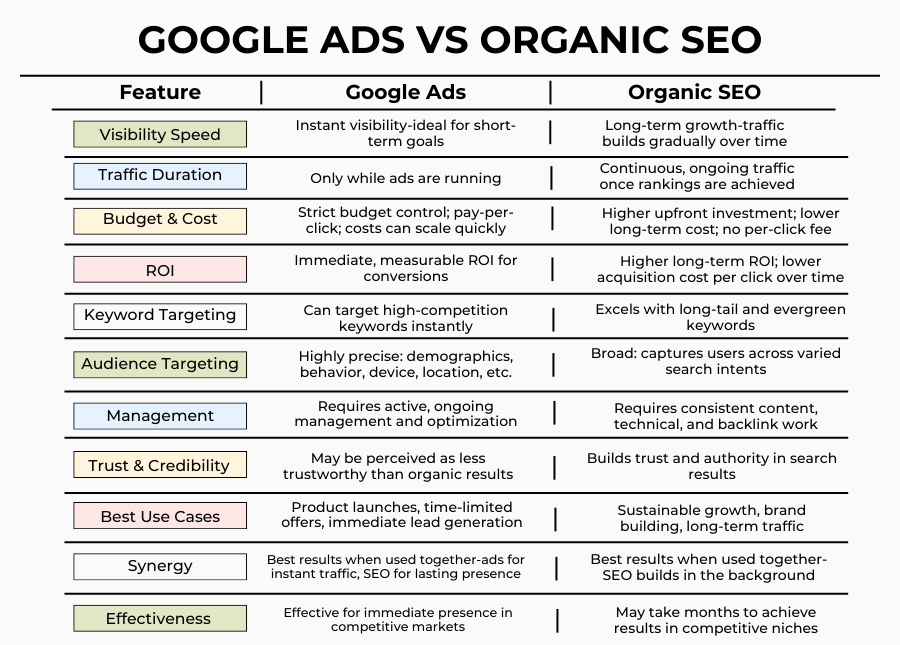
- Google Ads provides instant visibility, which suits short-term objectives such as product launches, holiday sales, or offers with time limits.
- Organic SEO is concerned with long-term development, generating long-term traffic through better search rankings and relevance of content over time.
- Both methods together tend to work most effectively, employing Google Ads to drive instant traffic whereas SEO activity builds up in the background.
- Google Ads has strict budget management, in which you can define daily spend limits and change spend by performance and ROI.
- SEO is cheaper in the long term, but it needs initial investment in content development, backlink building, and technical optimization.
- In very competitive verticals, SEO might take months to show tangible results, whereas Google Ads will put your brand on the spot in front of the intended audience right now.
- Google Ads allows you to conquer high-competition keywords, providing visibility when organic rankings remain a distant dream.
- Organic SEO positions you for long-tail and evergreen keyword rankings, creating rock-solid traffic streams without constant ad budget.
- Google Ads focuses on precise targeting of specific audience based on demographics, behaviors, device category, location, and more—ideal for unique customer segments.
- From awareness to conversion, SEO draws users from a wider range of search intent.
- Active management is necessary for Google Ads, which includes tracking performance, modifying bids, testing creatives, and routinely optimizing campaigns.
- Consistent work is necessary for SEO, including producing high-quality content, enhancing site architecture, obtaining backlinks, and resolving technical SEO problems.
Since both approaches need time and experience, your choice should take into account the capabilities, capabilities, and available resources of your team.
Choose Your Startegy And Get Immediate Visibility
Ultimately, employing Google Ads and SEO in conjunction with each other simply makes good sense. Google Ads provides you with immediate results and places your company in front of the appropriate individuals quickly, whereas SEO may take some extra time but positions you for consistent, long-term traffic and credibility. They’re not in competition—and they actually function better in tandem. It’s all about balance, paying attention to what is working, and making adjustments along the way. If you’re hoping to build your online presence in a wise, sustainable manner, using both together is the best way to do it.