Key Takeaways
- Putting your money behind hotel SEO isn’t just about generating extra bookings – it’s about building your brand and differentiating yourself from the big-name aggregators, and connecting with travelers in your area.
- Focusing on local SEO and hyperlocal keywords will capture guests looking for accommodations in the area, giving your hotel that true Austin edge.
- Crafting irresistible content and inspiring guest reviews instill confidence and showcase your hotel’s character, making it stand out in the traveler’s mind.
- By making your hotel website mobile-friendly, fast-loading, and easy to navigate, you guarantee that guests have a seamless online experience from the very beginning.
- Frequent refreshes to your SEO strategies, KPI monitoring, and proactive digital trend awareness future-proof your hotel’s online presence.
- By partnering with other local businesses, handling reviews strategically, and engaging in community events, you increase your hotel’s presence and credibility in Austin’s competitive hospitality landscape.
Hotel SEO is leveraging social tools and intelligent editing to make a hotel’s website rank higher on search pages like Google. Great SEO brings more guests right to your website, so you get more bookings without paying big fees to third-party sites.
Austin hotels are leveraging local keywords, reviews, and maps to differentiate themselves in a competitive marketplace. The following chapters discuss how Texas hotels can expand online with tested SEO techniques.
Beyond Bookings
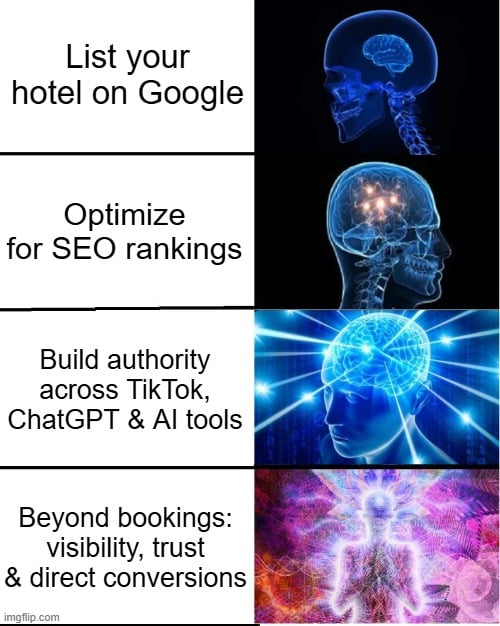
Hotel SEO today isn’t just about loading up rooms. The landscape is changing rapidly, influenced by AI, voice search, and tourists who initiate their research on TikTok or ChatGPT. To win, hotels require strategies that increase visibility, establish authority, and encourage direct bookings—far beyond simply being listed.
Here are five key strategies that keep hotels ahead in a world where 50% to 60% of travelers use non-Google platforms and 40+% of Gen Z hop directly to social or AI tools for trip planning.
1. Outrank Aggregators
So differentiating from OTAs involves choosing keywords they miss. Instead of simply “Austin hotel,” shoot for “boutique hotel in South Congress with free parking.” And that winnows the field.
Employ on-page SEO, semantic HTML and schema markup to push you higher in the ranks, so users and search engines can find your hotel faster. Original content is the ticket. Document guest experiences they can’t find elsewhere–perhaps a mural tour of Austin or local food events.
Concentrate on your difference from aggregator sites, which frequently have cookie cutter descriptions. Optimize for voice search, because 50% of all searches occurs this way. Consider how people speak, not only type, when requesting recommendations from their phone.
2. Own Your Brand
Stay consistent with your voice and style across your website, emails, and social media. This way, travelers remember you—not just the booking engine.
- Use SEO best practices like clean site structure and fast load times. They help rankings and make your brand look professional.
- Make sure your SEO strategy fits your brand goals. For example, if your hotel is pet-friendly, create content around pet travel in Austin.
- Share guest and staff stories. This builds an identity that’s more than just selling rooms.
3. Build Local Authority
Local SEO can get your hotel in front of travelers searching for an authentic Austin experience. Use local business partnerships: maybe a coffee shop next door, or an event venue down the street.
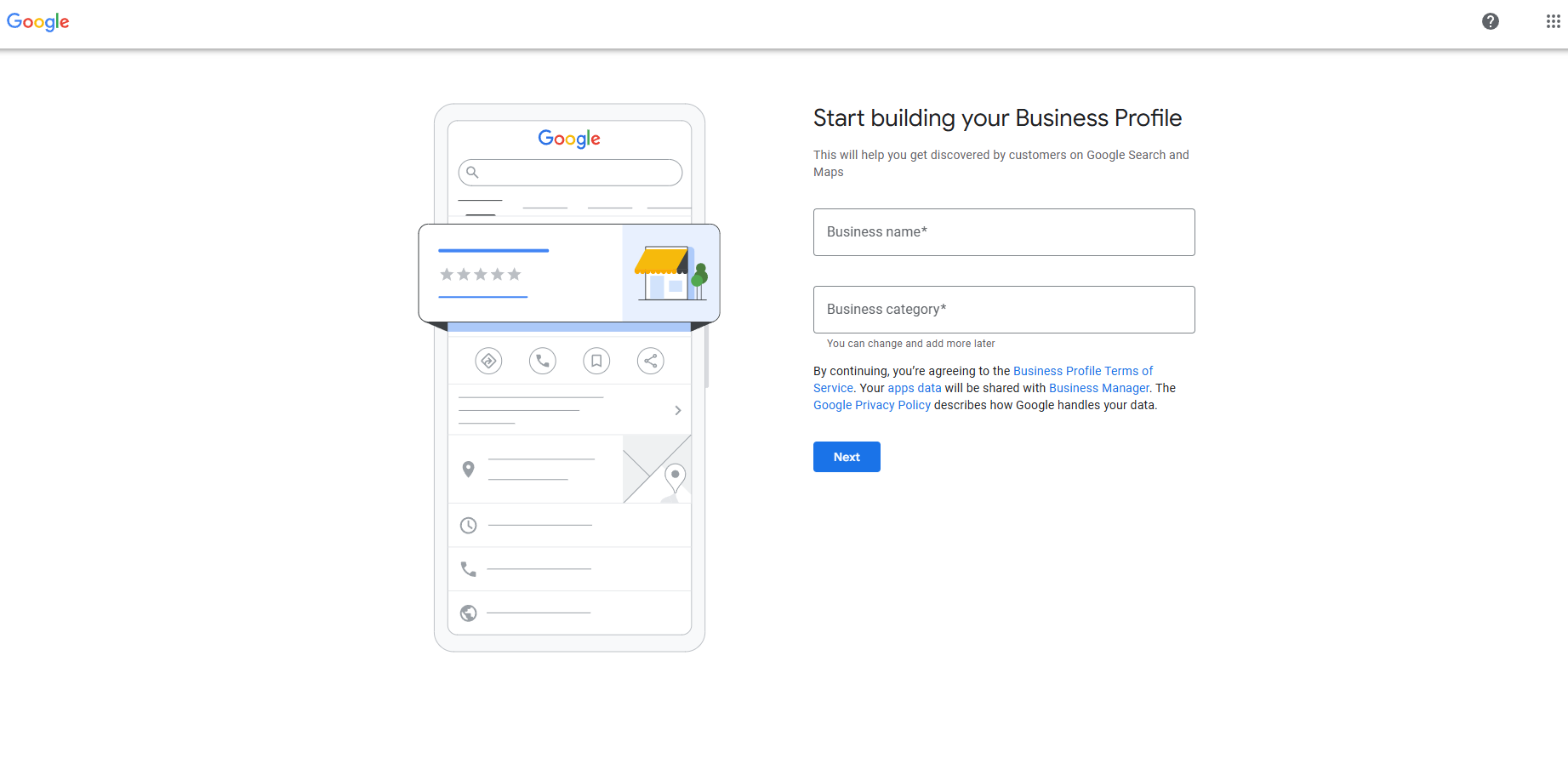
See your hotel on Google Business Profile with info up to date and inviting photos. Get guests to leave reviews – these enhance both your local ranking and trust as well. Reply to reviews — good or bad — to demonstrate your concern for guest feedback.
Attend local events or sponsor community happenings to stay top-of-mind in the area.
4. Future-Proof Your Hotel
SEO isn’t set in stone. Search algorithms change all the time, and now travelers use AI tools for highly personal queries. Staying ahead means staying informed—follow hotel marketing blogs, join groups, or attend webinars.
- Keep an eye on new tech like voice and chat searches.
- Watch your competitors—if they’re ranking on new keywords or platforms, experiment too.
- Invest in flexible strategies: test AI chatbots for direct bookings or run social video ads that appeal to Gen Z travelers.
5. Drive Direct Revenue
Direct bookings mean bigger profits. That starts with a booking engine that’s clear, simple, and free of hidden fees. Strong calls-to-action help guide guests to complete their stay with you.
- Use analytics to track which pages or campaigns generate the most revenue, then double down on them.
- Run flash deals or targeted ads to catch last-minute bookers.
- Create landing pages for major Austin events like SXSW to attract visitors searching for rooms.
- Keep your forms short—fewer steps mean fewer abandoned bookings.
Local Dominance
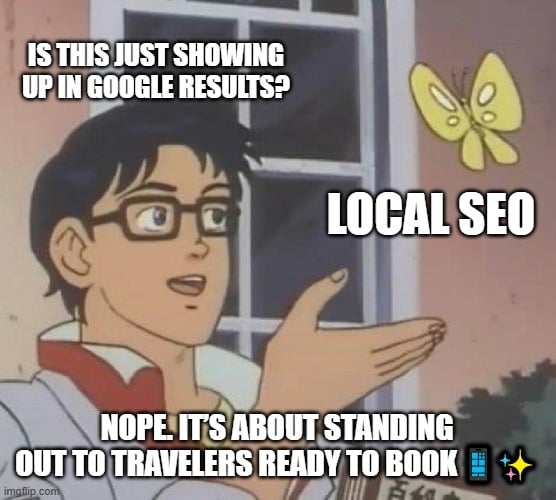
Local SEO is all about making sure travelers find you first when they search nearby for a place to stay. Most of these searches happen on phones, from people ready to book right away. That’s why mobile optimization, local citations, and backlinks from other nearby businesses are so valuable.
It’s not just about showing up in results — it’s about standing out to travelers who are already looking to book.
Hyperlocal Keywords
Skip the generic terms like “hotels in Austin.” Instead, focus on the phrases real people use when they talk about where they want to stay. Think:
- “Pet-friendly hotels near South Congress”
- “Boutique hotels downtown Austin”
These hyperlocal keywords help you show up in the searches that matter most — like “near me” queries or neighborhood-specific requests.
You can also:
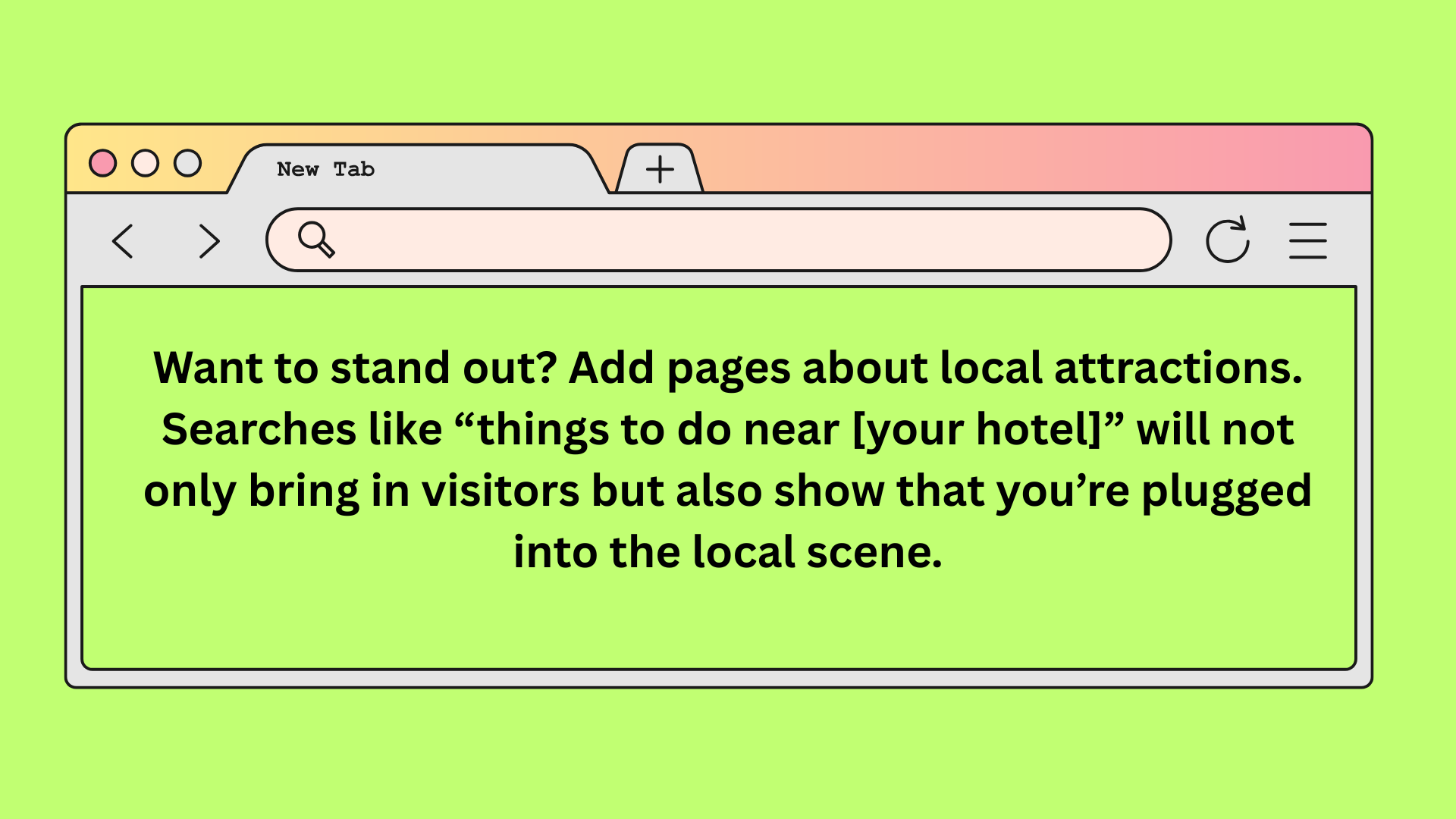
- Add landing pages tied to events like “music festivals in Austin.”
- Create geo-targeted guides to local parks or seasonal happenings.
This type of content proves you know the area and care about what your guests experience. Use tools like Google Search Console to track which terms work best and tweak your copy as trends shift.
Your Digital Lobby
Your website is your digital lobby. It should feel welcoming and easy to explore. Guests should find photos, amenities, and booking buttons quickly — no endless clicking around.
Review Management
- Own your business listings on Google, Yelp, and TripAdvisor – claim and update your business profiles.
- Establish alerts so you’re aware when new reviews arrive.
- Respond to each review, positive or negative, within a few days.
- Request happy guests’ write reviews post-checkout, possibly with a thank-you note or email.
- Monitor for common themes in your reviews–if visitors complain about slow wi-fi or noisy rooms patch these up and tell them you heard.
More than 7 in 10 travelers read reviews prior to a booking. Effective hotel SEO strategies extend beyond reputation management; they involve proving you care and implementing changes that enhance your hotel’s SEO performance, driving repeat visits.
On-Site Optimization
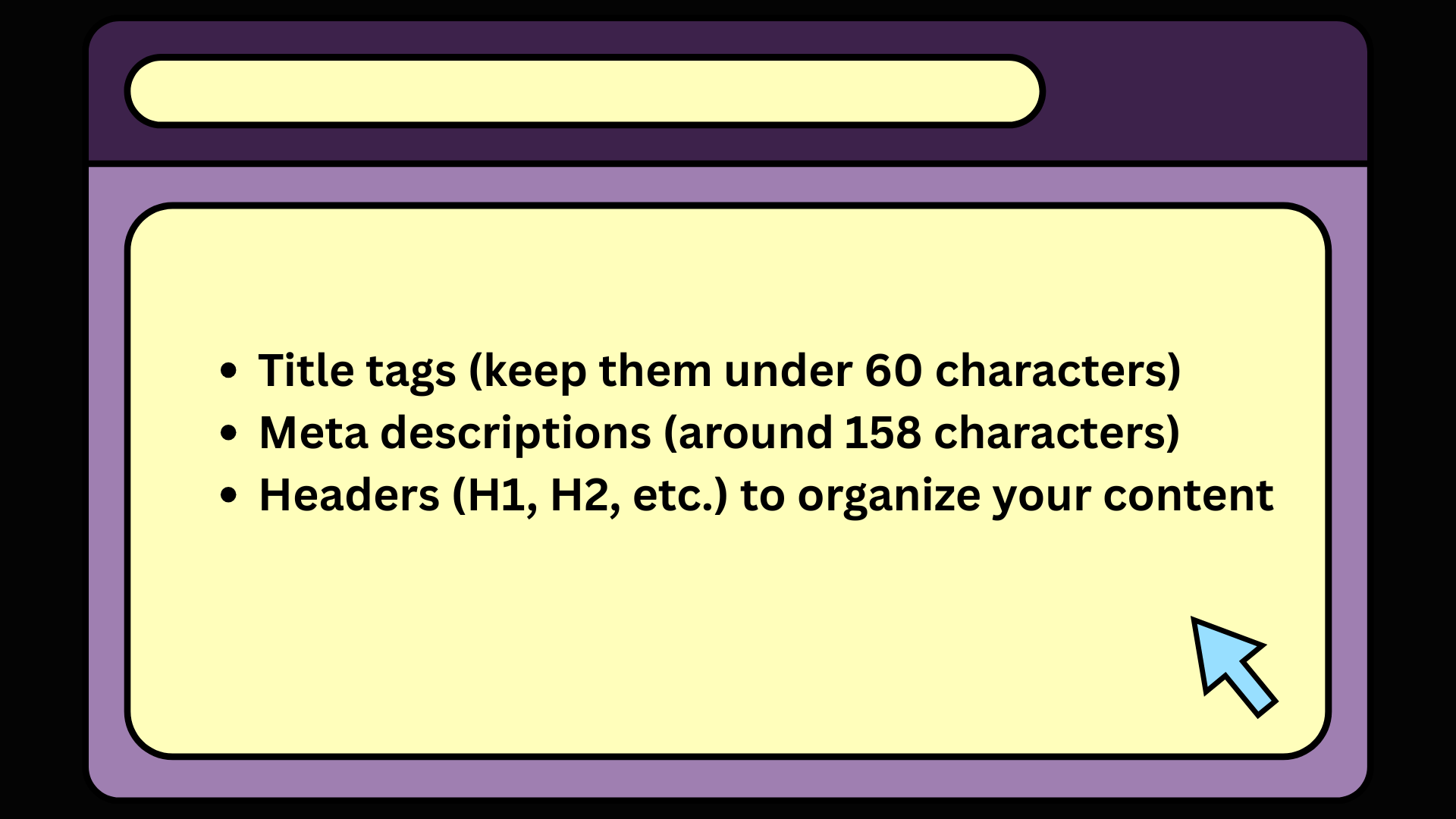
On-site optimization makes sure your hotel website works for both guests and search engines. Every element on your site — from titles to images — should make it easier for travelers to find you and book.
Start by thinking about what people search for when looking for hotels in your area. Use those keywords in the right spots:
|
On-Page SEO Technique |
Impact on Site Performance |
|---|---|
|
Title Tags |
Boosts click-through and search visibility |
|
Meta Descriptions |
Increases appeal in search results |
|
Header Tags |
Improves readability and keyword targeting |
|
Internal Linking |
Enhances navigation and distributes authority |
|
Image Optimization |
Speeds up load times, helps image ranking |
|
Structured Data |
Enhances rich snippets and context |
Page Speed
Nobody likes waiting. A fast site keeps guests happy and reduces bounce rates. Use tools like Google PageSpeed Insights to spot issues. Compress images, enable caching, and keep things light.
Pay special attention during busy seasons (SXSW, holidays, spring break). Slow sites at peak times can mean lost bookings.
Mobile Experience
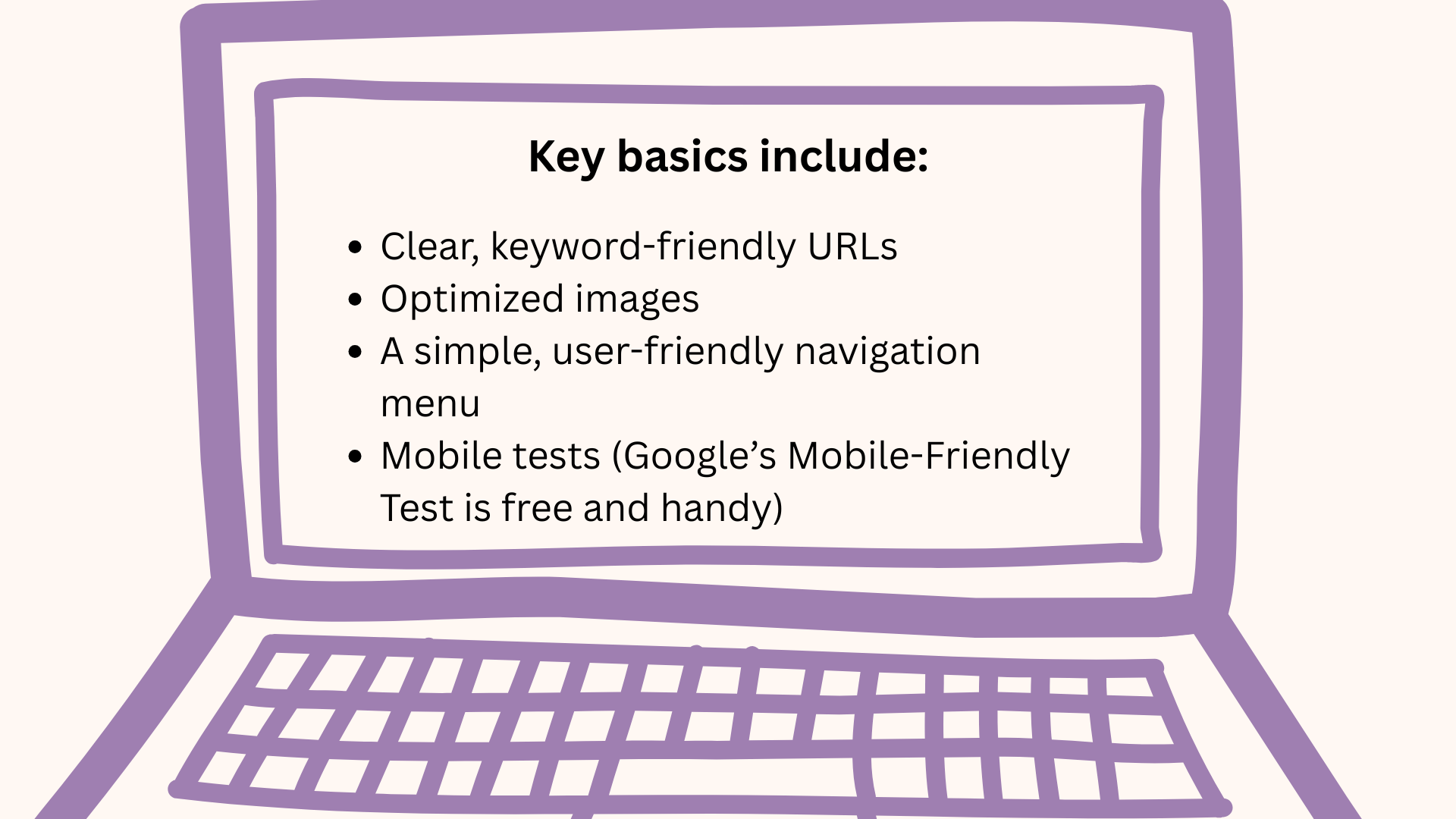
Most travelers first check hotels on their phones, so your site must be mobile-friendly. Test it across different devices and make sure booking forms, rates, and directions are easy to access.
Use large buttons, quick forms, and responsive design to create a smooth mobile booking experience.
Image SEO
Your hotel is visual — show it off! Use sharp, updated images of rooms, amenities, and attractions. Give each file a simple name (like austin-hotel-suite.jpg) and descriptive alt text (king suite with city view). This helps with Google Images and builds credibility.
Pro tip: swap out old photos if you’ve renovated or added new features.
Internal Linking
Links inside your site should guide visitors to where you want them: rooms, amenities, booking pages. Keep it simple and make sure every key page connects to at least one other.
Check for broken links every few months — they hurt both user experience and rankings.
Content Strategy
A strong hotel SEO content strategy connects your marketing goals with what travelers actually want. Start with keyword research: think about what people type into Google when looking for hotels in your city.
Use those keywords across:
- Page titles and headers (H1, H2)
- Blog posts
- Image file names (like deluxe-room-hotel-name.jpg)
The goal? To land on the first page of search results, where 90% of clicks happen.
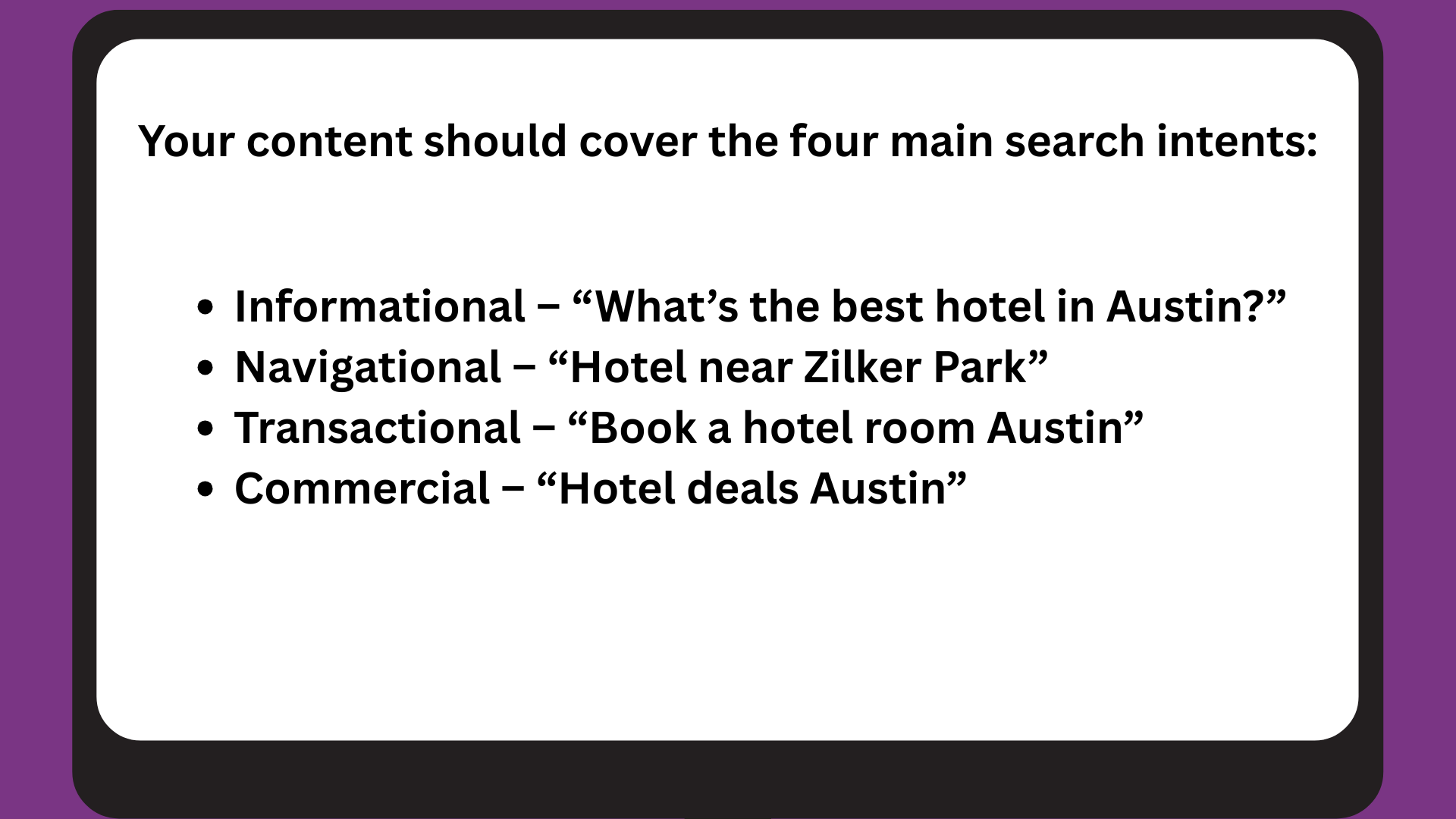
Keep it clear, short, and helpful. Use snappy titles, meta descriptions within best-practice lengths, and refresh your content regularly so it stays relevant.
Experiential Content
Content should make travelers feel what it’s like to stay at your hotel. Share stories like:
- Waking up to a Texas sunrise
- Grabbing coffee from a neighborhood café
- Enjoying your rooftop pool or live music nights
Bring your hotel to life with videos, virtual tours, and guest testimonials. Real stories inspire trust and turn your hotel into a memorable experience, not just another listing.
Seasonal Content
Seasonal topics keep your site fresh. Examples include:
- Highlighting SXSW or the Austin Food + Wine Festival
- Offering summer road trip deals
- Promoting holiday specials
Update your titles and keywords to match seasonal searches. Keep these pages current so visitors always see timely offers and reasons to book.
User-Generated Content
Travelers trust other travelers. Encourage guests to:
- Tag your hotel on Instagram
- Leave reviews after checkout
- Share photos and stories of their stay
Offer small perks (like a free drink or late checkout) as incentives. Then showcase their content on your site and social channels. Respond to reviews and thank guests — it builds community and encourages repeat visits.
Technical Foundation
A solid technical SEO setup makes it easier for both search engines and travelers to trust your hotel website. It covers crawlability, mobile-friendliness, and secure connections — all of which impact your rankings.
Run SEO audits at least once a year (ideally every few months) to catch technical issues before they hurt performance.
Schema Markup
Think of schema as a digital brochure for search engines. It gives Google and Bing extra details about your property, such as:
- Room types
- Amenities (spa, pool, gym)
- Prices and reviews
- Local attractions
This can make your search listings stand out with rich snippets. Keep schema updated when you add new packages or features, and test it with Google’s Rich Results Test to make sure it’s working.
Site Architecture
Your website should be simple to explore — both for humans and search engines.
- Start with a home page.
- Add main sections like Rooms, Dining, Meetings, Special Offers.
- Create subpages for specifics (e.g., King Suites, Banquet Menus).
- Use short, descriptive URLs like:
examplehotel.com/rooms/king-suite. - Add breadcrumbs so visitors can easily move back to higher-level categories.
Revisit your site architecture every quarter to keep up with new services, trends, or guest expectations.
Core Web Vitals
Google uses Core Web Vitals to measure user experience. The three big ones are:
- Loading speed – pages and images should load fast.
- Interactivity – buttons and forms should respond quickly.
- Visual stability – elements shouldn’t jump around as the page loads.
For hotel photos, use compressed .jpg files to keep quality high and load times short. Tools like PageSpeed Insights can show where to improve.
Make monitoring Core Web Vitals part of your routine. A fast, smooth site keeps guests happy and your SEO strong.
Measuring Success

If there’s one thing that success in hotel SEO ultimately boils down to, it’s how well your efforts turn searchers into guests. It’s not just about high rankings; it’s about measuring the right numbers, interpreting them, and refining your strategy to adapt to the evolving digital landscape.
The following table lists some key KPIs, what they measure, and why they’re important for hotels around the U.S.
|
KPI |
Measurement |
Significance |
|---|---|---|
|
Booking Source |
Channel attribution |
Pinpoints what drives revenue, helps spend smarter |
|
Keyword Rankings |
Position in Google/Bing/Yahoo |
Measures discoverability, tracks against competitors |
|
Organic Traffic |
Visits from search engines |
Shows reach and campaign impact |
|
Conversion Rate |
Bookings/Visits (%) |
Gauges how well your site turns visits to bookings |
|
Page Speed |
Load time (seconds) |
Impacts user experience, search ranking |
|
Backlinks |
Number/quality from other sites |
Boosts authority and visibility |
|
Mobile Friendliness |
Usability on smartphones/tablets |
Meets needs of mobile bookers |
Conclusion
Powerful hotel SEO that gets the phones ringing & rooms booked. The locals discover you initially, and travelers uncover you prior to them discovering the chain hotels. Great site, quick load, and clever content attract new visitors each season. Witnessed a Texas location transform from ghost town to weekend destination with little more than sprucing up their site, throwing in a few killer images, and staying local with their updates. SEO isn’t magic—just hard work, authentic stories, and a little know-how.
Ready to make your hotel number one in Austin or anywhere else? Hit up SirLinksALot. We know the industry, and we make sure hotels stay booked up. Give us a shout if you’re ready to get moving.
Frequently Asked Questions
What is hotel SEO?
Hotel SEO is about optimizing your hotel’s web site. This helps draw more visitors seeking a place to stay in your location.
Why does local SEO matter for hotels?
Local SEO strategies ensure your hotel appears in searches from travelers nearby, enhancing visibility on Google Maps and local listings, which ultimately drives more direct bookings and improves your hotel website SEO strategy.
How can on-site optimization help my hotel website?
On-site optimization enhances site speed, mobile-friendliness, and the use of specific keywords. This hotel website SEO strategy makes your site more attractive to both guests and search engines, helping it rank higher.
What type of content should hotels create for SEO?
Hotels can enhance their hotel website SEO strategy by building local guides, event calendars, and amenity FAQs to address traveler inquiries.
What technical SEO elements are important for hotel websites?
Essential components of an effective hotel website SEO strategy include rapid load time, HTTPS, mobile-first design, and clean architecture, ensuring search engines can efficiently crawl and index your site.
How do you measure SEO success for hotels?
Monitor your bookings, traffic, keyword rankings, and local pack visibility using effective hotel SEO strategies. Take advantage of Google Analytics and Google Search Console for precise, up-to-the-moment outcomes.
Can hotel SEO increase direct bookings?
Yes. Smart hotel SEO strategies bring better traffic to your hotel site, lessening your dependence on other booking sites and boosting your direct reservations.