This case study covers a Managed Link Building (MLB) campaign for a commercial property marketplace operating in a multi-lingual European market. The site serves content in three languages and targets users across multiple regions.
The client engaged a managed link building service in late April 2025. At that point the site had been live since 2022 and carried a Domain Rating in the low-to-mid 50s – but roughly 90% of its backlink profile was made up of low-quality, PBN-style links with a heavily over-optimized anchor distribution. The real authority behind the numbers was thin.
The campaign has been running continuously from May 2025 through the present (February 2026), with all link building handled by the MLB team at a budget of $500/month while the client manages on-page, technical, and content work independently.
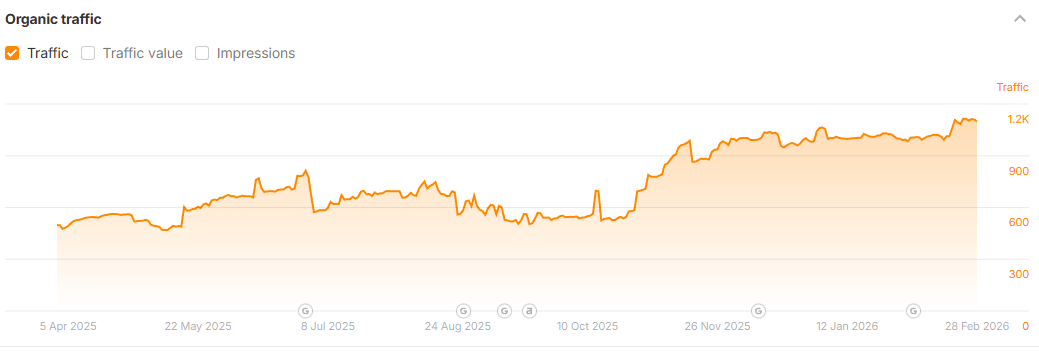
Over that period, the site weathered multiple Google core updates, keyword cannibalization issues, a major third-party reporting disruption, and the slow grind of diluting a manipulated backlink history – and still more than doubled its organic traffic.
Starting Point & Initial Audit
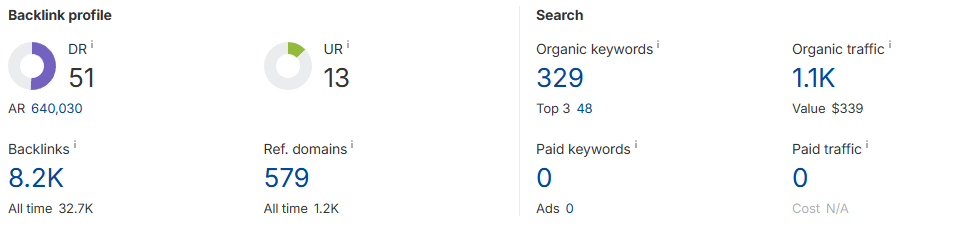
At the time of the initial audit (late April 2025), the site’s surface metrics looked reasonable – Domain Rating in the low-to-mid 50s, over 630 referring domains, and roughly 800 keywords driving a few hundred monthly organic visits.
The actual backlink profile told a different story.
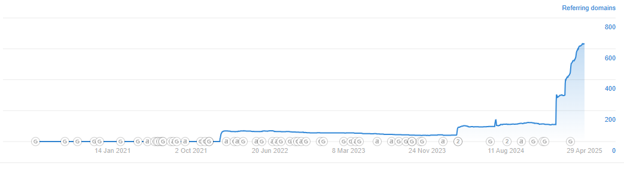
Around 90% of the site’s referring domains came from sites with no real traffic – PBN-style placements of varying quality. Only about two links in the entire profile came from sites with legitimate metrics and traffic. The anchor text distribution was heavily manipulated, loaded with exact-match anchors and lacking the branded and generic anchors that characterize a natural profile.
The site was ranking for relevant terms – including some first-page positions – but this performance was built on a fragile foundation.
As the audit noted, the site was responding positively to what were essentially spam links, and that kind of performance rarely holds up long-term.
Key metrics at campaign start (April 2025):
| Metric | Value |
| Domain Rating (DR) | 54 |
| Referring Domains | 632 |
| Organic Keywords | 794 |
| Organic Traffic | 444/mo |
The conclusion was clear: the off-page profile was fundamentally unnatural and needed to be rebuilt from the inside out.

Building quality contextual links with conservative anchor usage would gradually dilute the manipulative history while establishing real trust with Google.
Strategy
As a Managed Link Building client, the strategy was reviewed and adjusted at the start of each month based on how the site was responding – not locked into a static plan. That flexibility turned out to be critical given the number of external disruptions during the campaign.
The initial strategic priorities were shaped by two realities: the existing backlink profile was heavily manipulated and needed dilution, and the site operated in a multi-lingual market with content in three languages.
All links built during the campaign came from English-language websites using English-letter anchor text only. This was a deliberate approach, not a limitation.
Domain-level authority flows regardless of the language on either side of the link – a quality placement from an English-language site with real traffic passes the same trust signals to the receiving domain whether the site’s content is in English, German, French, or anything else. By building from English-language sources, the campaign had access to a far deeper pool of quality linking sites than the local market alone could provide, and authority flowed to all three language versions simultaneously.
The team’s experience working with European-market sites and multi-lingual SEO environments meant they could work effectively with the site’s URL structure and correctly prioritize target pages across language versions from day one.
Key strategic principles:
- Building exclusively real contextual links (guest posts and niche edits) to create a sharp quality contrast with the existing PBN-heavy profile
- Emphasizing branded, URL, and generic anchor text to offset the existing over-optimization – no aggressive exact-match anchors
- Focusing heavily on the homepage in the early months to push domain-level authority across all language versions simultaneously
- Gradually introducing inner-page targets (key category pages in specific city markets) once the homepage foundation was stable
- Layering in higher-authority placements (DR 51+) as the campaign matured and the profile could support them
- Adding supplemental diversity through social signals where appropriate
The approach was deliberately measured. Given the existing anchor manipulation, every link placed served the dual purpose of building genuine authority and diluting the toxic history.
Challenges
This campaign faced a higher-than-usual number of external disruptions. Not every month moved in the right direction, and understanding why is part of the story.
Existing backlink toxicity and ongoing spam. The biggest ongoing challenge was the site’s own backlink history. With roughly 90% of referring domains being PBN-style, diluting that profile with quality links is inherently slow. On top of that, new spam links appeared mid-campaign (noted September 2025), requiring a strategic shift toward higher-authority homepage placements to help neutralize them. The referring domain count tells this story clearly – it peaked around 800 mid-campaign as legacy links were still indexed, then settled back to roughly 580 as low-quality links naturally decayed. This looks like a decline on paper, but the profile was actually getting cleaner over time.
Algorithm updates. The Google June 2025 Core Update caused a visible traffic dip, and the December 2025 Core Update slowed growth temporarily. In both cases, recovery came within weeks and the team maintained consistent pacing rather than overreacting.
Metric volatility. Two separate issues made performance tracking harder than usual. First, by August 2025 the site was experiencing keyword cannibalization – multiple pages competing for the same terms – which inflated the apparent traffic decline. Second, Google changed a SERP reporting parameter in September 2025 that limited tools like Ahrefs to reporting only the top 10 results per keyword. Keywords ranking below position 10 simply disappeared from the data. This caused reported keyword counts to drop dramatically without necessarily reflecting actual ranking losses. The traffic and top-3 position data, which were unaffected by this reporting change, told a much more positive story throughout.
None of these issues was caused by the link building itself. They represent the normal operating environment for SEO – algorithm updates, tool limitations, and the slow process of cleaning up a problematic backlink history while simultaneously trying to grow.
Month-by-Month Breakdown
| Month | Link Types | DR Range | Focus | Notes |
| May 2025 | Niche edits, social signals | DR 10+ | Homepage | First month; foundational links + diversity signals |
| Jun 2025 | Guest posts | DR 36–50 | Homepage + inner page | Building volume with mid-authority placements |
| Jul 2025 | Guest posts, niche edits, social signals | DR 21–50 | Homepage + inner page | Continued foundation; June Core Update impact |
| Aug 2025 | Niche edits | DR 36–51+ | Homepage + inner page | First high-authority niche edit; cannibalization noted |
| Sep 2025 | Guest posts | DR 51+ | Homepage | High-authority push to neutralize new spam links |
| Oct 2025 | Guest posts, niche edits, social signals | DR 36–51+ | Homepage + inner pages | |
| Nov 2025 | Niche edits | DR 10–50 | Homepage + inner pages | Broader DR range for profile diversity |
| Dec 2025 | Guest posts | DR 51+ | Homepage + inner page | High-authority reinforcement; December Core Update |
| Jan 2026 | Guest posts, niche edits, social signals | DR 36–51+ | Homepage + inner page | Continued push through core update recovery |
The mix of link types and authority levels was adjusted monthly.
When spam links appeared, the team shifted to higher-authority homepage placements. When the profile needed diversity, lower-DR niche edits were layered in.
This responsive pacing is a core feature of the managed approach.
Results
The strongest signal in this campaign is the one that matters most: organic traffic more than doubled, from roughly 444 monthly visits at campaign start to approximately 1,100 by late February 2026. And this happened on a modest $500/month budget while the site was simultaneously dealing with a questionable legacy backlink profile, algorithm updates, and reporting disruptions.
The client’s own data confirms it. According to Google Search Console, the site’s average position improved from 22 at campaign start to approximately 8.9 within just the first six months of the managed link building campaign. The client briefly considered pausing the service for budget reasons, but the results were clear enough that stopping didn’t make sense – the campaign has run continuously since.
Performance – What Improved
| Metric | April 2025 | February 2026 | Change |
| Organic Traffic | 444/mo | 1,100/mo | +148% |
| Top 3 Keywords | 9 | 48 | +433% |
| Avg. Google Position (GSC) | 22 | 8.9 | +59% improvement |
These are the metrics that reflect real users finding the site and real ranking improvements. Traffic nearly 2.5x’d, the number of keywords in the top 3 positions more than quintupled, and the client’s own first-party data confirmed average positions moving from deep page two to solidly on page one.
Performance – Surface Metrics That Require Context
| Metric | April 2025 | February 2026 | Change | Context |
| Domain Rating (DR) | 54 | 51 | -3 | Legacy PBN links decaying; quality composition improved |
| Referring Domains | 632 | 579 | -53 | Same – low-quality links falling off faster than new quality links added |
| Organic Keywords (Ahrefs) | 794 | 329 | -465 | Google’s Sep 2025 SERP parameter change removed Ahrefs reporting below position 10 |
The DR and referring domain declines are actually a healthy signal. The referring domain chart shows a peak around 800 mid-campaign as legacy links were still indexed, followed by a gradual decline to ~580 as PBN-style links naturally decayed. Meanwhile, every link added by the managed campaign was a real contextual placement from a site with genuine traffic and authority. The profile’s overall quality has improved substantially even as the raw count dropped.
The keyword decline is almost entirely a reporting artifact. When Google restricted SERP data to the top 10 in September 2025, Ahrefs lost visibility into hundreds of keywords that were still ranking – just below position 10. The fact that top-3 keywords went from 9 to 48 during the same period tells you the site’s actual keyword portfolio is growing where it counts.
AI Search Visibility
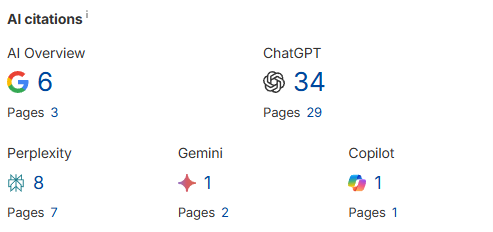
As a forward-looking note: the site has also gained meaningful visibility in AI-powered search platforms during the campaign period. As of late February 2026, it appears in 34 ChatGPT citations across 29 pages, 8 Perplexity citations, 6 Google AI Overview citations, and additional appearances in Gemini and Copilot. While this wasn’t a campaign objective, growing domain authority and topical relevance through link building likely contributed to the site being surfaced by these platforms.
Anchor & Target Page Approach
How anchors and target pages are distributed matters just as much as the links themselves – especially for a site with a manipulated backlink history.
Both the anchor text strategy and the target page distribution were shaped by the need to dilute the existing over-optimized profile while building domain-level authority that would benefit all three language versions of the site.
Anchor Text Strategy
The anchor strategy was designed specifically to counteract the site’s existing over-optimized profile. With the legacy profile dominated by exact-match anchors, the priority was to build a heavy layer of branded, URL, and generic anchors to restore a natural distribution.
Anchor Distribution:
- Branded & URL anchors: ~55% – Brand name variations, domain URL, legal entity name
- Generic / neutral anchors: ~25% – Non-descriptive, non-keyword references
- Topical / descriptive: ~20% – Category-level references and service descriptions
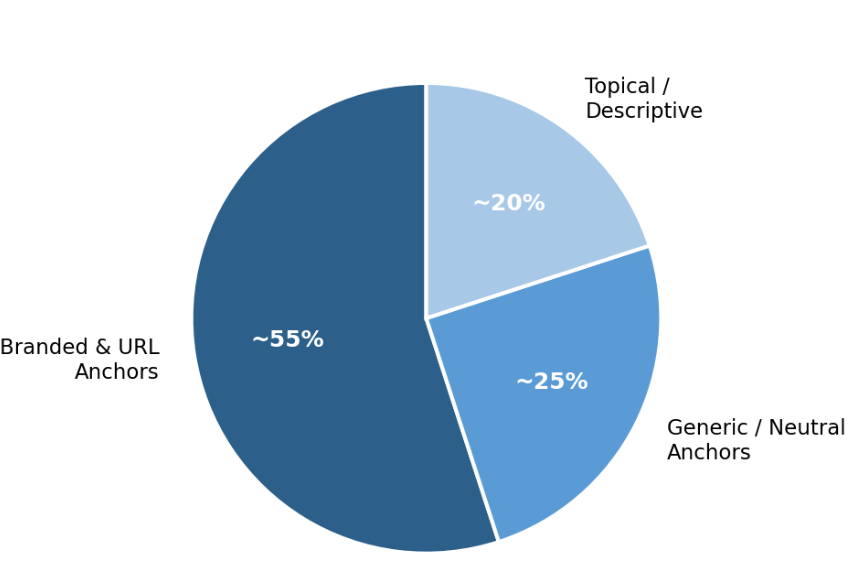
No aggressive exact-match keyword anchors were used at any point during the campaign. Even the more descriptive anchors stayed at the topical or category level rather than targeting specific keyword phrases.
Target Page Distribution
Link placement was intentionally homepage-heavy, especially in the early months, to push domain-level authority across all three language versions simultaneously. Inner pages were introduced selectively once the foundation stabilized, targeting key category pages across multiple city markets.
Target Page Distribution:
- Homepage: ~60% – Domain-level authority foundation
- Category / city pages: ~40% – Distributed across priority city-level category pages
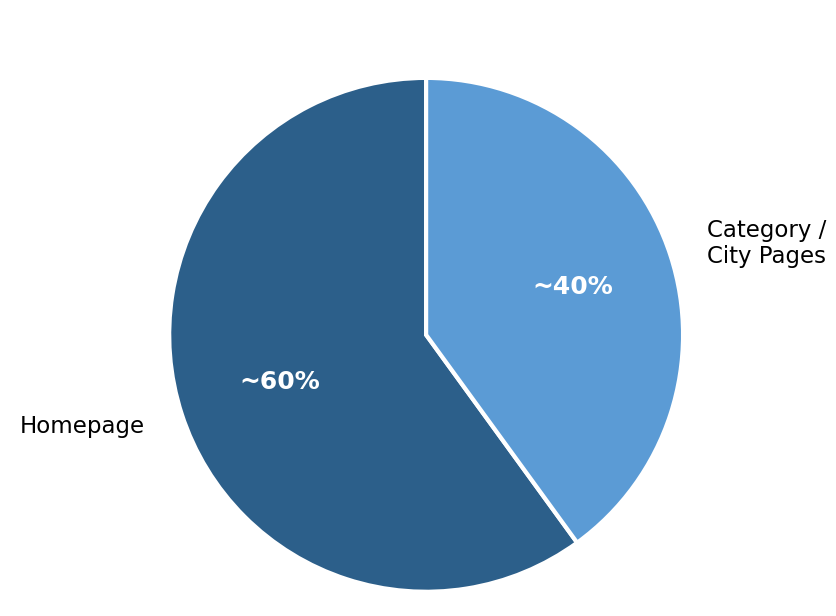
No single inner page received a disproportionate number of links relative to the homepage. This ensured authority flowed naturally through the site’s internal linking architecture to all language versions.
Takeaways & Why This Worked
This campaign worked because it addressed the right problems in the right order and adapted when the environment changed – not because the numbers went up every single month.
The existing backlink profile was a liability masquerading as an asset. Rather than piling more links on top of a potentially toxic foundation, the managed approach built genuine authority that gradually displaced the manipulated history. The referring domain count decreased, but the profile improved. That distinction matters.
The month-to-month flexibility meant the team could respond to spam link attacks, algorithm updates, and reporting disruptions without abandoning the plan. When new spam appeared, the response was higher-authority homepage placements. When traffic dipped from a core update, the response was steady pacing. Consistency through volatility is what ultimately produced compounding results.
Building exclusively from English-language sources for a non-English site was a strategic advantage. Domain authority doesn’t care about language, and the English-language link pool is vastly deeper than any single local market.
Key principles this campaign reinforces:
- A manipulated backlink profile can be overcome with patience and the right dilution strategy – it doesn’t have to be fatal
- English-language links work for foreign-language sites when the campaign is structured around domain-level authority
- Surface metrics (DR, RD counts, Ahrefs keyword totals) can be misleading – traffic and first-party position data are more reliable indicators of real progress
- Algorithm updates are part of the landscape, not a reason to stop building
- $500/month applied consistently for 10 months produced better results than the same amount would have in a single burst
- Continued link acquisition prevents plateaus and protects against competitive erosion and further algorithm shifts
Conclusion
Over 10 months of consistent managed link building at $500/month, this site went from a fragile PBN-dependent profile to a legitimately growing authority in its market.
Traffic more than doubled. The top-3 rankings went from 9 to 48. The client’s own Search Console data showed average positions improving from 22 to under 9. And the site is now appearing in AI-powered search results across multiple platforms – a new visibility channel that wasn’t even on the radar at campaign start.
The campaign is still active. As the legacy PBN links continue to decay and quality links continue to mature, the overall profile composition keeps improving. The trajectory points toward continued growth – provided the authority building continues.